

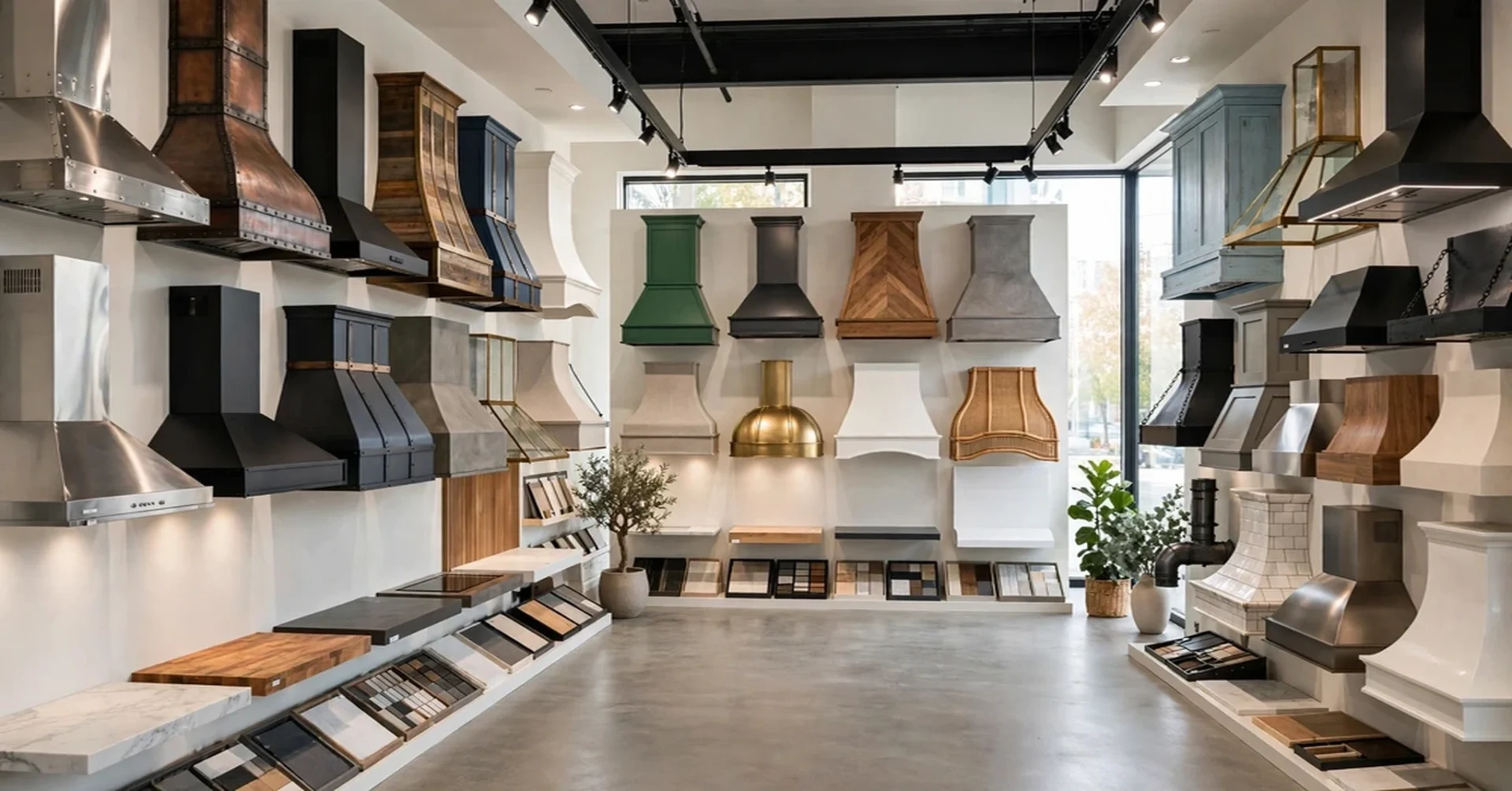
Transform your kitchen into a stylish space by choosing a unique and functional range hood design. In this article, we’ll explore 60 innovative kitchen hood ideas that seamlessly blend aesthetics with practicality, ensuring they fit every kitchen style and layout. Whether your kitchen is modern, rustic, or minimalist, these ideas can inspire you to create a standout cooking area.
1. Sculptural Plaster Range Hood
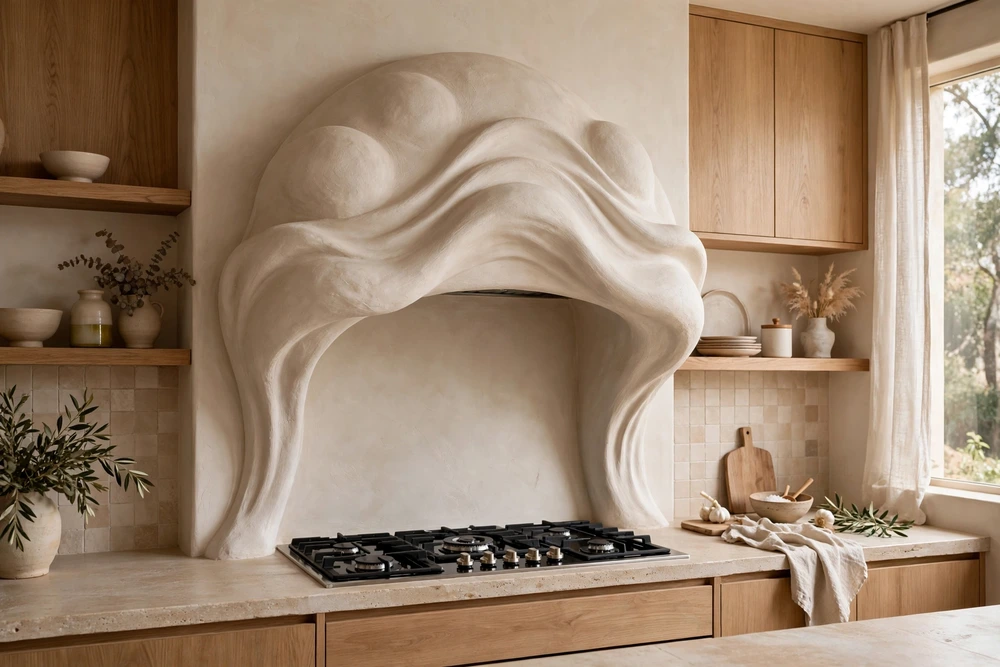
Create a stunning focal point with a sculptural plaster range hood that exudes elegance. Perfect for Mediterranean, organic-modern, Southwestern, or minimalist kitchens, the smooth curves of plaster or Roman clay can offer a unique texture. Opt for colors like warm white or pale clay to match your kitchen’s theme. Ensure your ventilation setup is properly sized and ducted outdoors to maintain functionality.
2. Arched Hood Surround
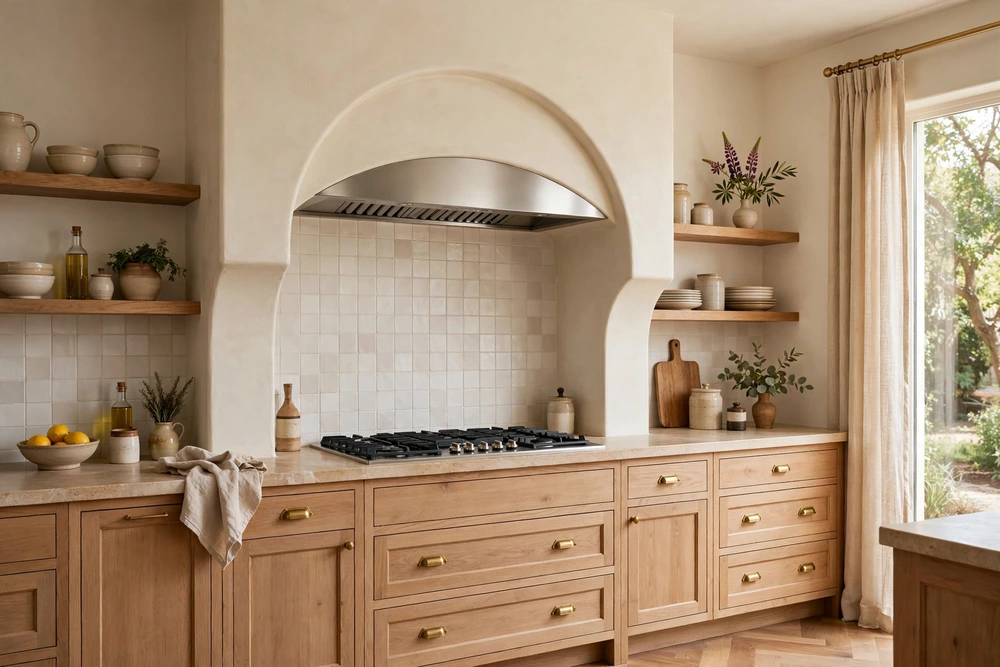
Introduce an arched hood surround to soften linear kitchen interiors. This design complements Mediterranean, traditional, or European-inspired kitchens. Whether you paint it to match your cabinetry or contrast it with plaster, an arch can become a beautiful feature. Just ensure that the arch does not limit the hood’s capture area or function.
3. Boxed-In Hood Matching the Cabinetry
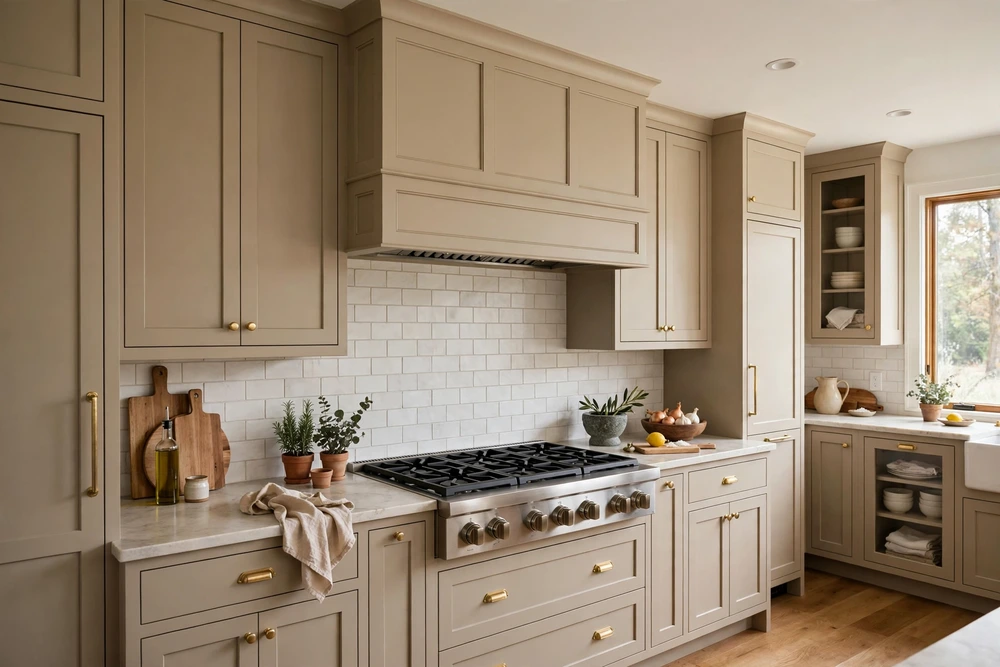
For a seamless and understated look, match your hood with the kitchen cabinetry. This idea works well in transitional or contemporary kitchens where a cohesive aesthetic is desired. Use matching materials like painted MDF or walnut veneer and ensure proper ducting to maintain efficiency while appearing unified.
4. Contrasting Wood Hood
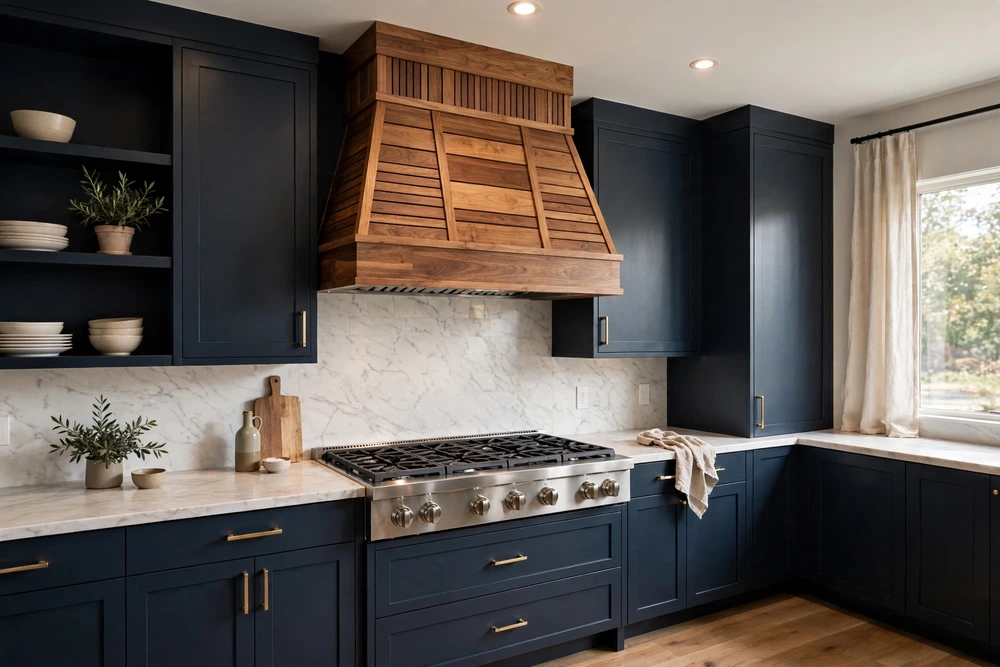
A contrasting wood hood can add warmth and character to a kitchen, especially against painted cabinets. Pair materials like walnut or white oak hoods with muted cabinetry colors like ivory or charcoal. Protect the wood with a durable finish for easy maintenance, while keeping the focus on its natural beauty.
5. Fluted or Reeded Hood
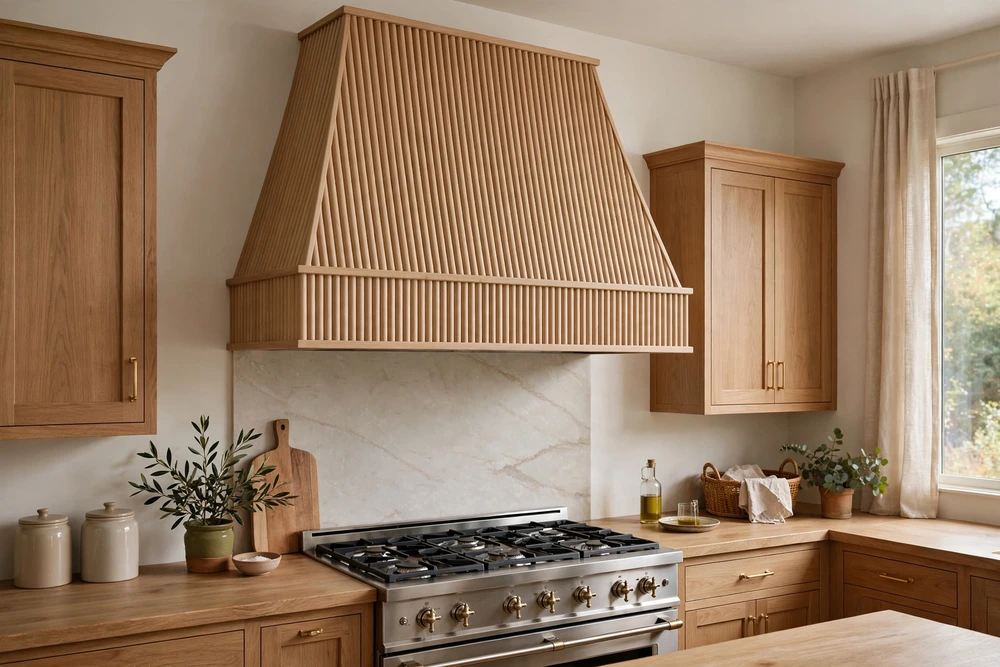
Add visual interest with a fluted or reeded hood. The vertical lines add texture without overpowering the space. Ideal for both contemporary and traditional settings, you can choose materials like painted wood or oak veneer. Ensure that the grooves are easy to clean and that function remains a priority.
6. Stone-Clad Hood
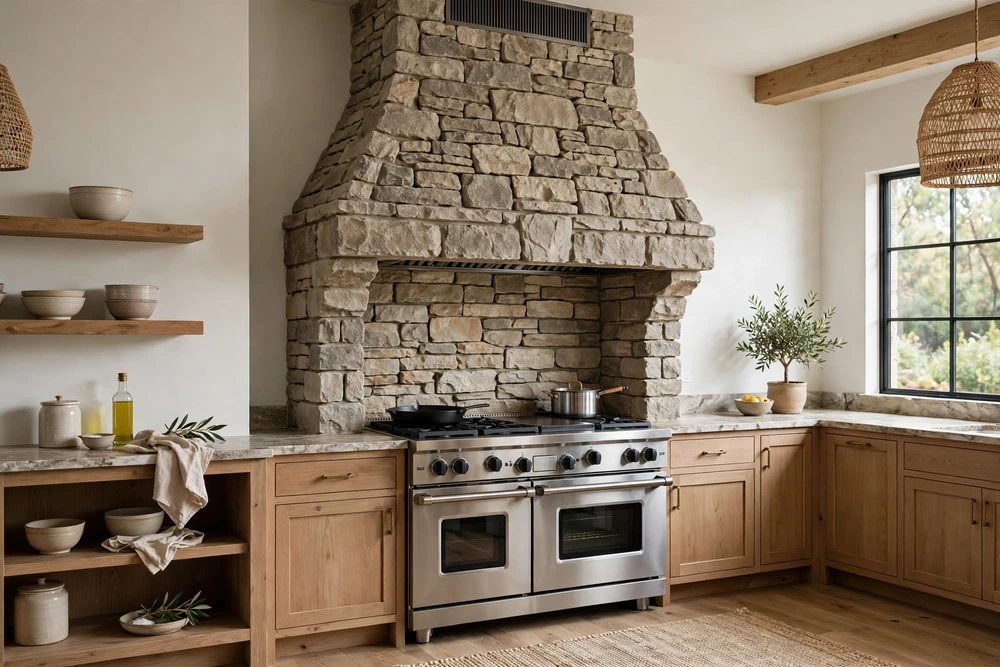
Wrap your hood in luxurious stone cladding to enhance your kitchen’s decor. This design suits high-end, rustic, and contemporary kitchens. Stones like marble, limestone, or quartzite can become a central feature. Consider weight and support requirements to seamlessly integrate the stone into your design.
7. Full-Height Backsplash with a Floating Hood
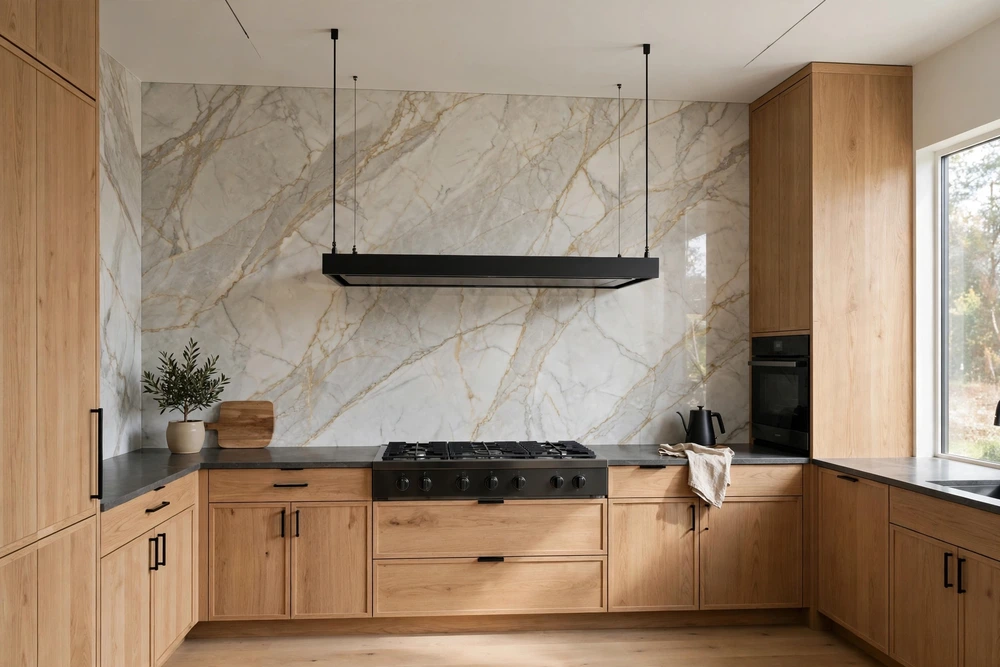
For a modern touch, let your backsplash extend to the ceiling with a floating hood in front. Materials like slab marble or porcelain enhance the gallery-like appearance. Plan the installation carefully to keep ventilation effective and uninterrupted.
8. Stainless-Steel Professional Hood
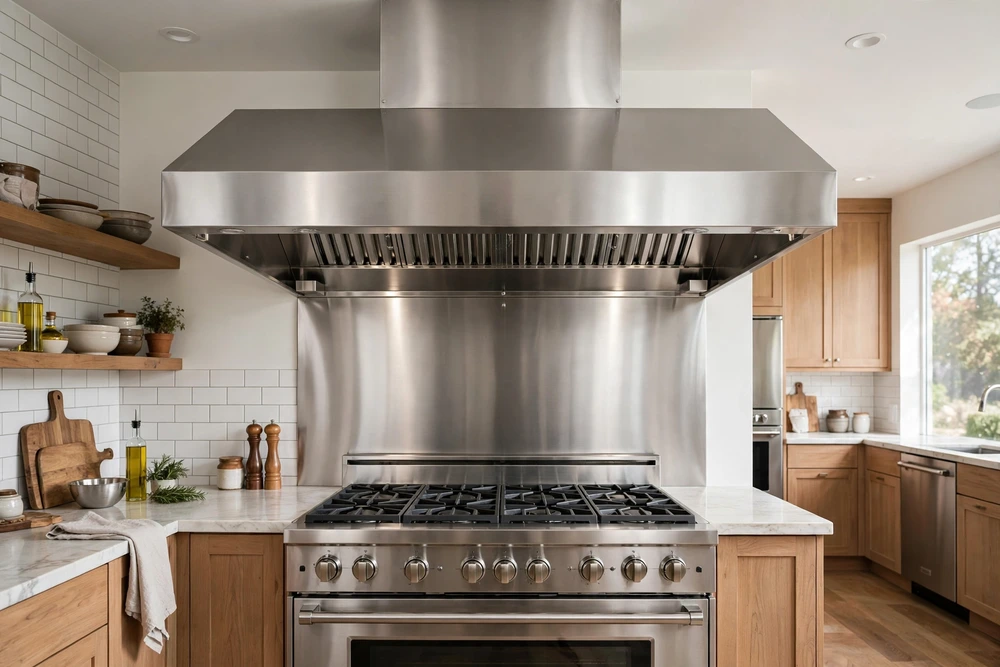
A stainless-steel hood brings a chic, professional look to any kitchen. Ideal for industrial or modern farmhouse kitchens, it pairs well with stainless appliances and a variety of cabinetry colors. Opt for a brushed finish to reduce fingerprints and ensure proper width and airflow for safety.
9. Matte-Black Hood

Introduce a matte-black hood for a bold, modern feature. Perfect for Scandinavian or high-contrast kitchens, this design pairs well with natural materials like white oak or concrete countertops. Choose a cleanable finish to manage visibility of grease or smudges.
10. Brass or Copper Hood
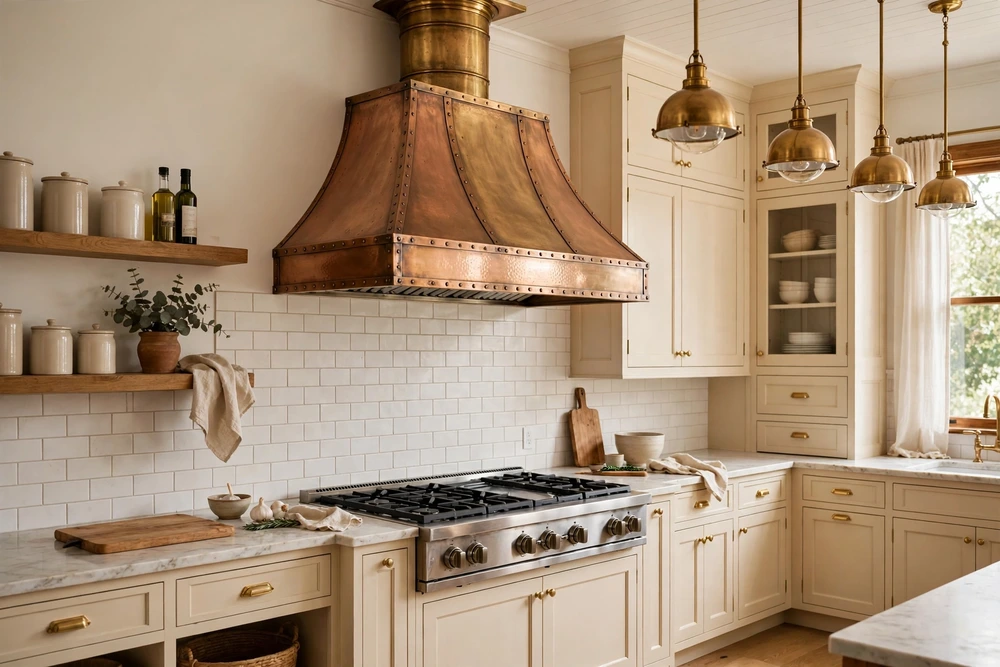
Create a warm focal point with a brass or copper hood. These materials bring an elegant, vintage touch to rustic kitchens. Understanding how metal patinas over time is key to maintaining its beauty. Coordinate with other kitchen elements like cabinetry and hardware for a cohesive look.
11. White Hood Against White Cabinetry
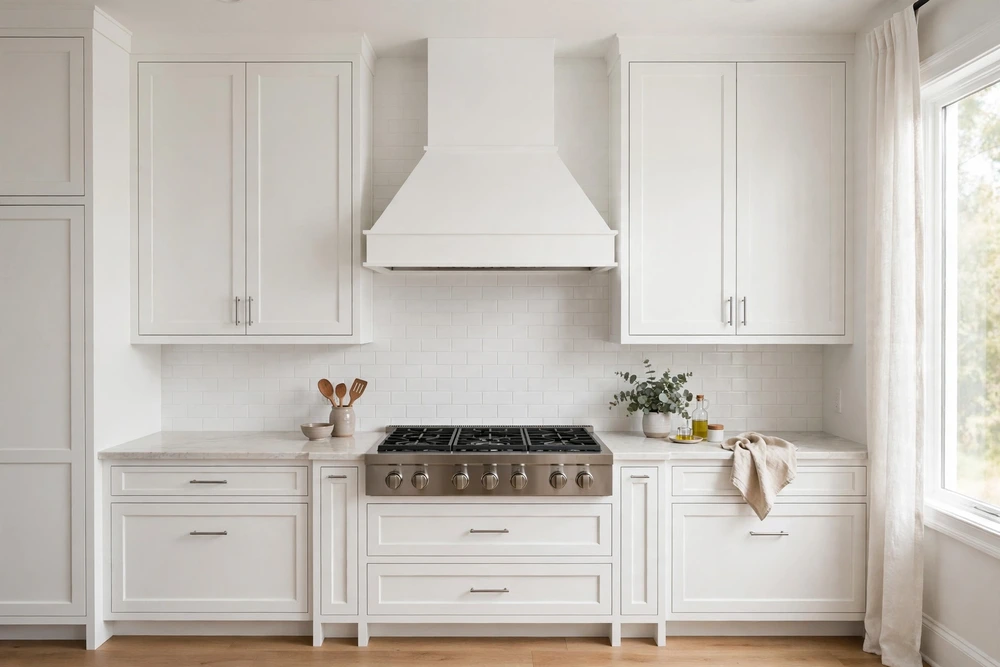
Use a white hood with white cabinets to make small kitchens feel more open. Variations in texture or sheen can add subtle interest. Enhance the monochrome theme with contrasting accessories like dark hardware or wood elements.
12. Colored Hood as the Room’s Accent
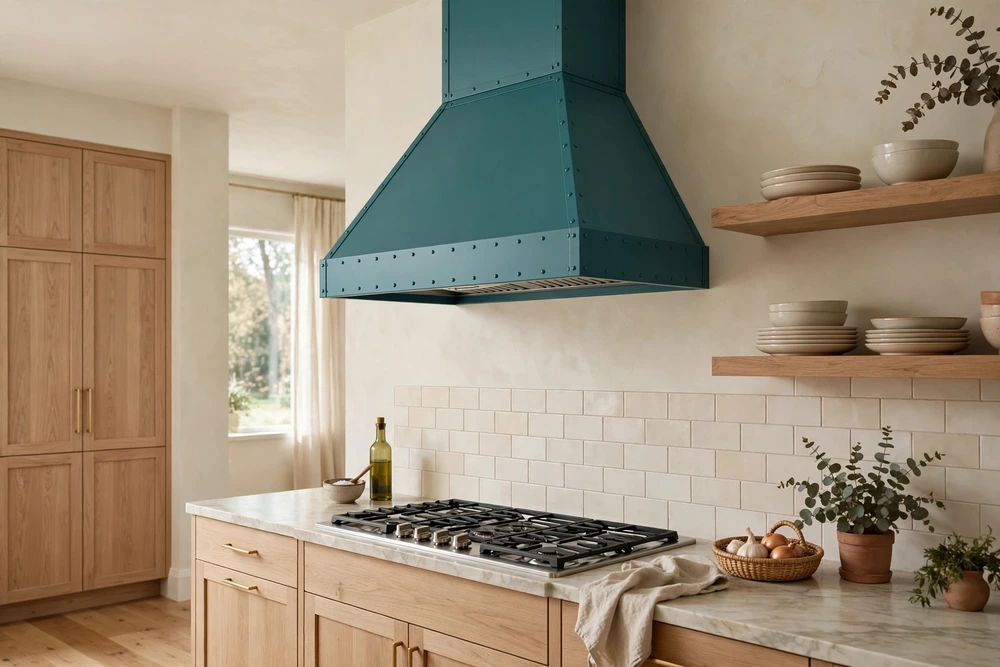
Transform your hood into a central accent by painting it in a standout color. Colors like navy or deep green work well and can be mirrored in other accessories for cohesion. Ensure the hood surface is appropriate for heat and frequent cleaning.
13. Hood with a Mantel Shelf
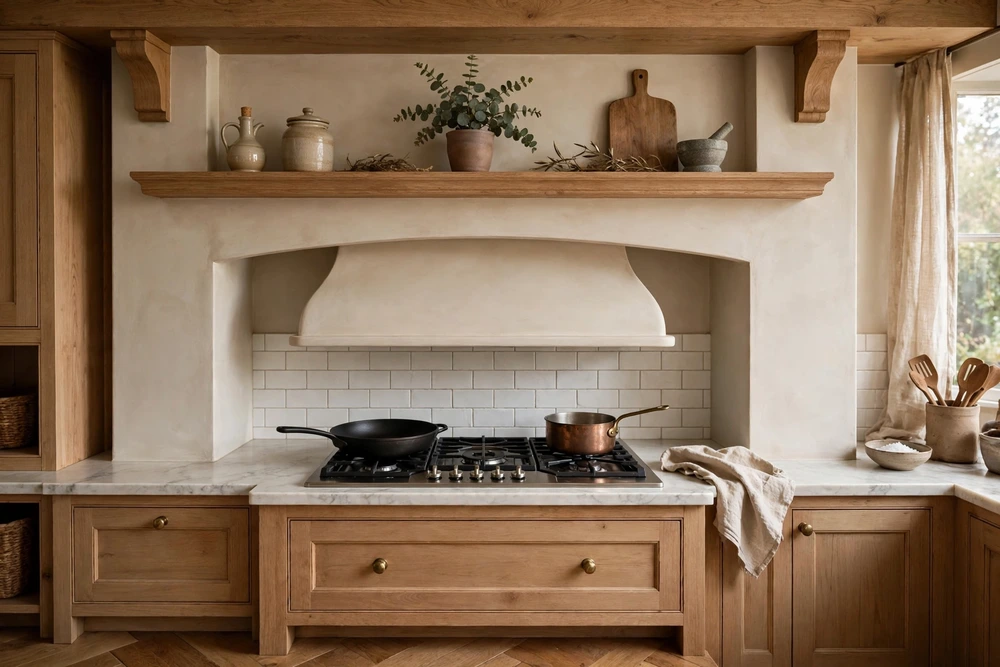
Add architectural interest by incorporating a mantel shelf on your hood. Display decorative items in traditional or cottage-style kitchens. Just ensure the shelf remains clear enough not to impact ventilation.
14. Hood Integrated into a Cabinet Wall
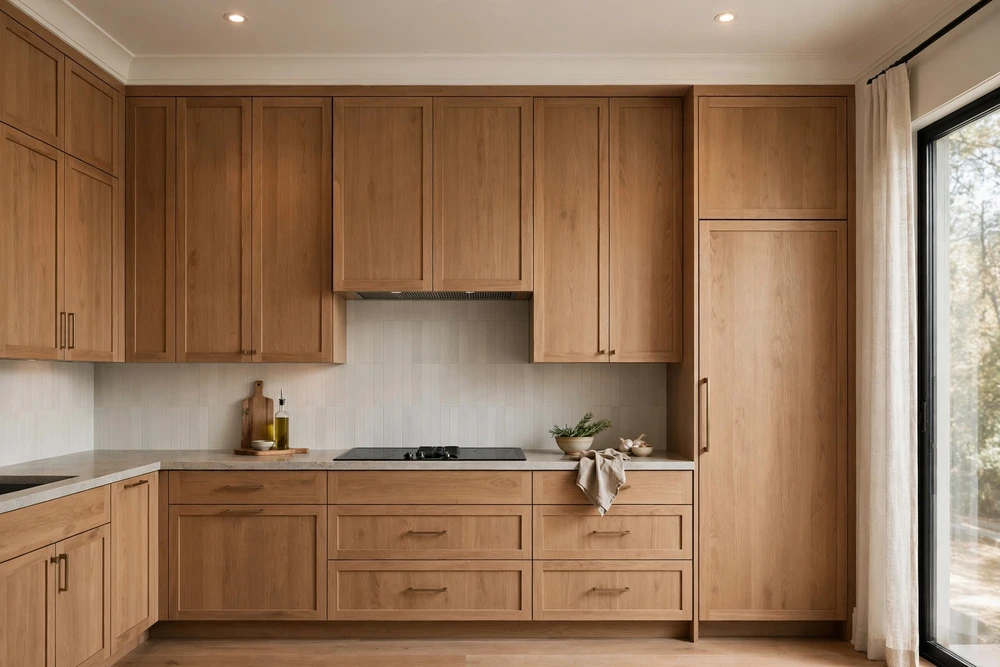
For a continuous, built-in aesthetic, integrate your hood within a cabinet wall. This design fits well in small kitchens where space is at a premium. Coordinate cabinetry and ensure proper ducting.
15. Corner Range Hood
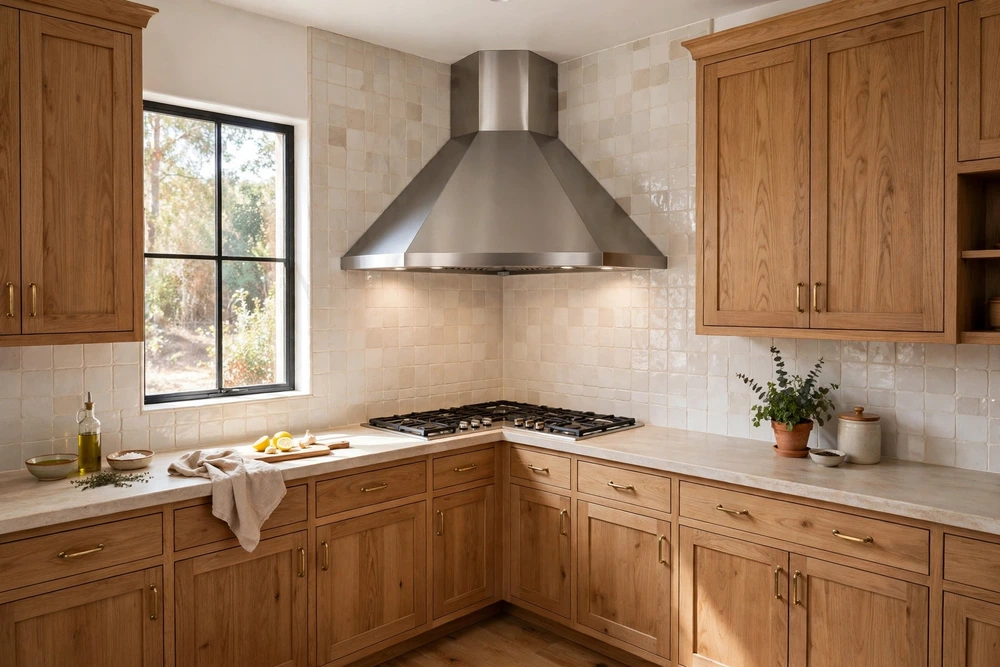
Optimize awkward kitchen layouts by installing a custom corner range hood. Suitable for various styles, it maximizes the use of space. Thorough planning is required to maintain clearances and avoid obstructions.
16. Island Canopy Hood
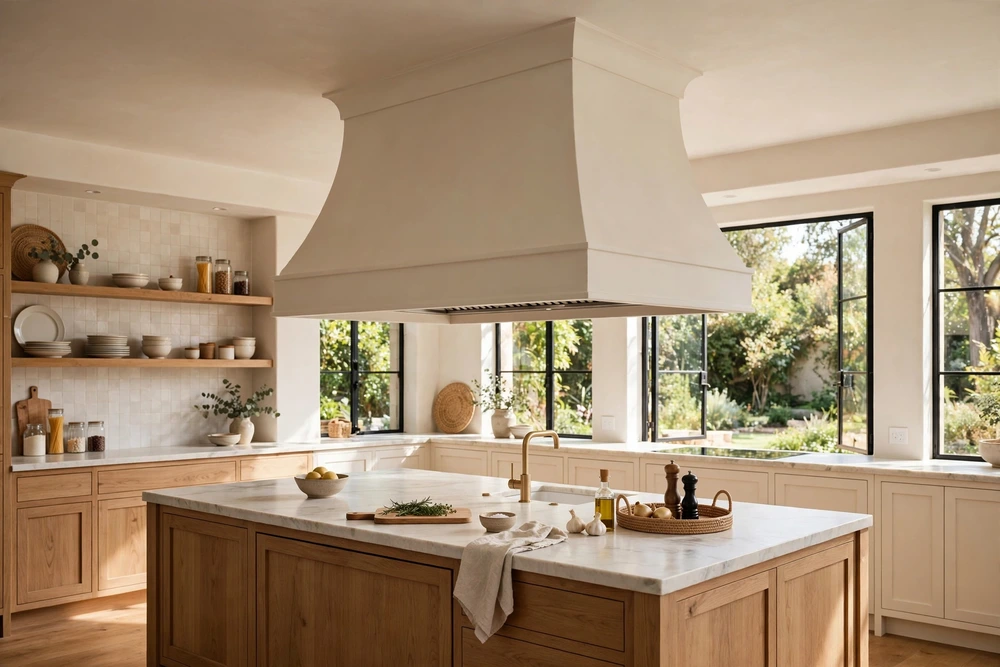
Make a statement with an island canopy hood in open layouts. Various materials and styles can create a captivating centerpiece. Careful sizing ensures efficient capture in the absence of a wall backdrop.
17. Ceiling-Mounted Island Extractor
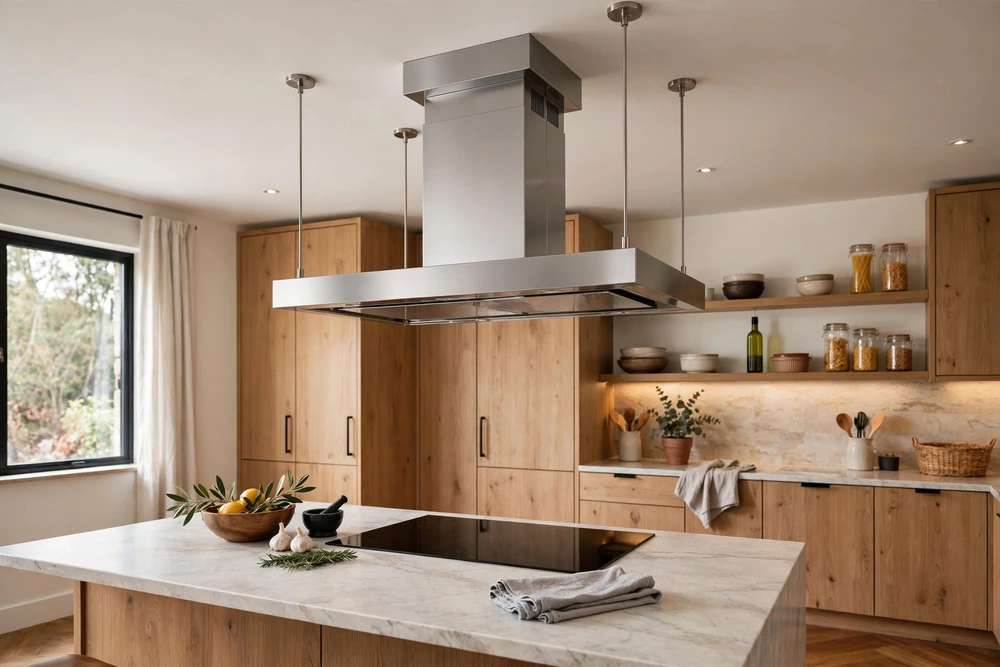
Keep sightlines uncluttered with a ceiling-mounted extractor. Ideal for minimalist kitchens, it captures emissions while disappearing into the ceiling. Matching the unit to the ceiling or choosing a contrasting color can enhance the look.
18. Downdraft Ventilation for an Open Island
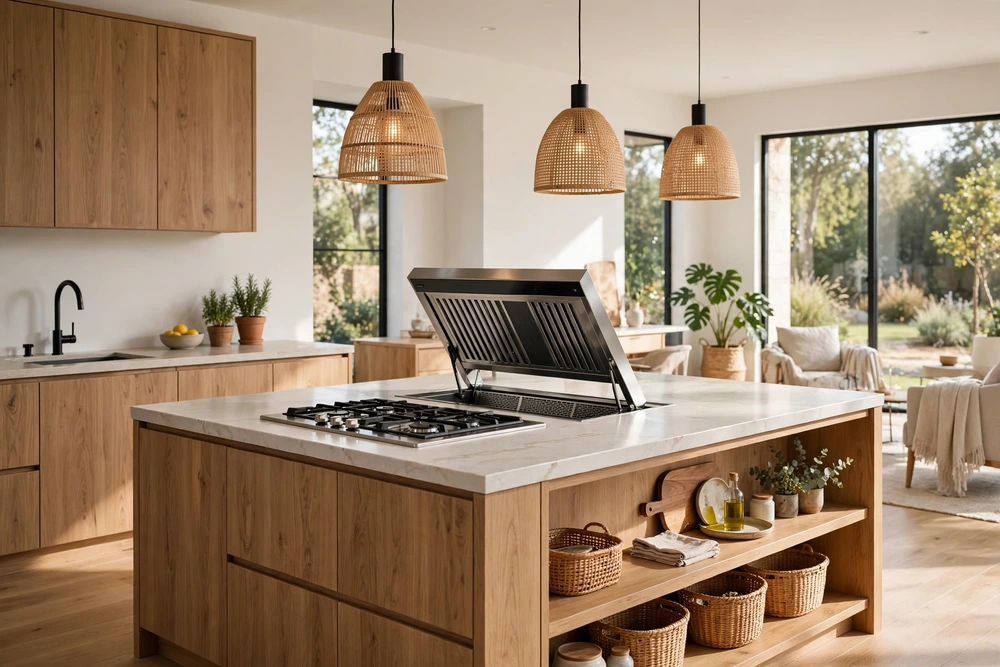
Maintain open island views with downdraft ventilation. This system is useful where overhead hoods may be obstructive. Ensure the design meets performance expectations for all cooking styles.
19. Under-Cabinet Hood
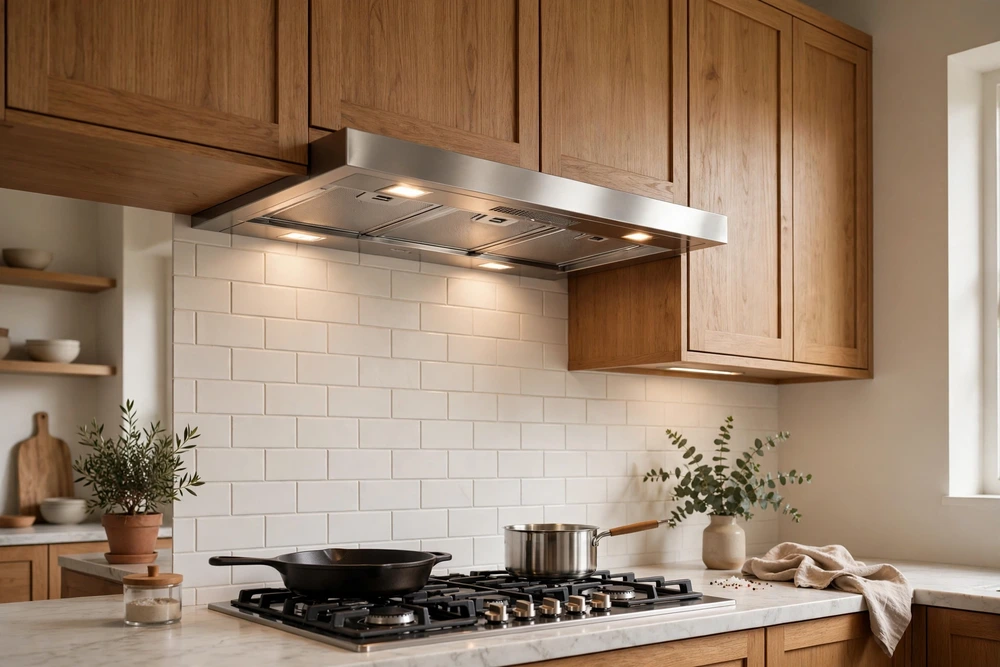
An under-cabinet hood provides a compact, functional solution in small spaces. This discreet style blends well with cabinetry, maintaining a minimalist look. Confirm that its presence doesn’t limit storage.
20. Slimline Hood for a Small Kitchen
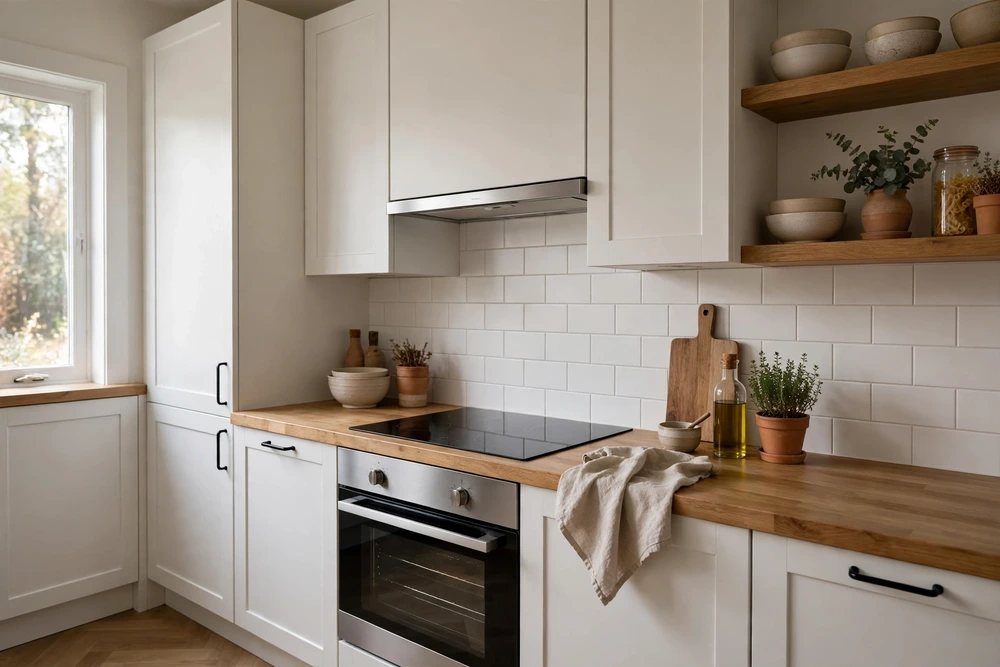
Reduce visual bulk with a slimline hood in tight spaces. Ideal for studios or narrow kitchens, select a model that meets functional capacity requirements without compromising aesthetics.
21. Chimney-Style Wall Hood
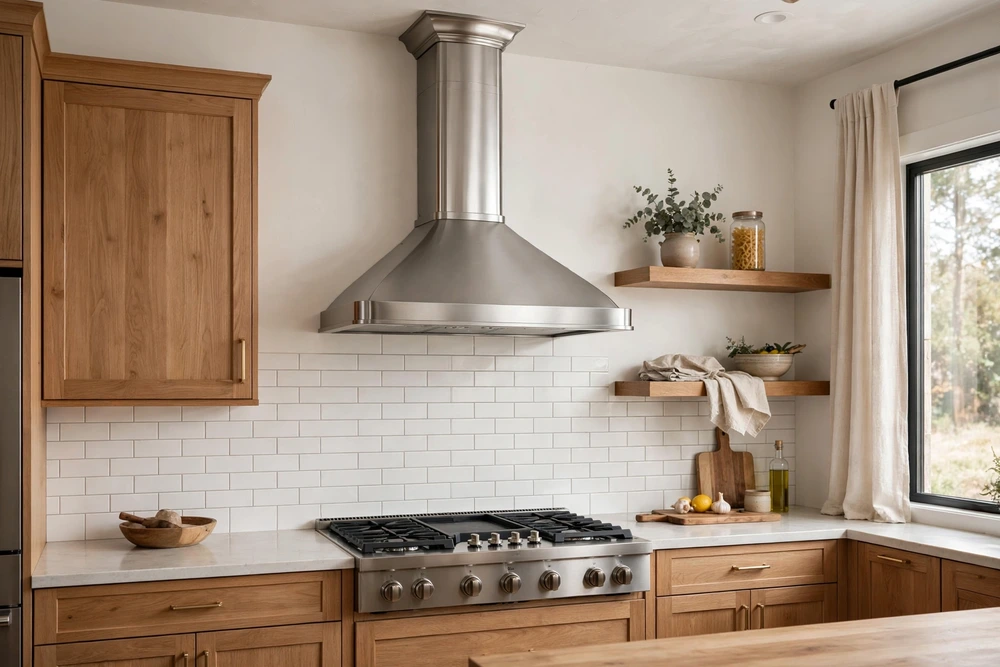
Create a vertical emphasis with a chimney-style wall hood. This design provides structure, particularly in low-ceiling kitchens, while offering a professional appearance when using stainless steel or other materials.
22. Angled Glass Hood
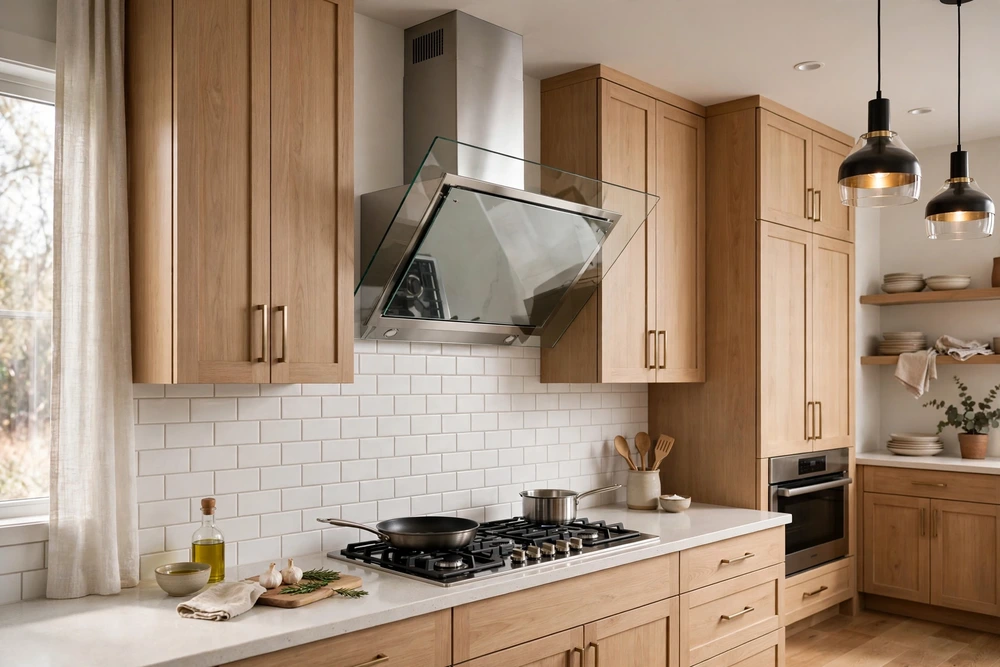
Choose an angled glass hood for improved head clearance and a modern touch. Ideal for compact, contemporary kitchens, the glass adds visual lightness while still requiring regular maintenance.
23. Curved Canopy Hood
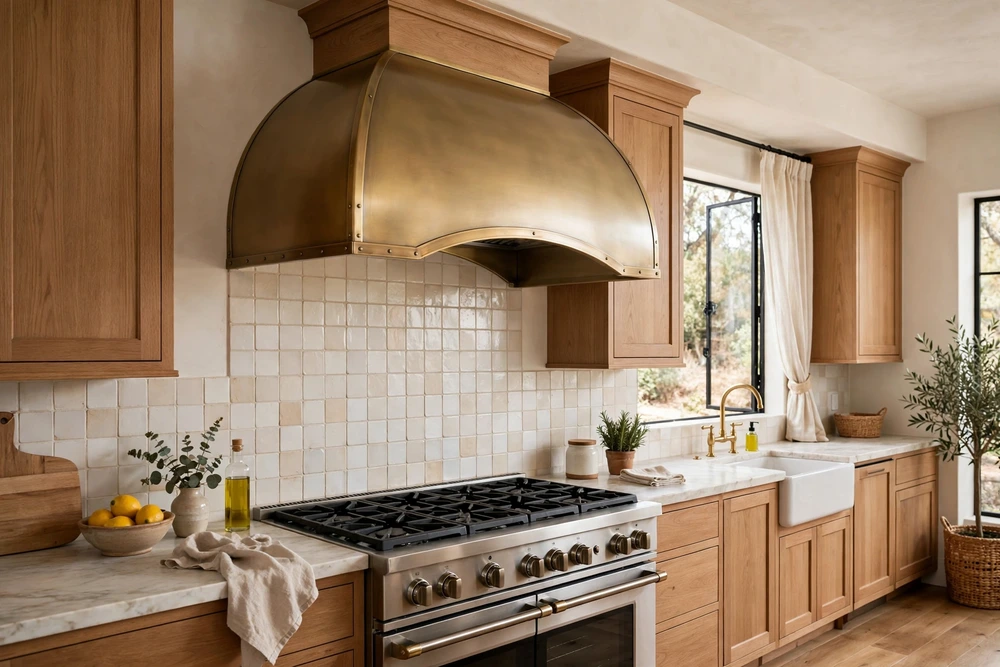
A curved canopy hood can soften harsh lines and add architectural sophistication. Suitable for both contemporary and classic kitchens, curves bring gentle elegance above the range.
24. Geometric Faceted Hood
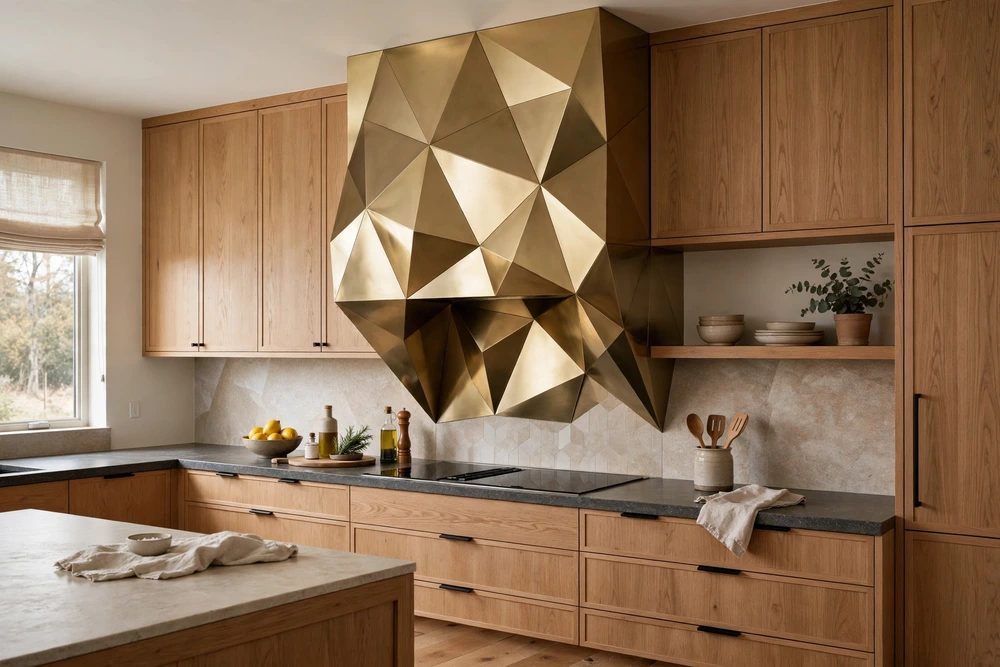
Make a bold statement with a geometric faceted hood. Best for modern or eclectic styles, these designs use simple shapes to create a focal point. Easy-to-clean surfaces are recommended.
25. Brick-Lined Hood Surround
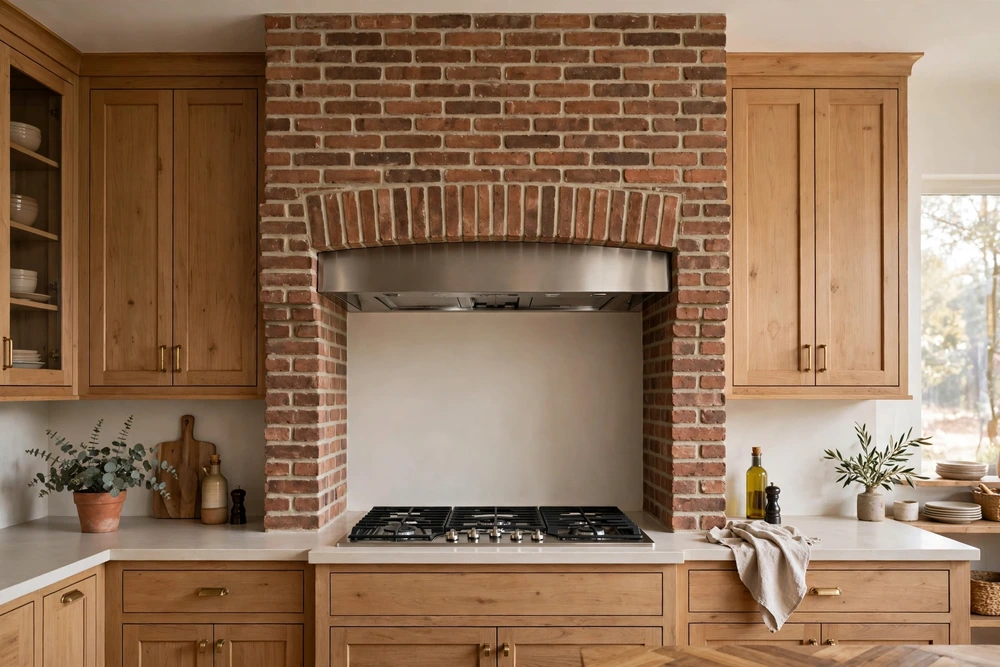
Introduce texture and historical charm with a brick-lined hood surround. Suitable for rustic or industrial settings, sealing the surface ensures easier maintenance.
26. Zellige-Tile Hood
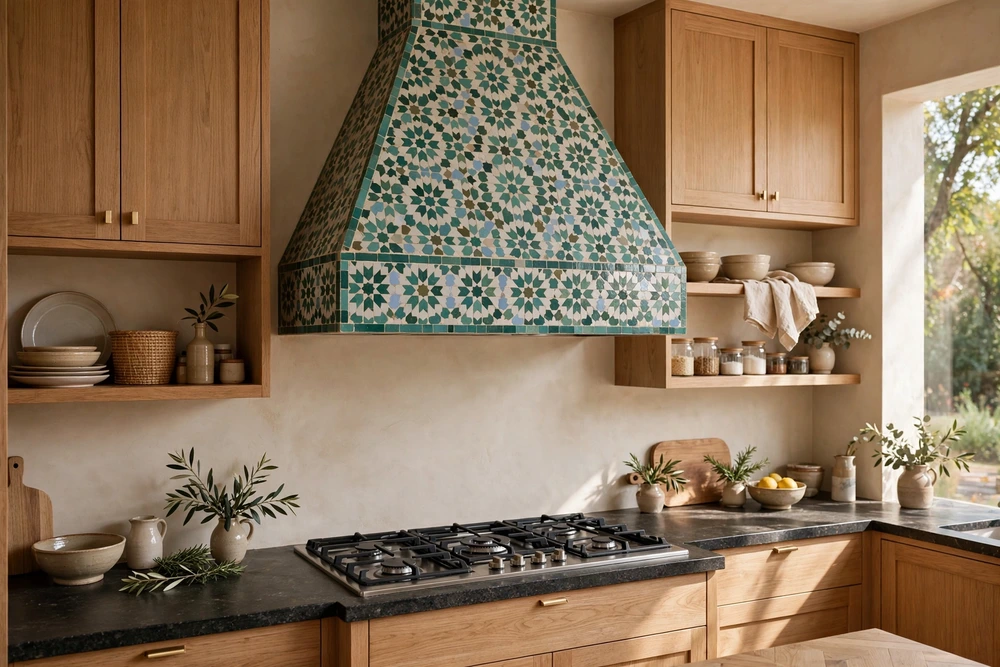
A Zellige-tile hood adds charm through its handmade look and varied hues, perfect for Moroccan or Mediterranean-style kitchens. Choose grout that withstands kitchen conditions.
27. Patterned Tile Hood Niche
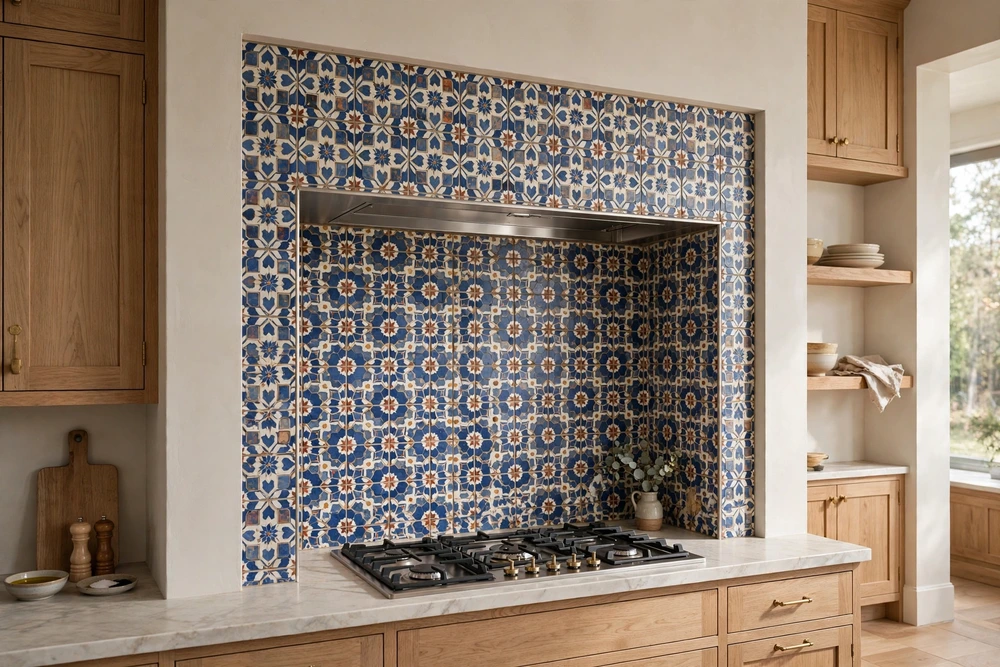
Highlight the hood area with a patterned tile niche. This creates a dynamic focal point without overwhelming the overall backsplash continuity.
28. Slab Backsplash Rising into the Hood
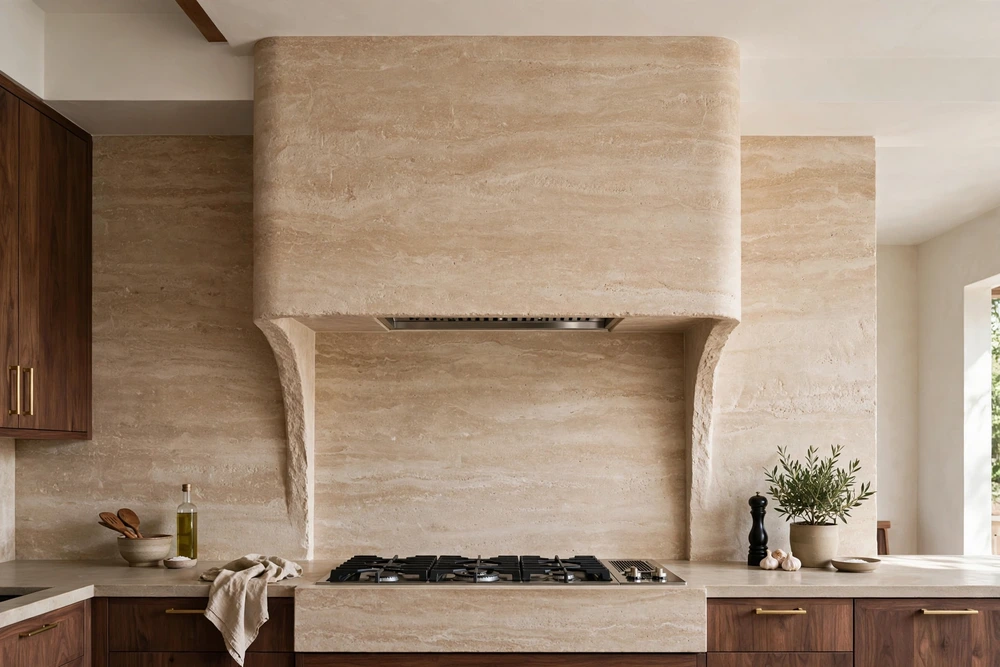
Create a seamless look with a slab backsplash flowing into the hood. Popular in contemporary designs, this style uses materials like marble or quartzite to elevate decor.
29. Hood Framed by Open Shelves
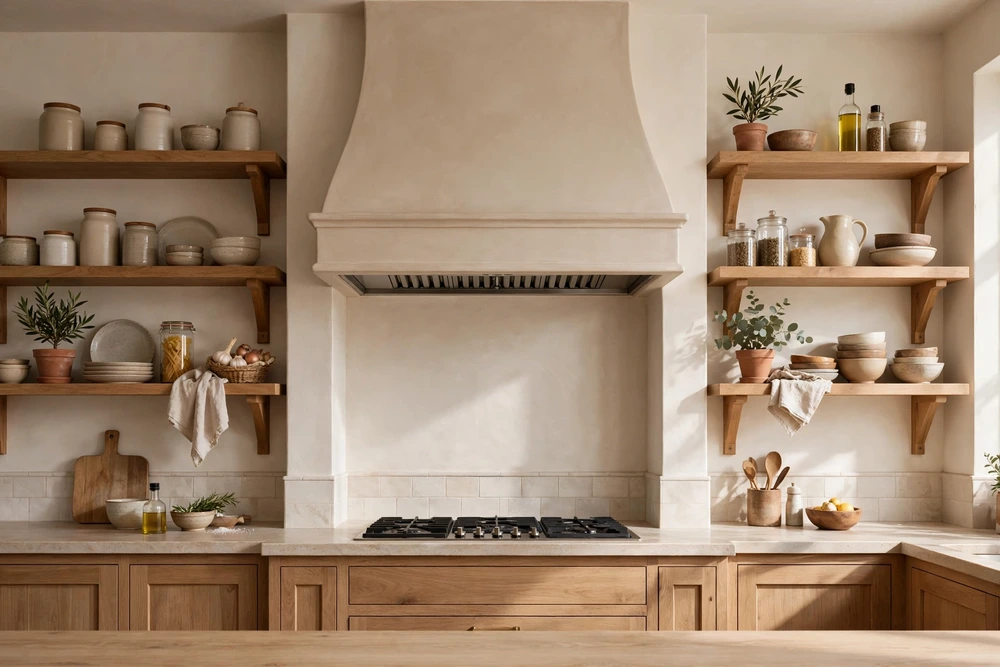
Add symmetry and storage by framing your hood with open shelves. This feature enhances the farmhouse or transitional aesthetic while allowing display of grease-resistant items.
30. Hood Flanked by Glass-Front Cabinets
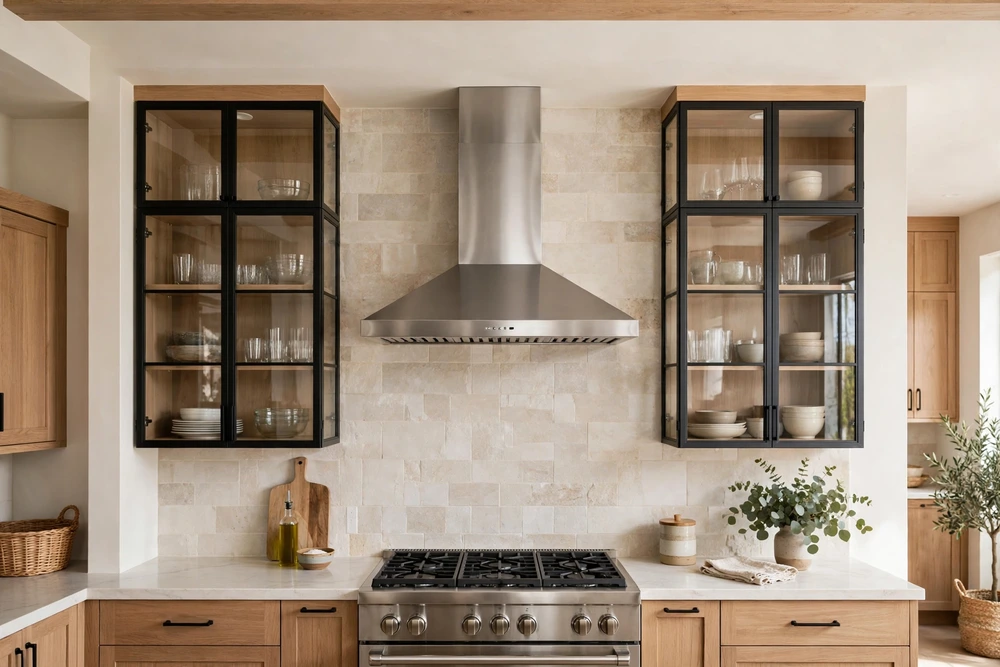
Lighten the kitchen’s visual weight with glass-front cabinets beside your hood. Select materials like reeded or antique glass for a touch of elegance.
31. Hood with Integrated Task Lighting
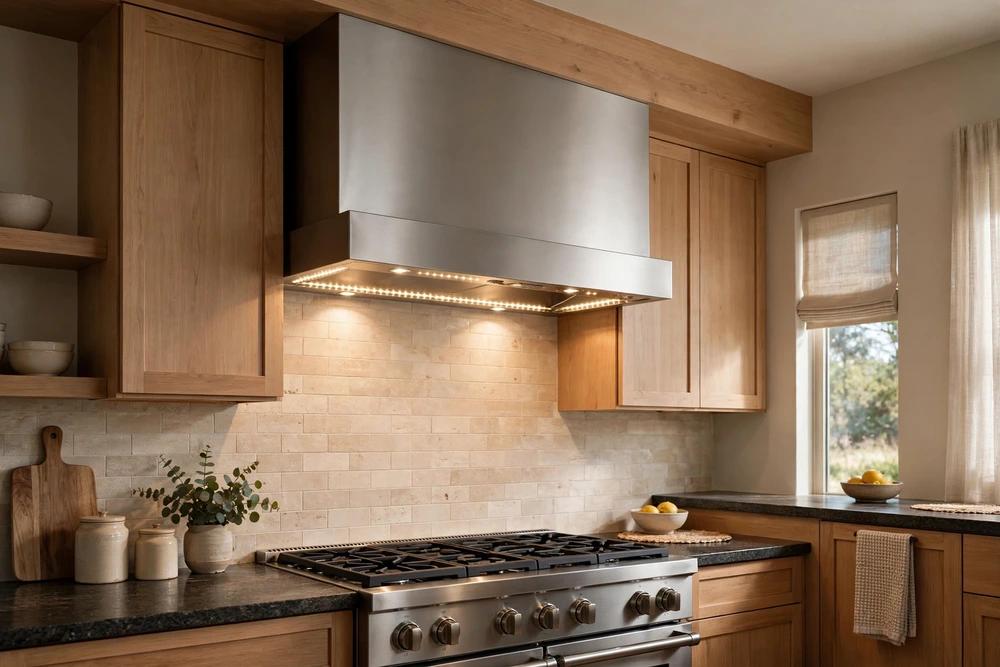
Incorporate built-in task lighting within the hood design for improved cooking visibility. LED strips or metal shades offer both functionality and style.
32. Quiet Hood for an Open-Plan Home
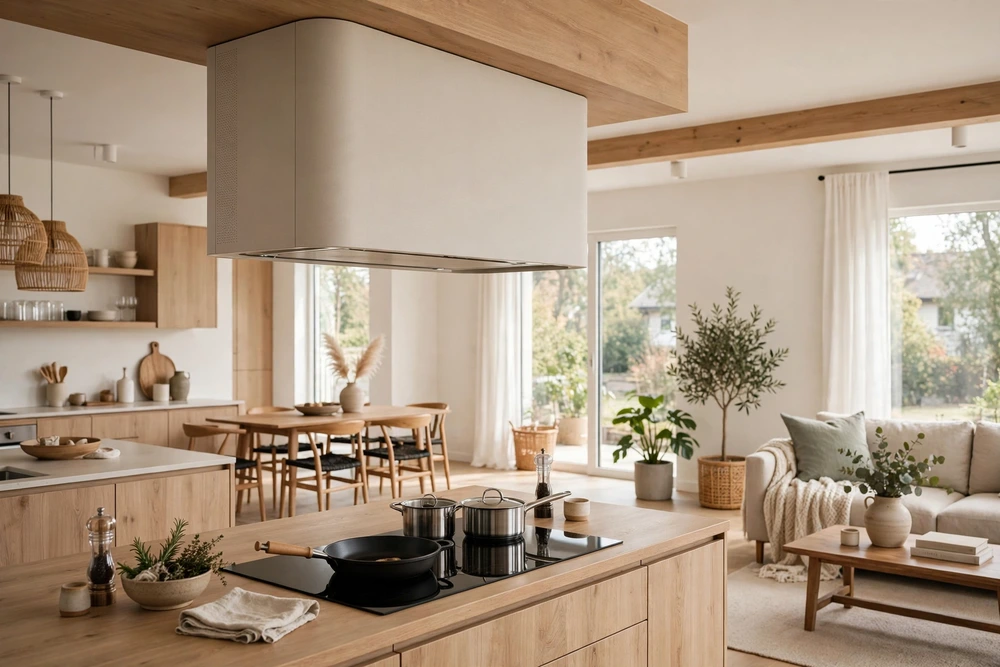
Prioritize a quiet hood operation in open-plan spaces. Sound-reducing technologies and thoughtful design choices enhance shared living environments.
33. Remote Blower Hood
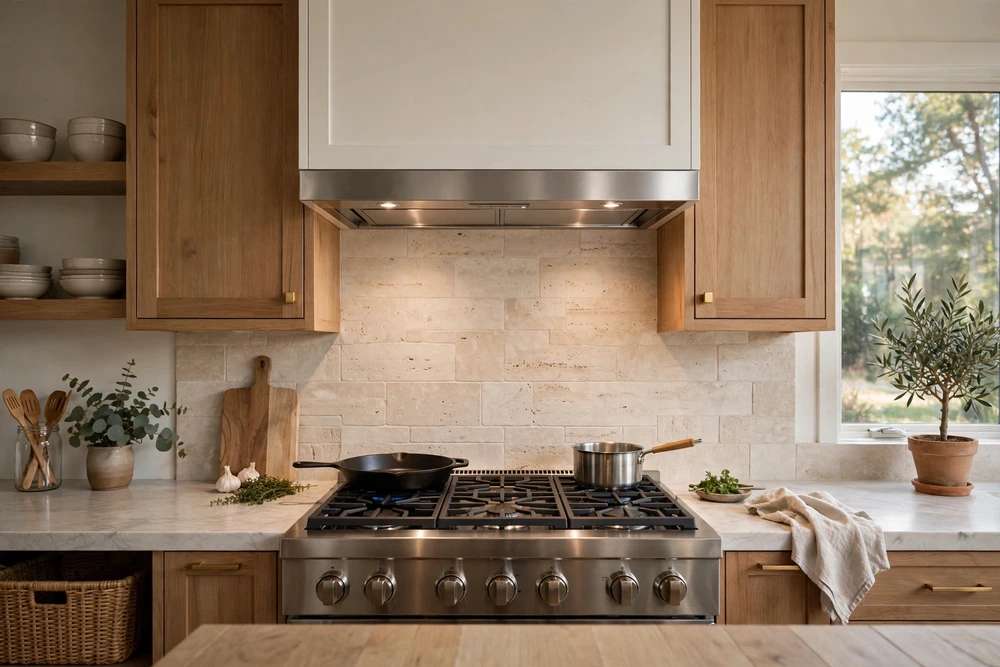
Move the blower component to a remote location, reducing noise at the cooking surface while preserving a clean design.
34. Hood with Side Panels or Capture Shields
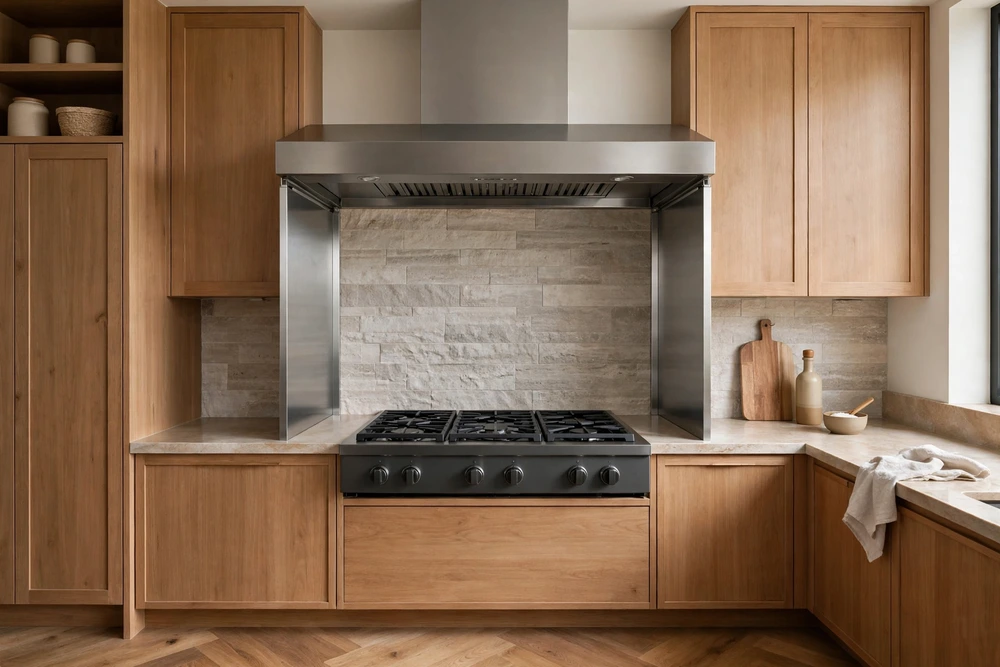
Side panels on the hood help contain emissions, especially in open or high-ceiling kitchens. They should complement the hood’s form without feeling intrusive.
35. Extra-Wide Hood for a Large Range
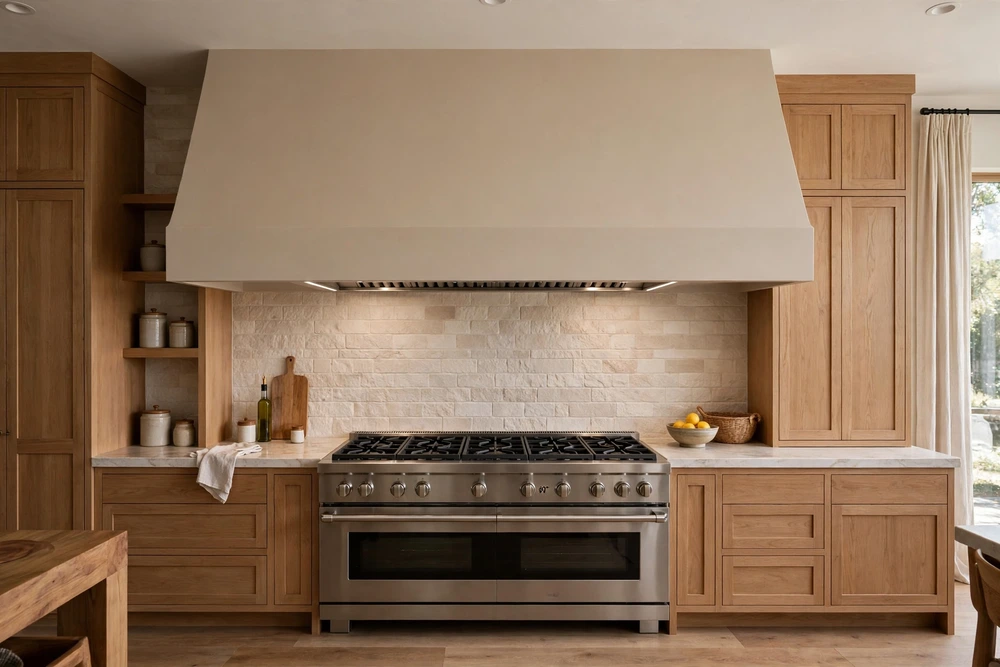
Balance a large range with an extra-wide hood. This option offers visual stability and improved capture while enhancing the kitchen’s aesthetics.
36. Low-Profile Custom Hood over a Compact Range
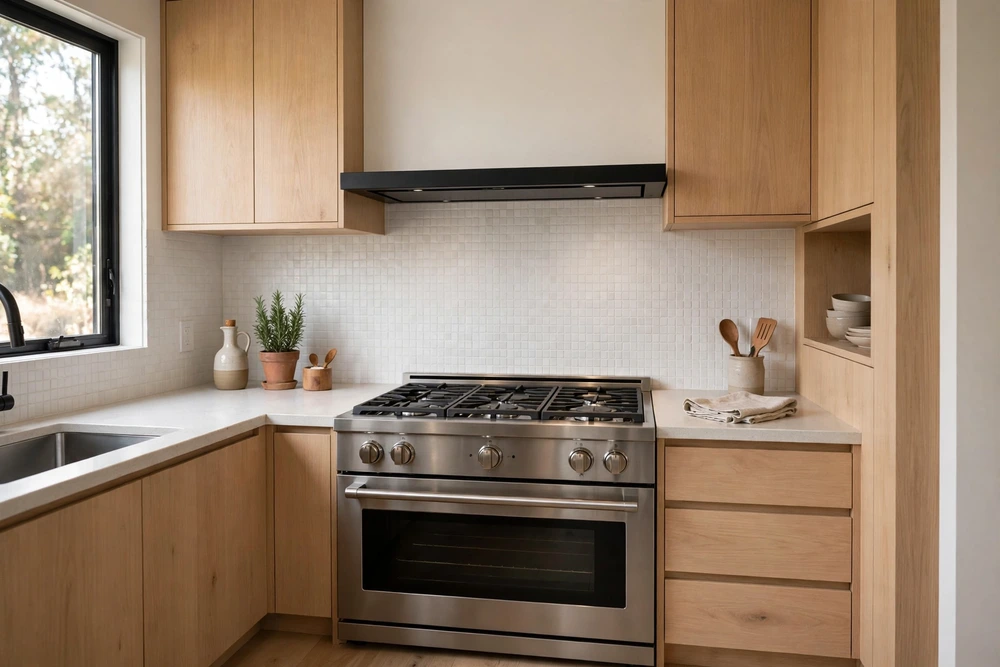
Maintain function and form with a low-profile hood in small kitchens. This approach balances unobtrusiveness with effective performance.
37. Hood Centered Beneath a Ceiling Beam
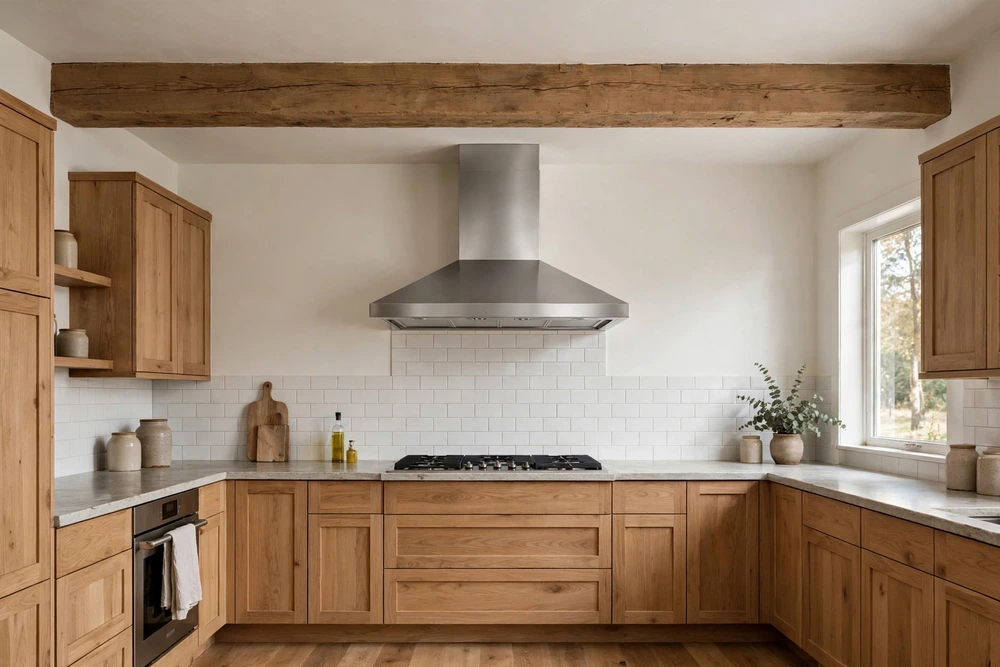
Integrate the hood design with ceiling beams for a cohesive look in rustic or modern farmhouse kitchens. Ductwork planning is essential for this style.
38. Hood Aligned with a Window
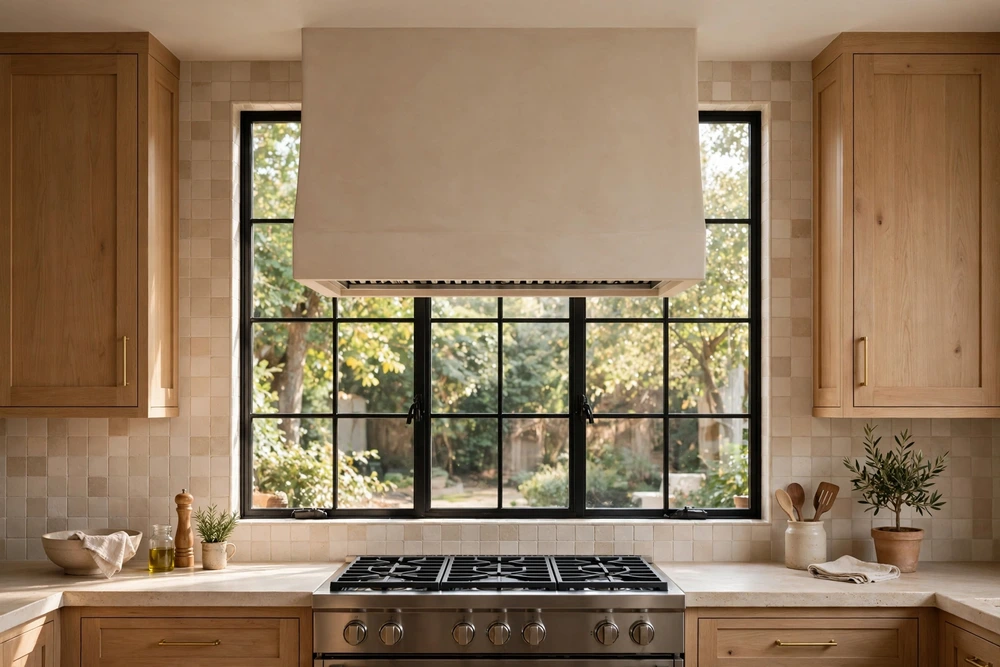
Position the hood near a window for views and natural light. This alignment balances aesthetics with functional requirements.
39. Hood as a Dark Anchor in a Pale Kitchen
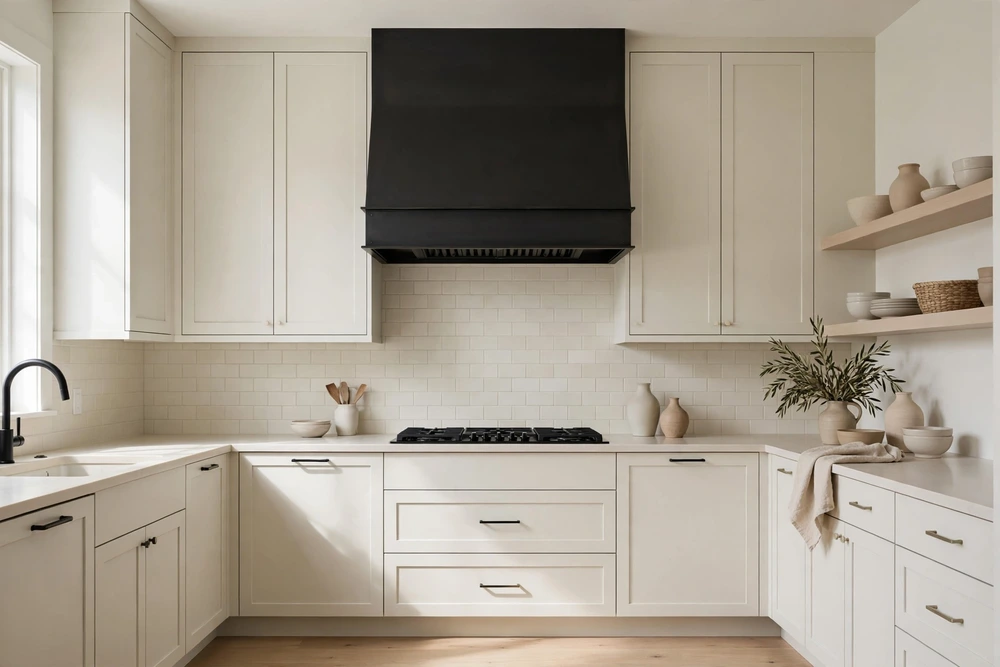
Introduce contrast by using a dark hood in a light kitchen setting. Pair with similar accents to create a cohesive and intentional design.
40. Hood as a Warm Focal Point in a Cool Kitchen
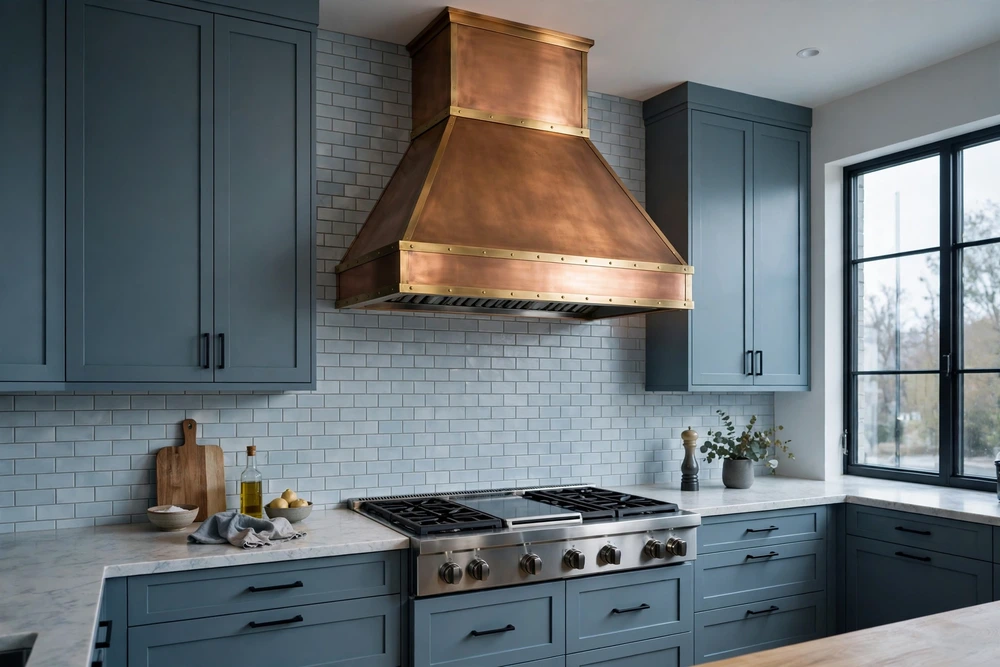
Soften a cool color palette with a warm material hood like wood or copper. This creates harmony by balancing cool and warm tones throughout the room.
41. Two-Tone Hood with Contrasting Underside
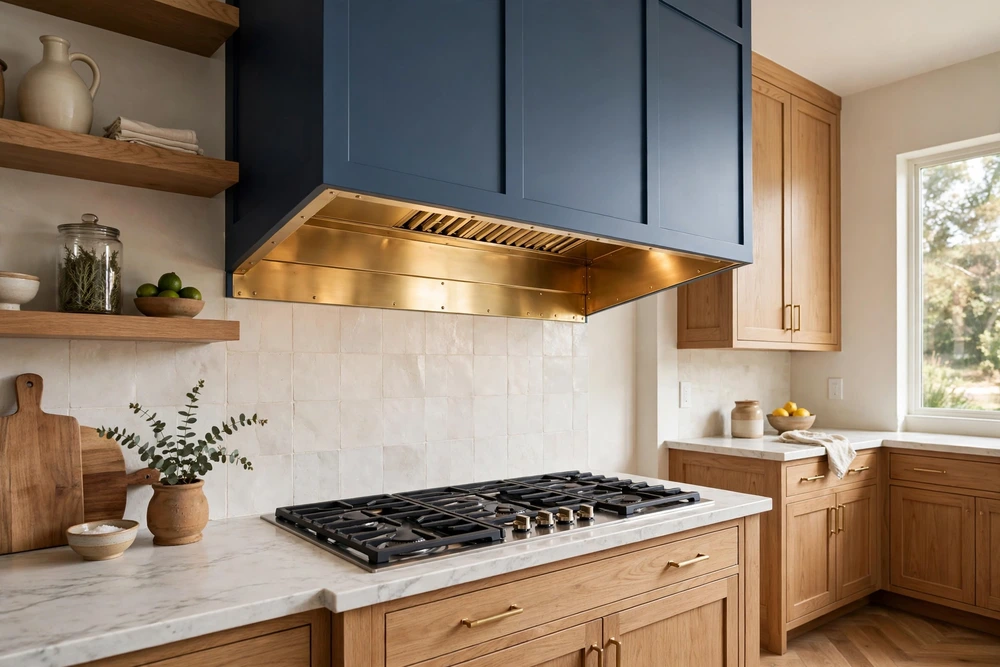
Add interest by designing a two-tone hood with a contrasting underside. This layered detail connects cabinetry and hardware elements subtly.
42. Hood with a Tiled Lower Band
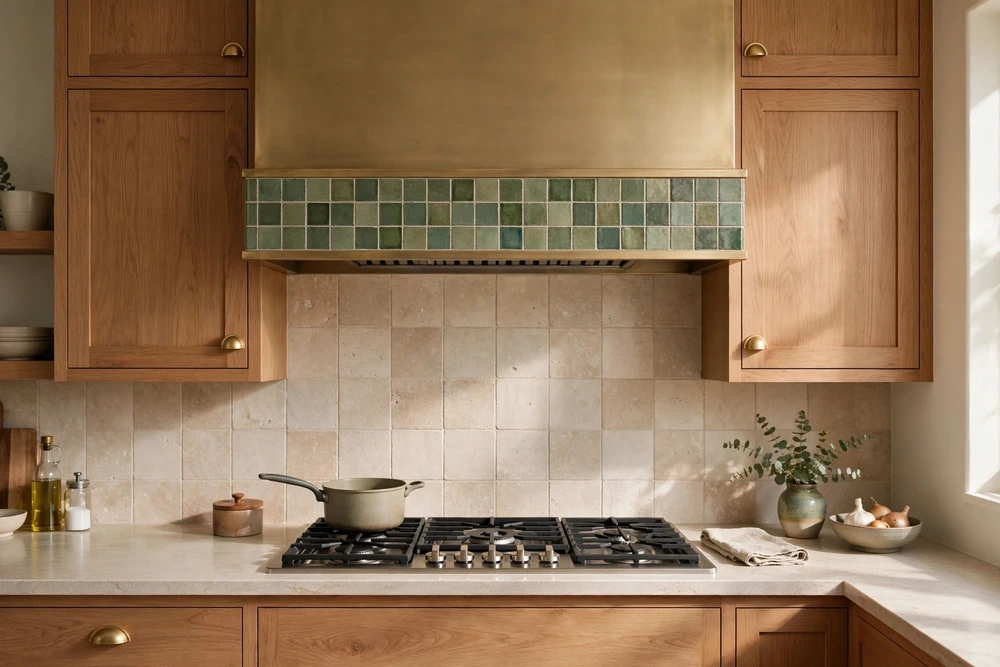
Enhance your hood with a decorative, tiled lower band that ties into your backsplash design. Choose simple, easy-to-clean tiles for this detail.
43. Seamless Ceiling-to-Hood Transition
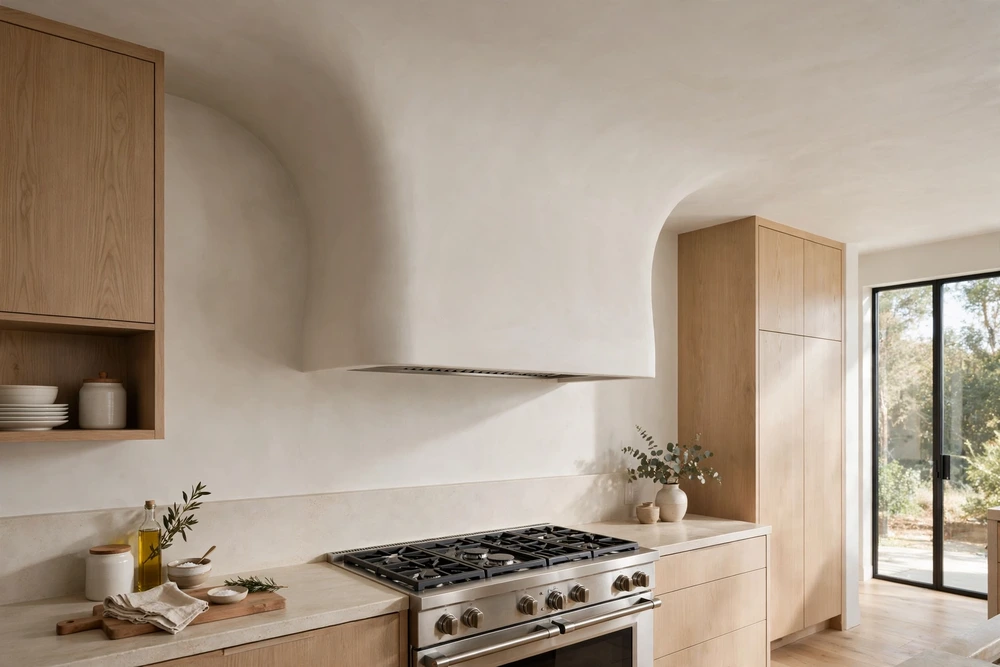
Create an expansive effect with a full-height hood surround. This approach eliminates gaps, giving a refined architectural appearance.
44. Hood Hidden Behind a Lift-Up Cabinet Front
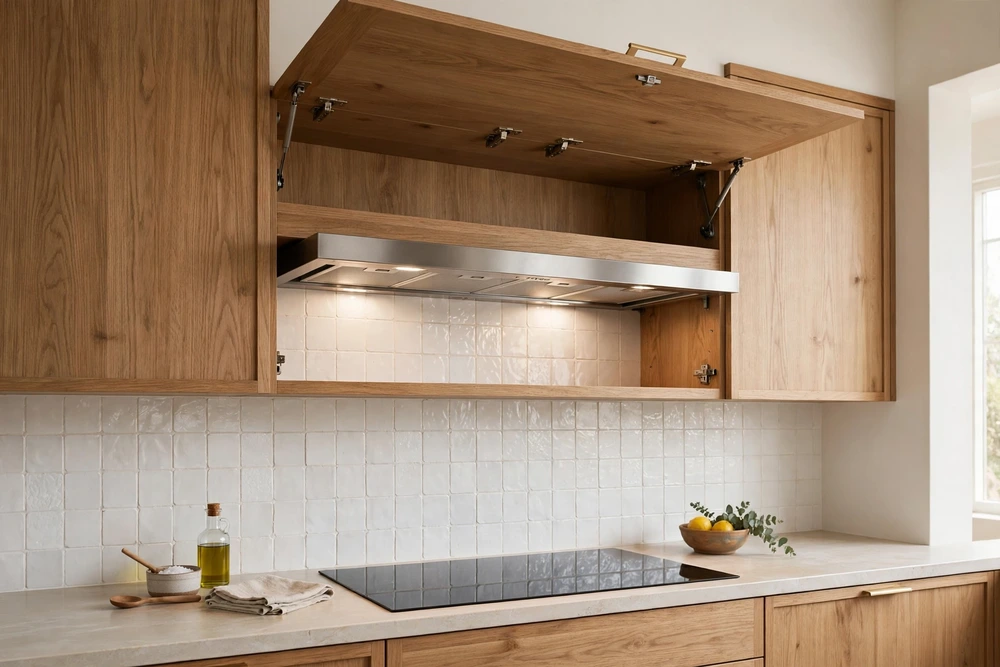
Conceal the hood with a lift-up cabinet door when not in use, ideal for small or open-plan spaces seeking clean lines.
45. Built-In Hood over a Range in a Pantry Kitchen
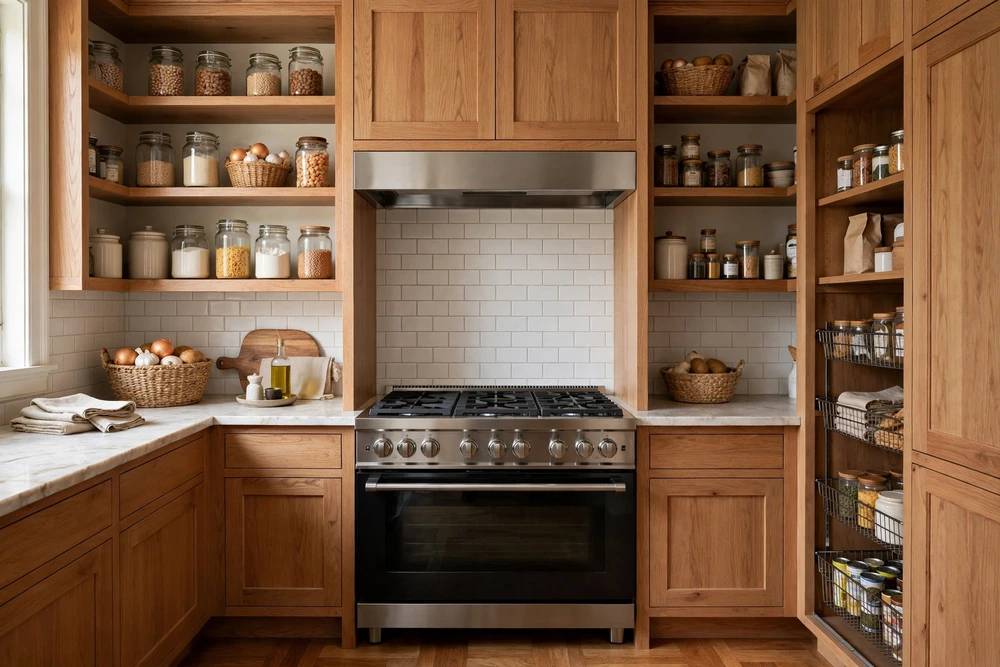
Use a practical, hidden hood in utility-focused pantry kitchens. Simplicity and effectiveness should take precedence over design flourishes.
46. Hood with Concealed Duct Chase in a Wall

Hide ducting within a wall chase for a clean finish in minimalist kitchens. Ensure access for maintenance and installation.
47. Exposed Duct Hood
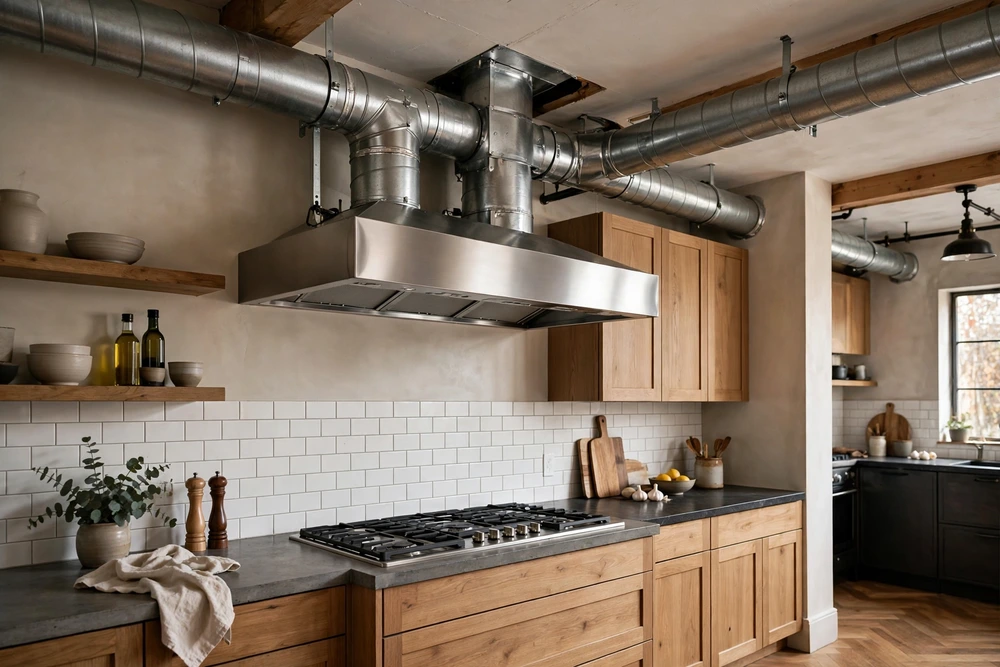
Make the ductwork a design feature in industrial or loft kitchens. Opt for finished metals like stainless steel or copper for an intentional look.
48. Hood with Integrated Warming Shelf
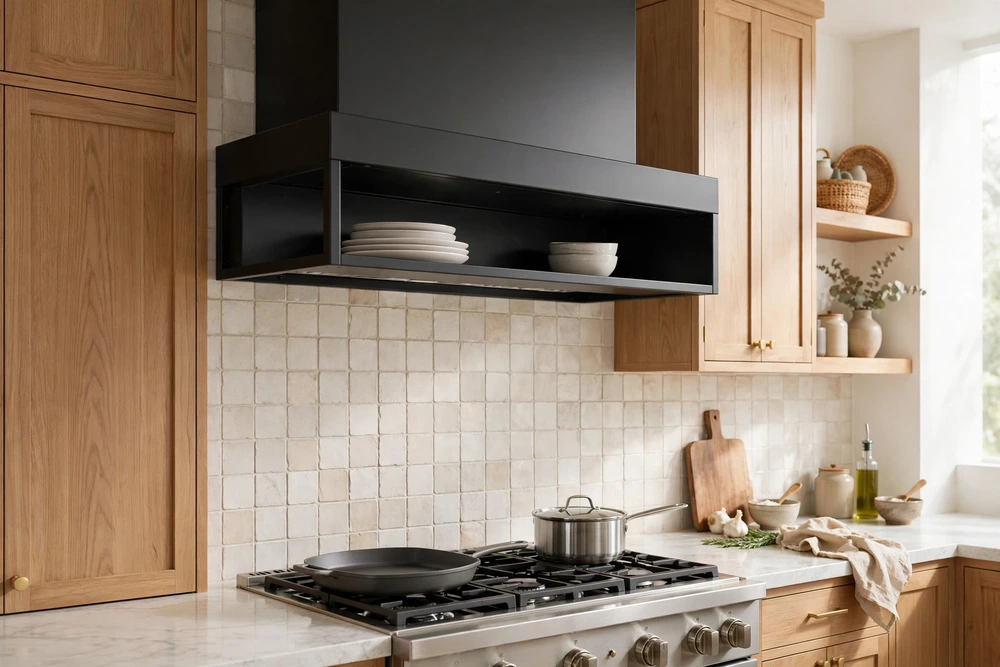
Add functionality with an integrated warming shelf in farmhouse or professional kitchens. This keeps essentials within reach but should be grease-free.
49. Hood Coordinated with the Island
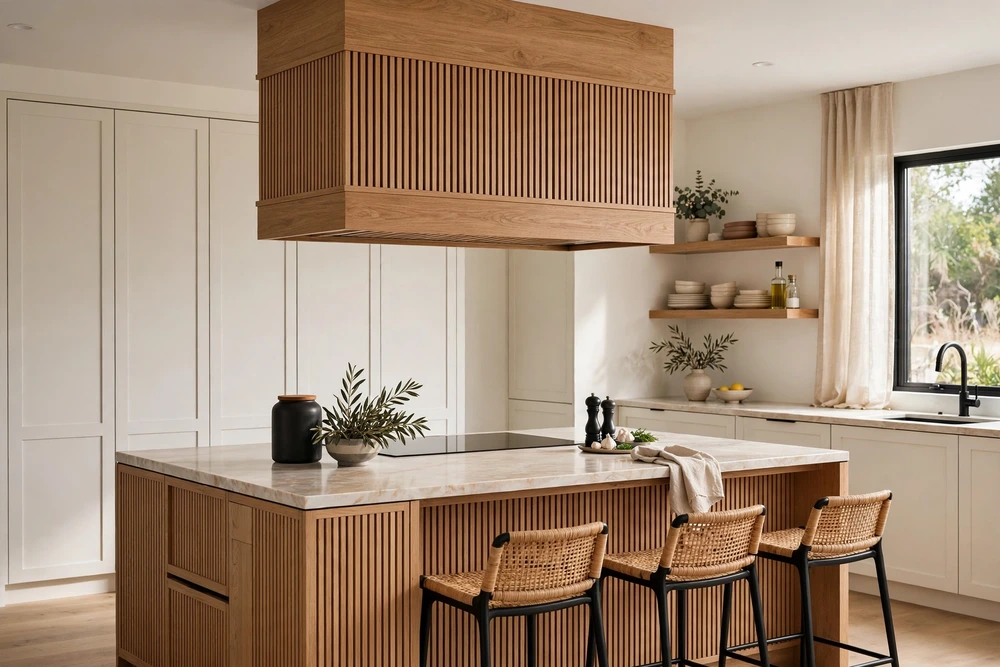
Create a cohesive look by matching hood and island materials or colors. This repetition connects key elements without overpowering the design.
50. Hood Paired with a Concealed Microwave

In small kitchens, conceal the microwave to maintain focus on a dedicated hood. This setup optimizes both space and aesthetics.
51. Hood with a Concealed Control Panel
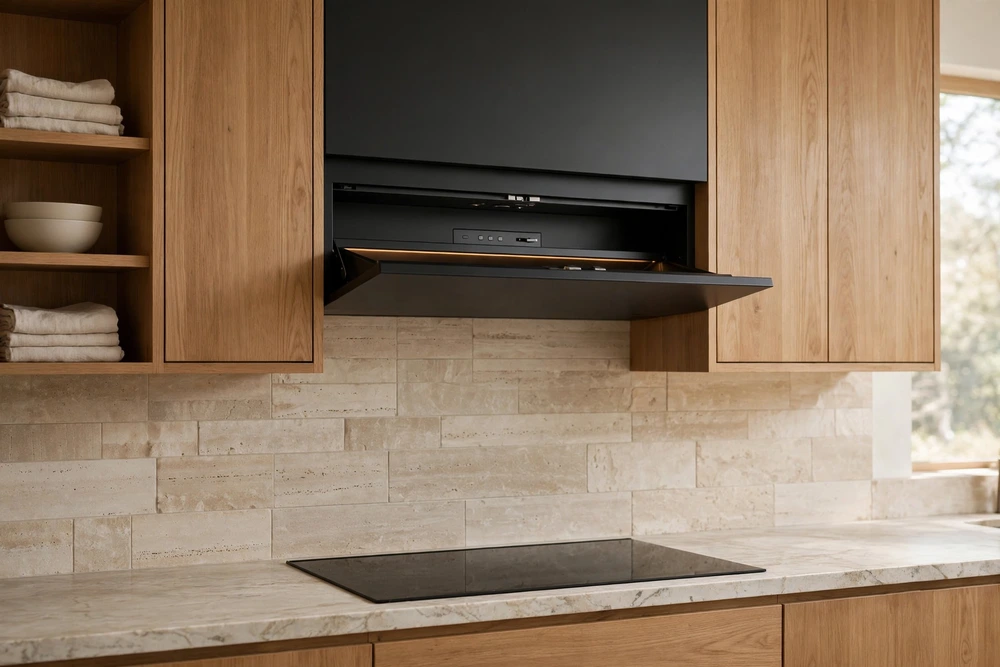
Preserve a sleek design by hiding the control panel within the hood. Accessibility remains key for user-friendly operation.
52. Hood with a Visible Filter Pattern
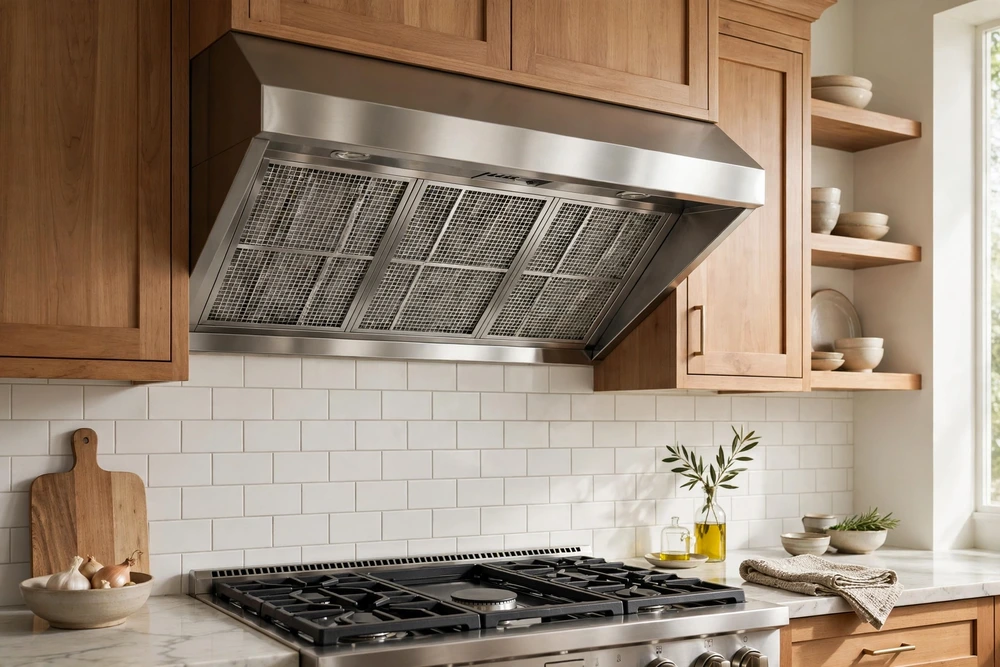
Highlight functional elements like filters as part of the design in industrial or modern kitchens. Regular cleaning ensures they remain an attractive feature.
53. Hood Designed Around an Induction Cooktop
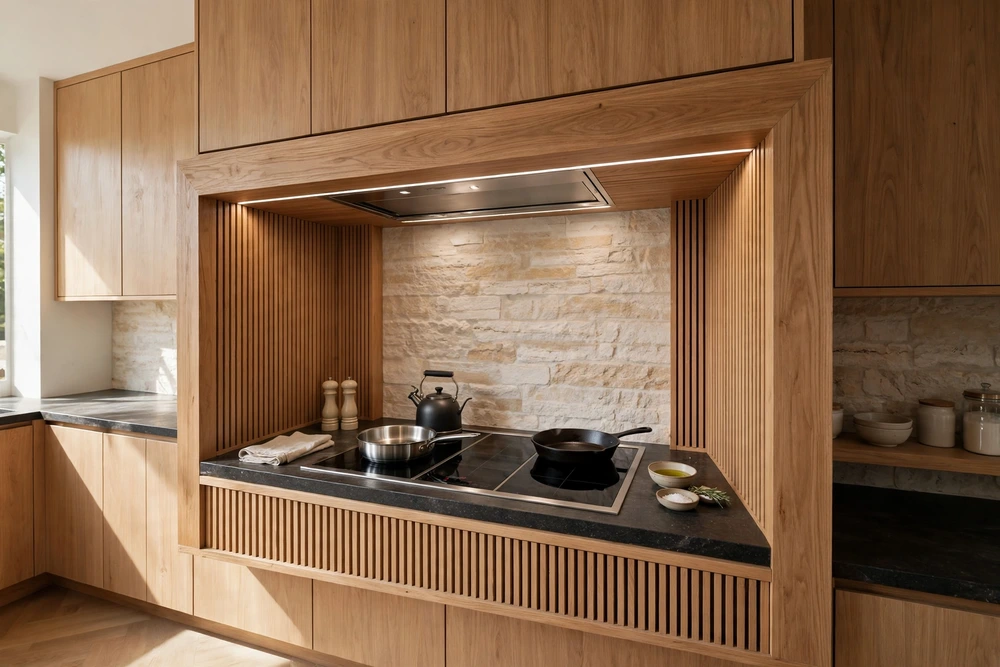
Choose a hood to complement induction cooktops that match the style and ensure efficient venting of steam and odors.
54. Hood Designed Around a Gas Range
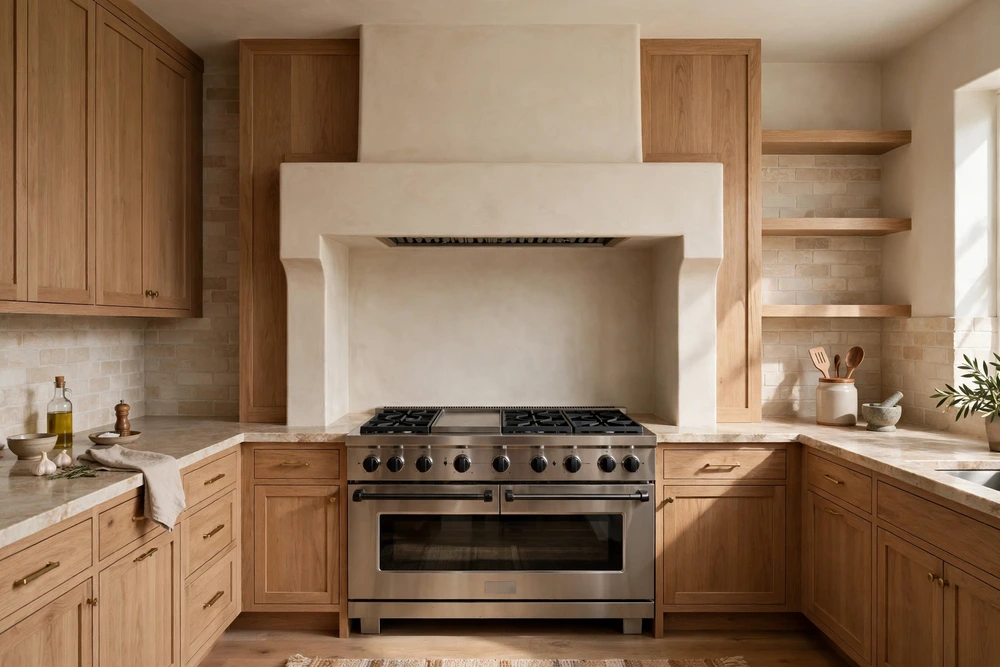
Ensure adequate ventilation with a properly designed hood for gas ranges, prioritizing safe exhaust of combustion products.
55. Makeup-Air-Conscious Hood Design
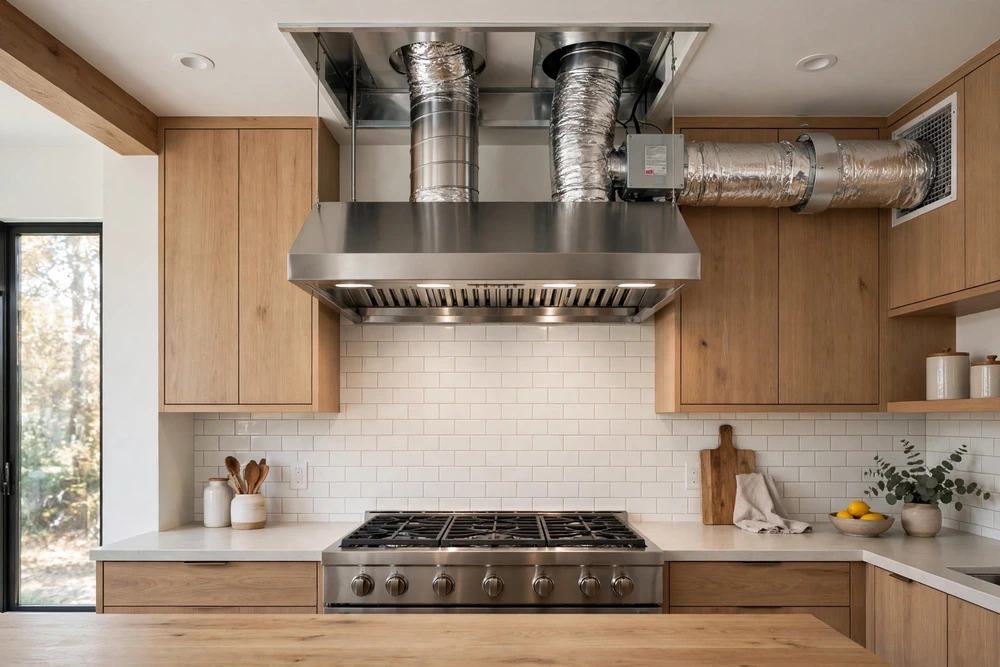
Integrate makeup air systems for high-capacity hoods in sealed homes. Consult on air requirements to balance pressure effectively.
56. Hood Planned for a Tightly Sealed or Low-Energy Home
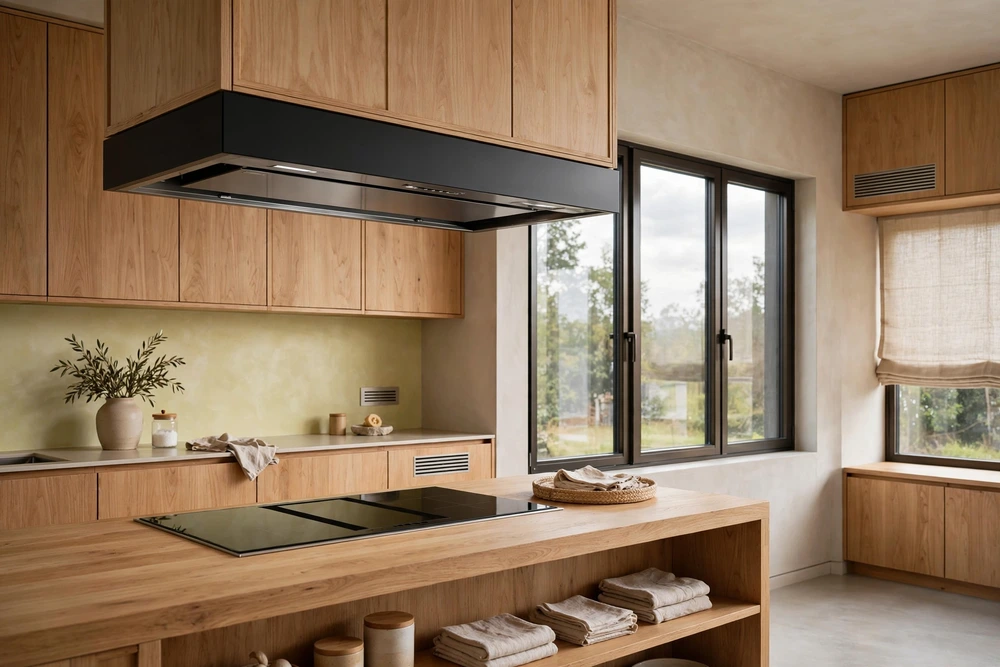
Select high-efficiency hoods for low-energy homes, considering balance and duct design. Test systems early in the build process for optimal results.
57. Hood with a Short, Direct Duct Route
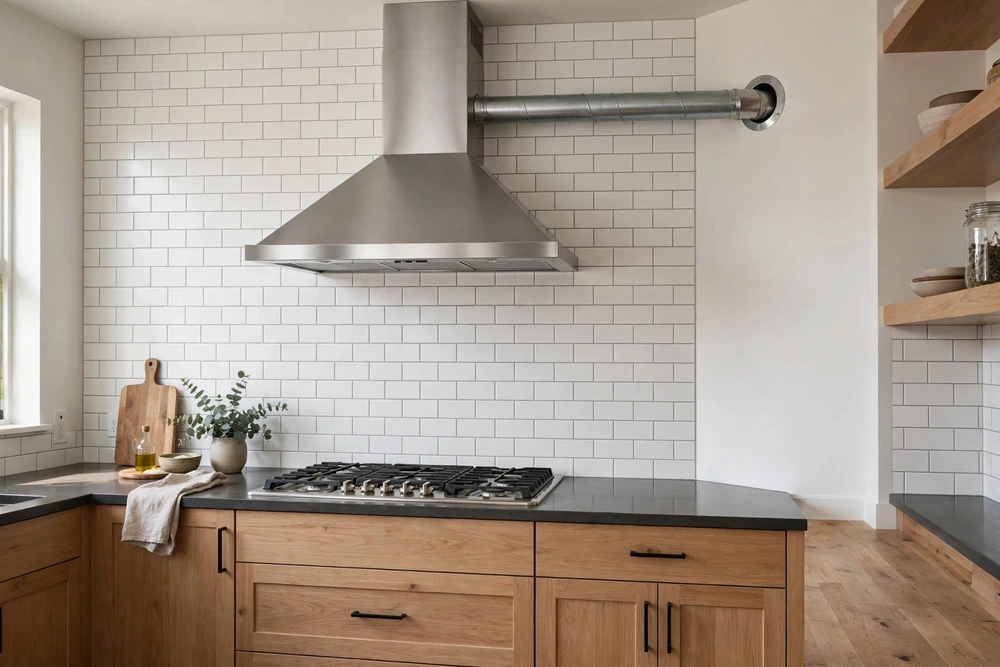
Optimize venting with a short, direct duct route to enhance ventilation performance. Prioritize simplicity and efficiency in layout planning.
Conclusion
With these creative kitchen hood ideas, you can transform your cooking space into a stylish and functional area. By selecting the right design, you combine beauty and efficiency, making your kitchen a joy both to cook in and to admire.
