

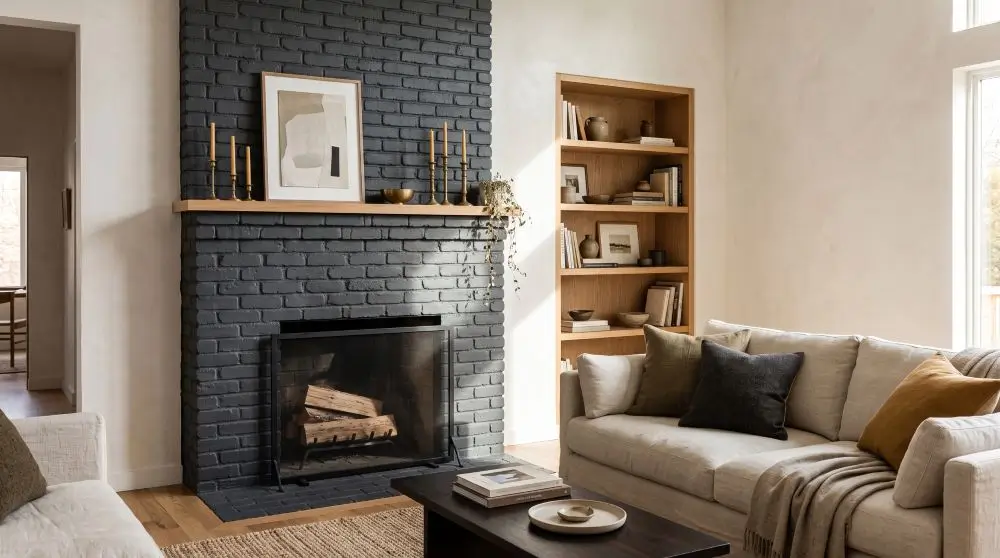
An old brick fireplace can make a room feel dated, especially when its red and orange tones clash with the rest of the decor. If you’re looking for painted brick fireplace ideas, a fresh coat of paint can change the look without replacing the original brick. From soft neutrals to bold colors and decorative finishes, there are plenty of ways to give your fireplace a fresh new style.
The right choice depends on your room, the condition of the brick, and how much of its original texture you want to keep. These 43 painted brick fireplace ideas cover simple color updates, creative finishes, and designs for different interior styles. You’ll also find a practical DIY guide, paint recommendations, and budget tips to help you plan your project.
43 Painted Brick Fireplace Ideas
1. Crisp White Brick with Black Accents
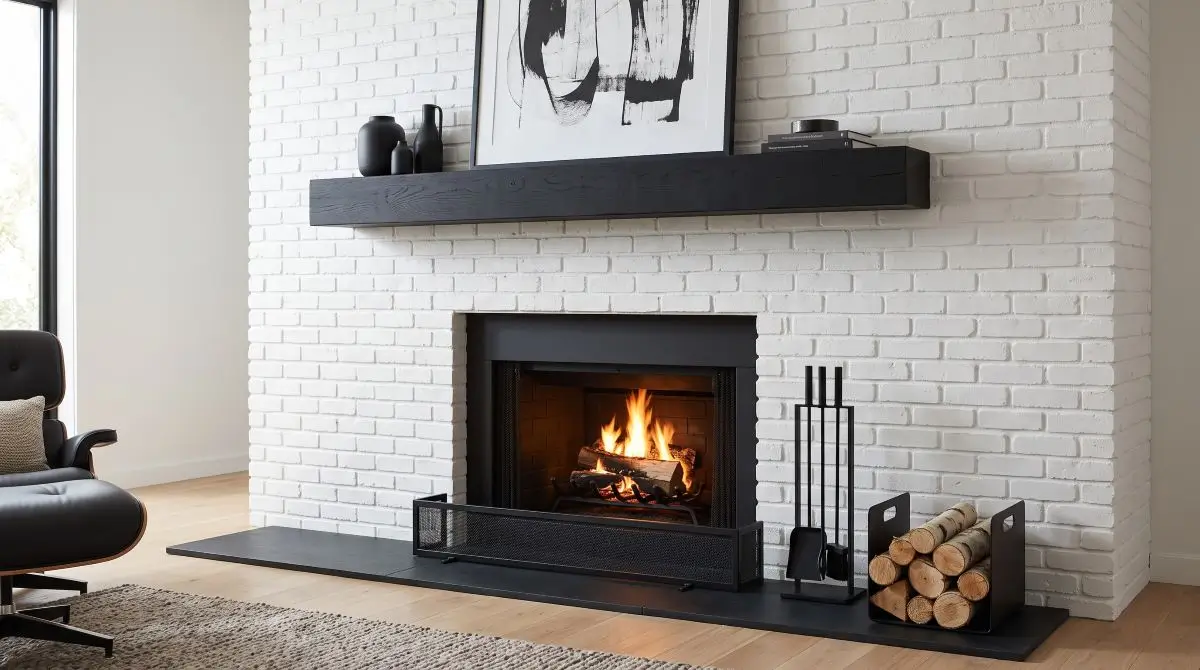
Bright white paint across the brick and mortar gives the fireplace a clean, gallery-like finish and lifts a dark or crowded room. The key feature here is contrast: black picture frames, a slim metal fire screen, and dark window trim keep the all-white palette from looking flat.
2. Cream Brick with Layered Textiles
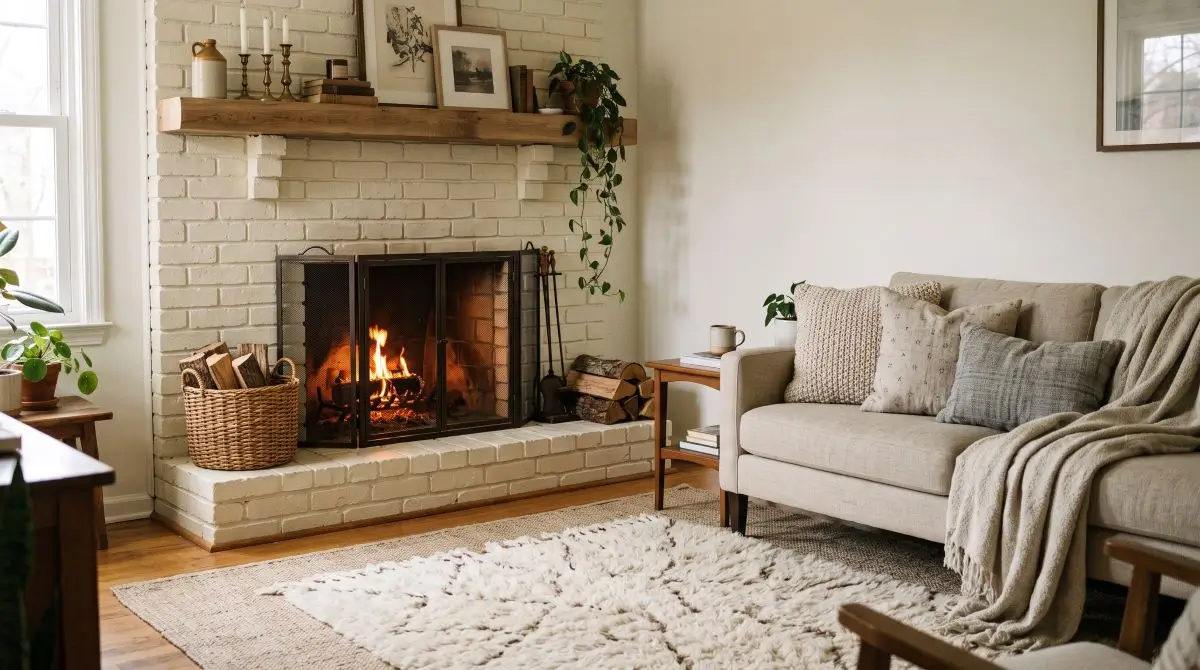
Cream paint is softer and warmer than bright white, and it shines when paired with texture rather than contrast. Layer a chunky wool throw, woven baskets, linen upholstery, and a natural wood floor around the hearth for a cozy, lived-in feel, keeping soft items a safe distance from the opening.
3. Scandinavian White Brick Fireplace
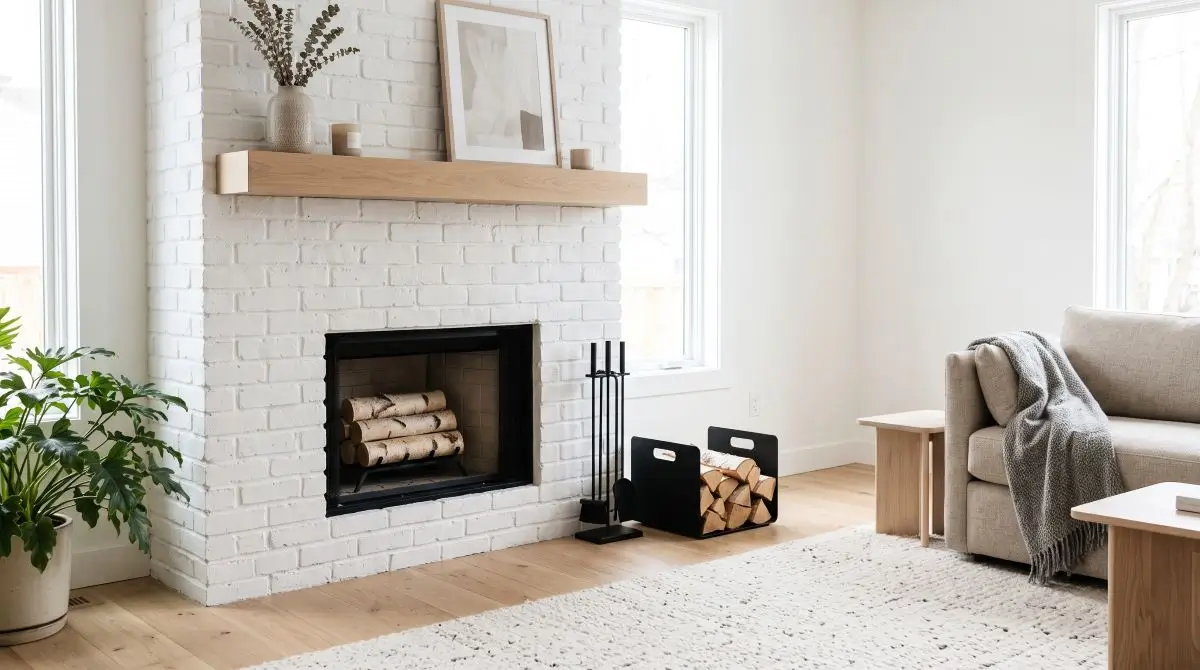
For a Scandinavian look, skip the mantel and let the painted brick stand alone as one flat, quiet surface. Pale oak furniture, neutral fabrics, and a single leaning artwork or plant keep the space light and calm, so the brick texture becomes the only decoration.
4. French-Country White Brick Fireplace
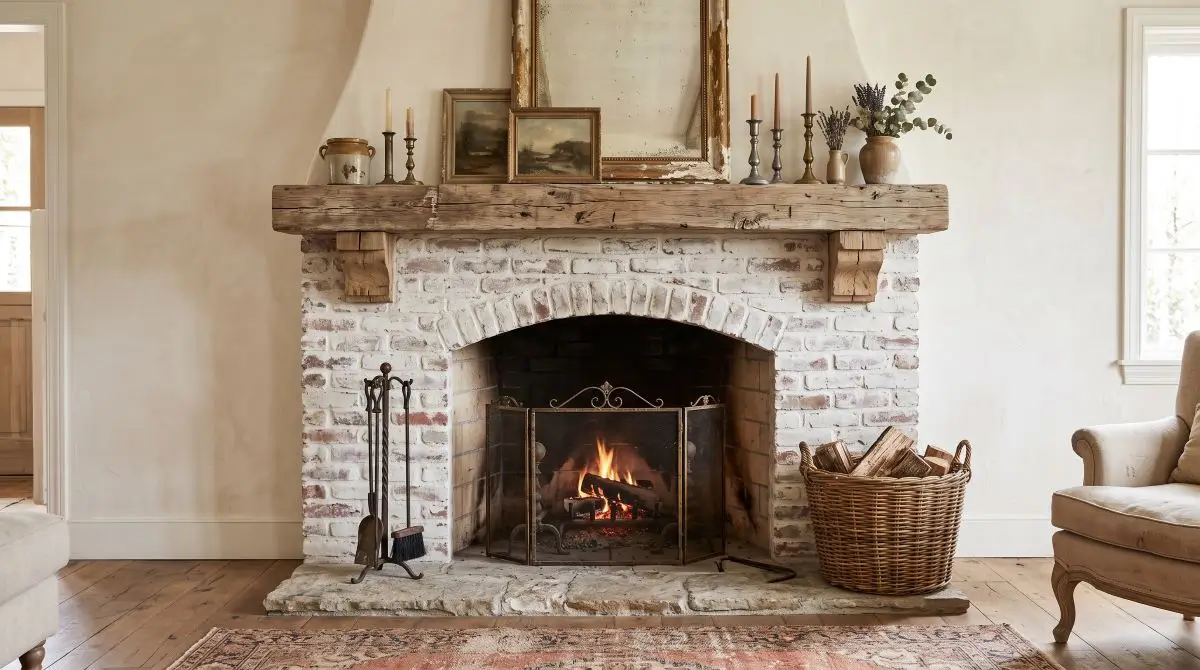
A soft, slightly warm white sets the stage for an ornate overmantel mirror in an aged gold or whitewashed frame, which becomes the main feature of this look. Add candlesticks, linen curtains, and muted vintage fabrics for a relaxed French-country mood. The mirror also bounces light across the room.
5. Vanilla Brick with a Matching Mantel
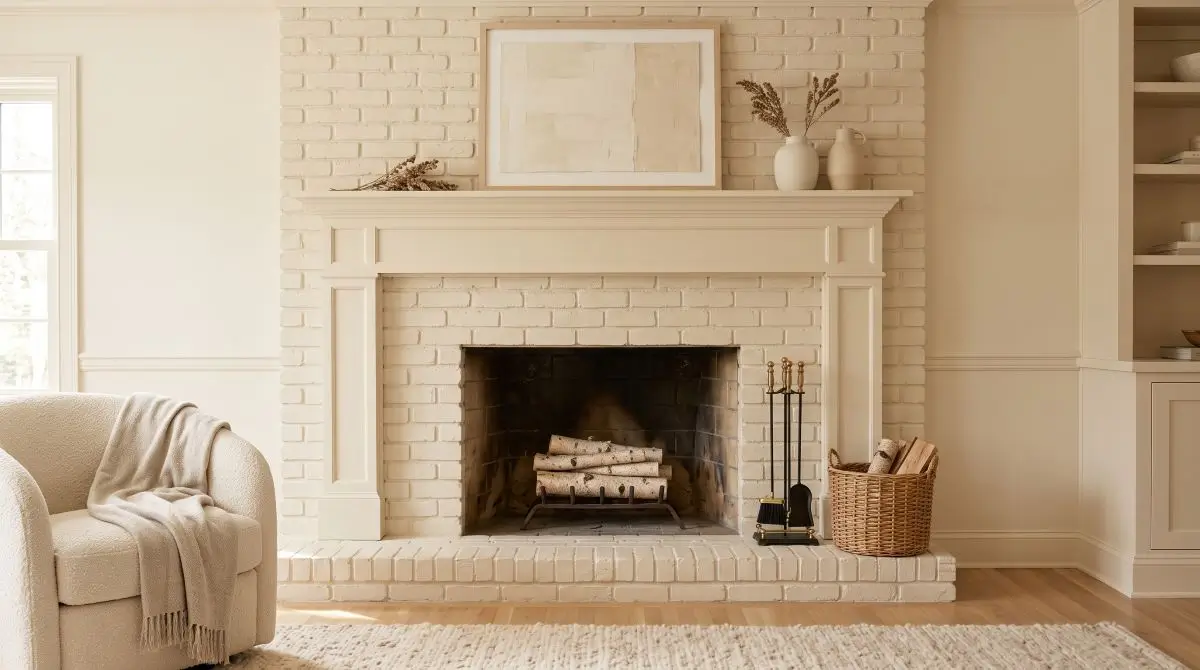
Painting the wood mantel in the same soft vanilla as the brick creates a tonal, almost sculptural fireplace with no hard color breaks. The pale yellow-white softens strong red brick while keeping the room warm. Ivory cushions, natural wood furniture, and simple artwork support the cottage feel.
6. Light Gray Brick with White Trim
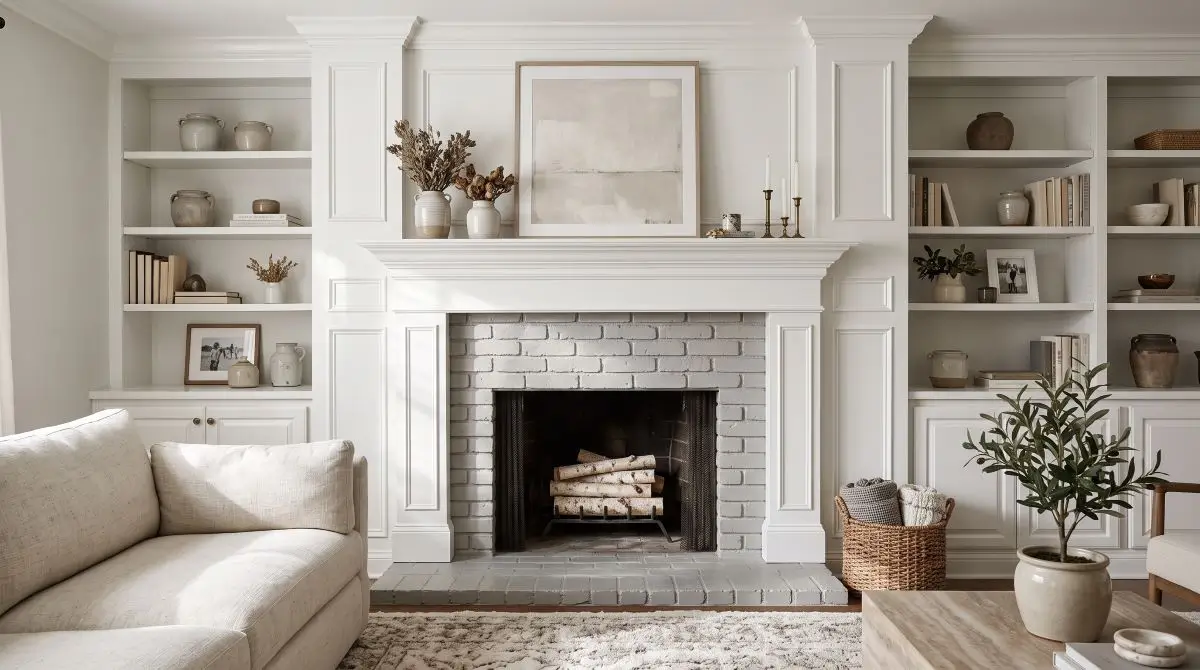
Light gray is a useful alternative if you want something cooler than cream but less stark than white. White trim around the fireplace creates a clear outline, while simple furniture keeps the design suitable for both traditional and contemporary homes.
7. Greige Brick Fireplace
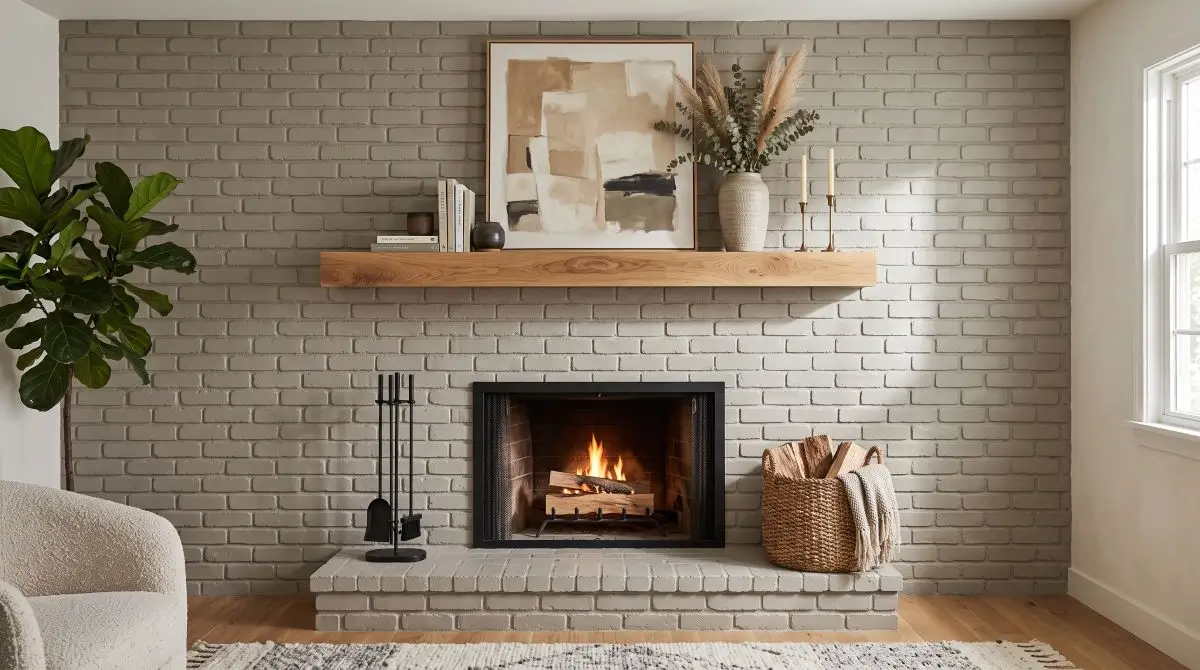
Greige combines gray and beige, making it a practical choice for rooms with mixed warm and cool finishes. It suits oak furniture, cream seating, stone accessories, and neutral rugs without drawing too much attention to the fireplace.
8. Taupe Brick with Earthy Materials
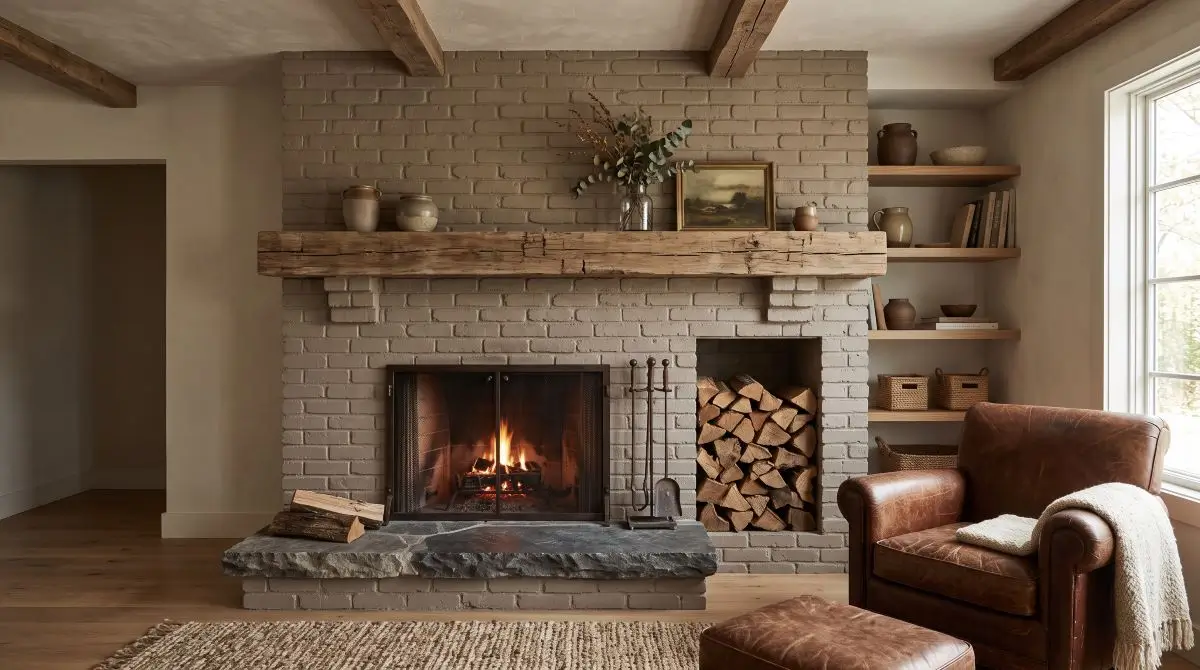
Taupe adds depth while keeping the overall palette natural. Combine the painted brick with linen curtains, brown leather, pale stone, or aged bronze details. This approach suits living rooms where you want a calm, grounded feel rather than a sharp contrast.
9. Match the Fireplace to the Wall Color
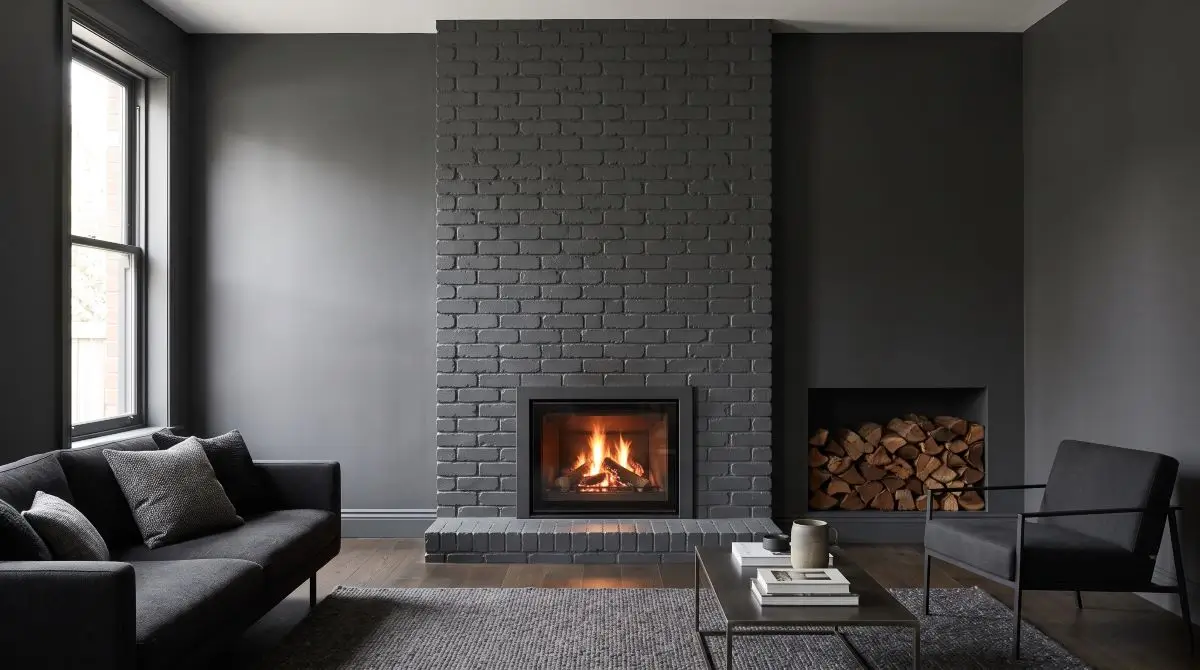
Painting the brick and surrounding wall in similar shades creates a continuous look. This can work particularly well in smaller rooms where strong color breaks make the wall feel busy. A contrasting mantel provides just enough definition, so the fireplace still reads as a feature without dominating the room.
10. Two-Tone White and Charcoal Brick
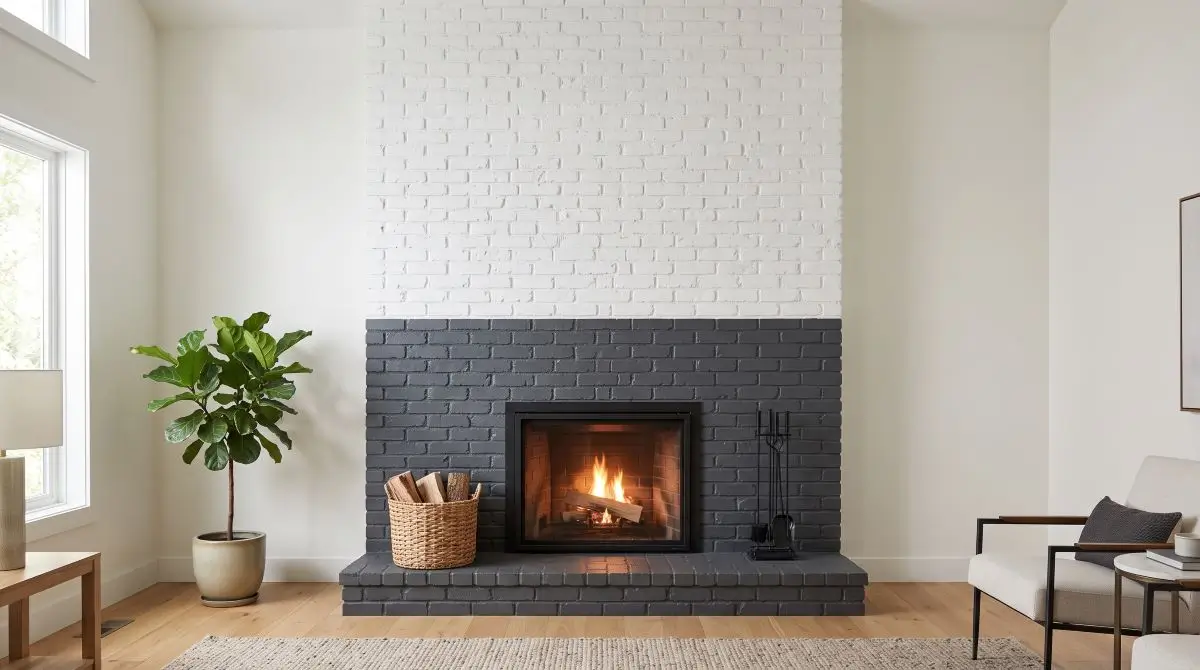
Instead of using one color across the entire fireplace, divide the design into two clear sections. White brick with a charcoal border creates a graphic look, while a charcoal lower section and white upper section can make a tall fireplace feel more balanced.
11. Industrial Charcoal Brick Fireplace
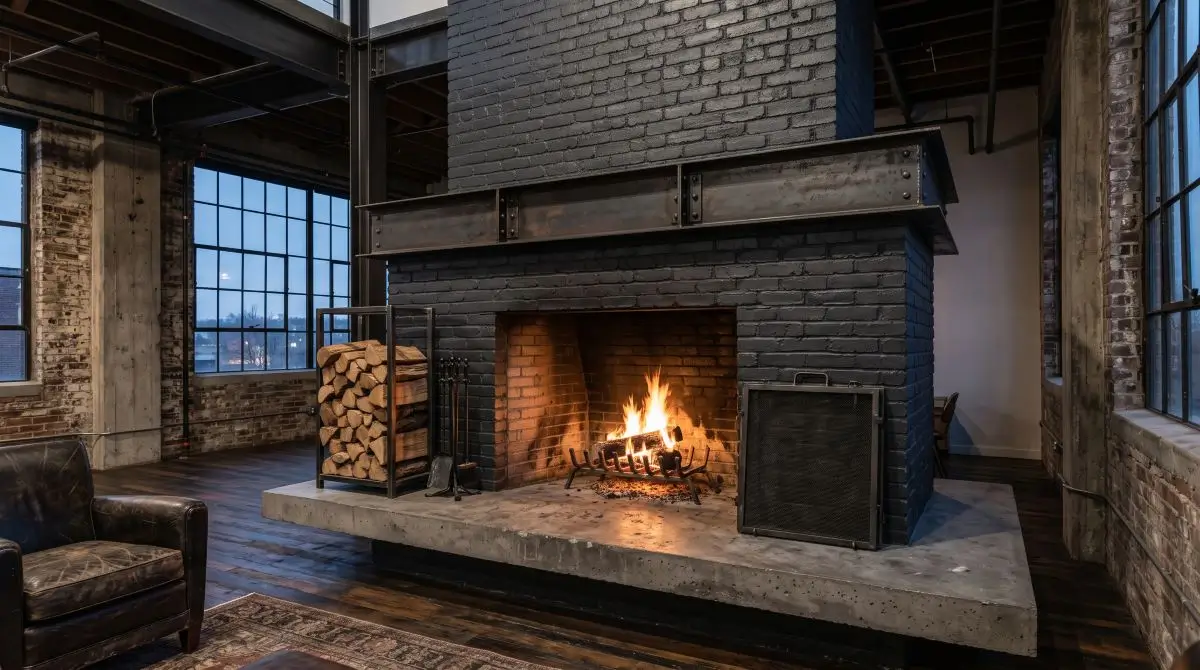
Charcoal reads like softly weathered metal, which makes it a natural fit for loft and industrial spaces. Pair it with steel-framed accessories, tan leather seating, concrete or dark wood floors, and exposed beams. A satin or low-sheen finish is easier to wipe clean than ultra-flat paint.
12. Matte Black Brick Fireplace
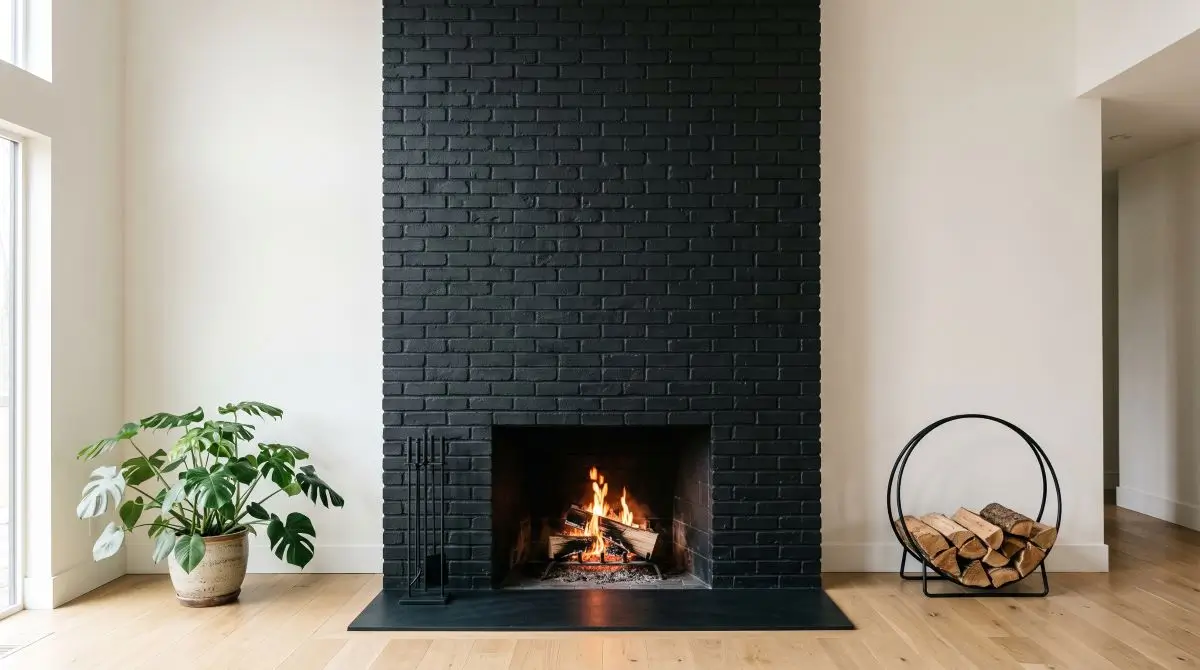
Matte black works best on a wide, low-profile midcentury fireplace, where painting brick and mortar the same shade makes the surface read as one flat, sculptural plane. Walnut furniture and light walls balance the dark color. Keep in mind that matte finishes show dust more easily than satin.
13. Navy Brick with White Paneling
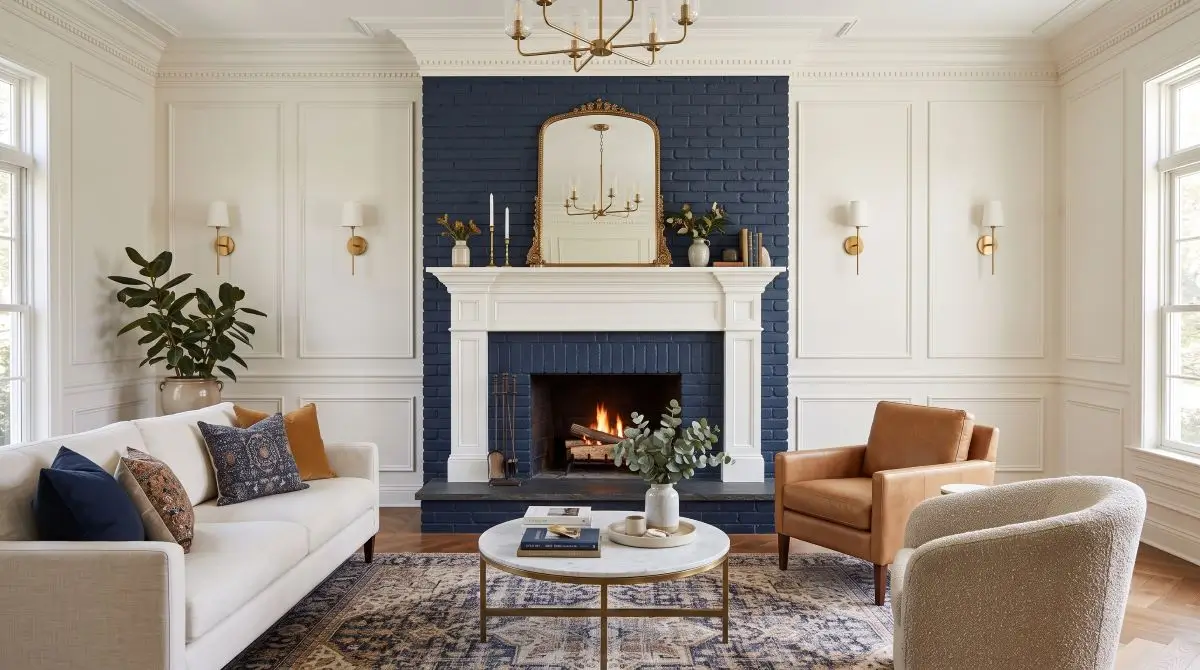
Deep navy looks most refined against crisp white paneling or wainscoting, which frames the dark brick like a piece of tailored furniture. Brass accessories and warm oak furniture stop the color from feeling cold. This look suits traditional and transitional rooms.
14. Color-Drenched Denim Blue Fireplace Wall
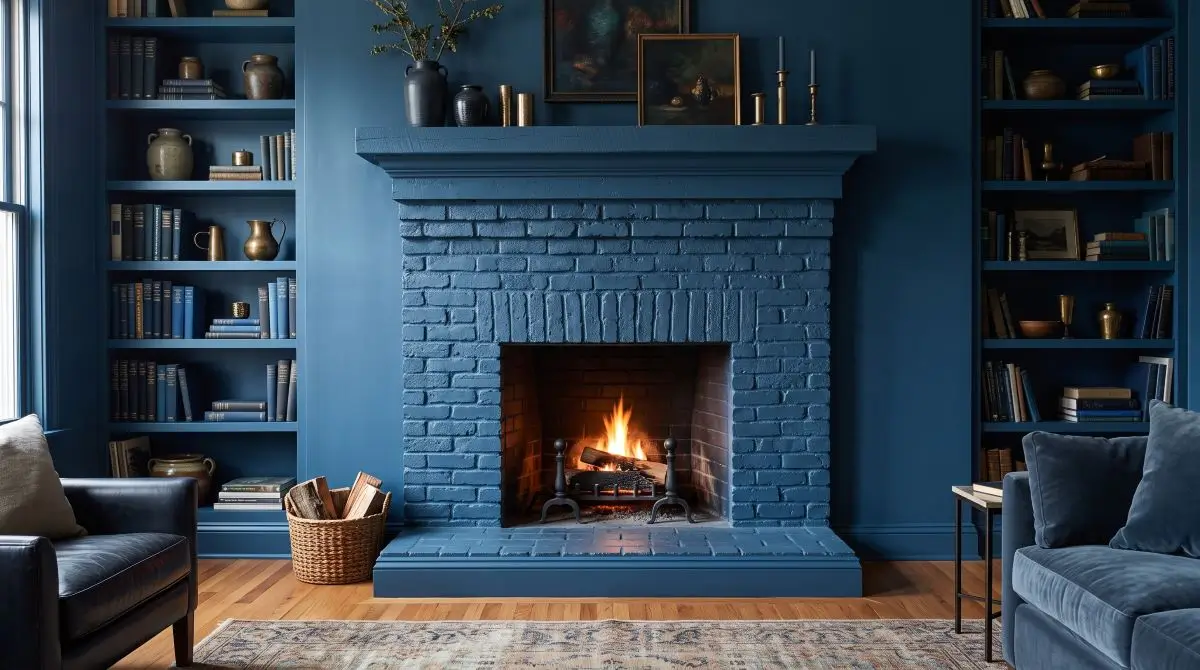
For a more adventurous room, use one mid-tone denim blue on the brick, nearby walls, and mantel. The single color makes the fireplace part of the architecture rather than a separate feature. Linen seating, patterned cushions, and natural wood add the texture that keeps a one-color scheme from feeling flat.
15. Soft Blue-Gray Brick for a Coastal Cottage
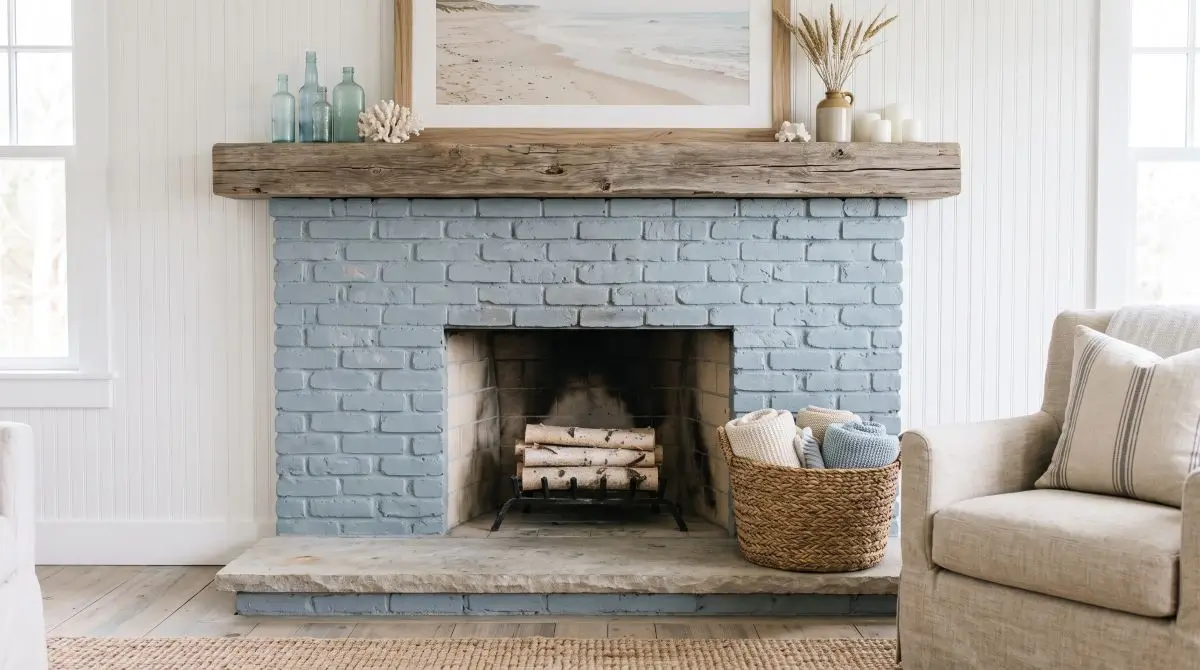
A pale blue-gray recalls sea and sky, and it keeps the fireplace light where navy would feel heavy. Combine it with whitewashed wood, rope or rattan accents, and light linen upholstery for a relaxed coastal look.
16. Forest-Green Brick with Walnut Wood
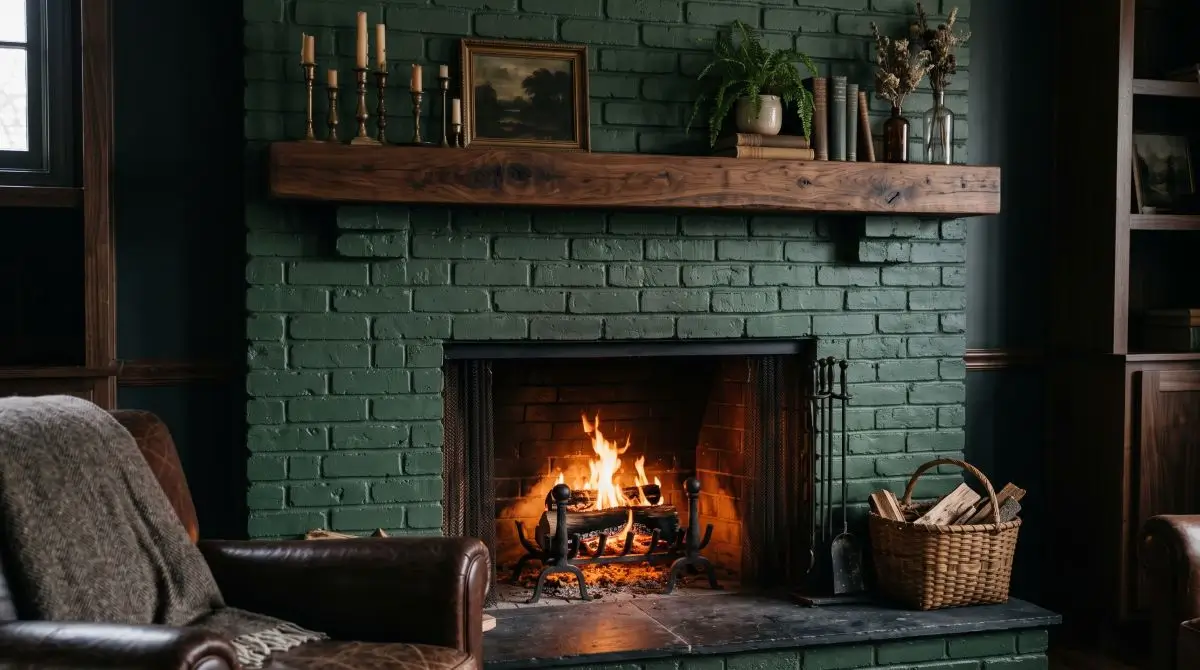
Deep green creates a rich focal point and looks especially good beside walnut, antique brass, and cream textiles. Choose it when the room needs more depth or when you want the fireplace to stand out from pale walls.
17. Muted Sage Brick for a Relaxed Interior
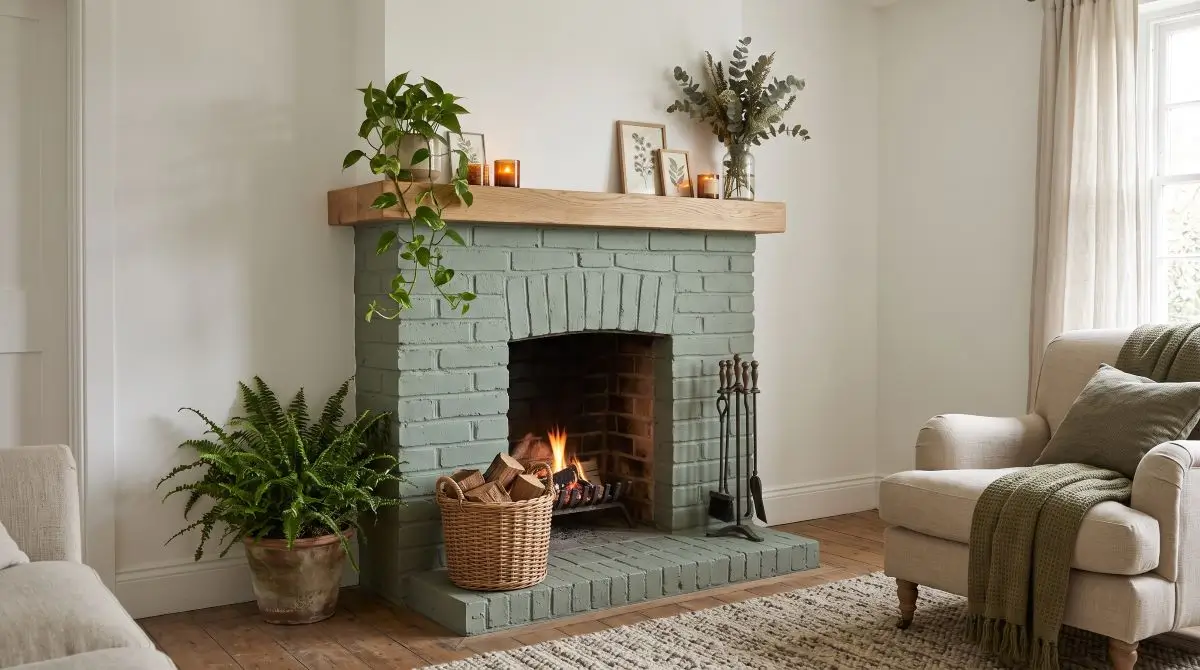
Sage green is a quieter option for homeowners who like color but do not want a dark feature wall. Team it with pale oak, woven shades, and simple pottery. It fits cottage-inspired rooms and relaxed family spaces.
18. Terracotta or Clay Paint for an Earthy Finish
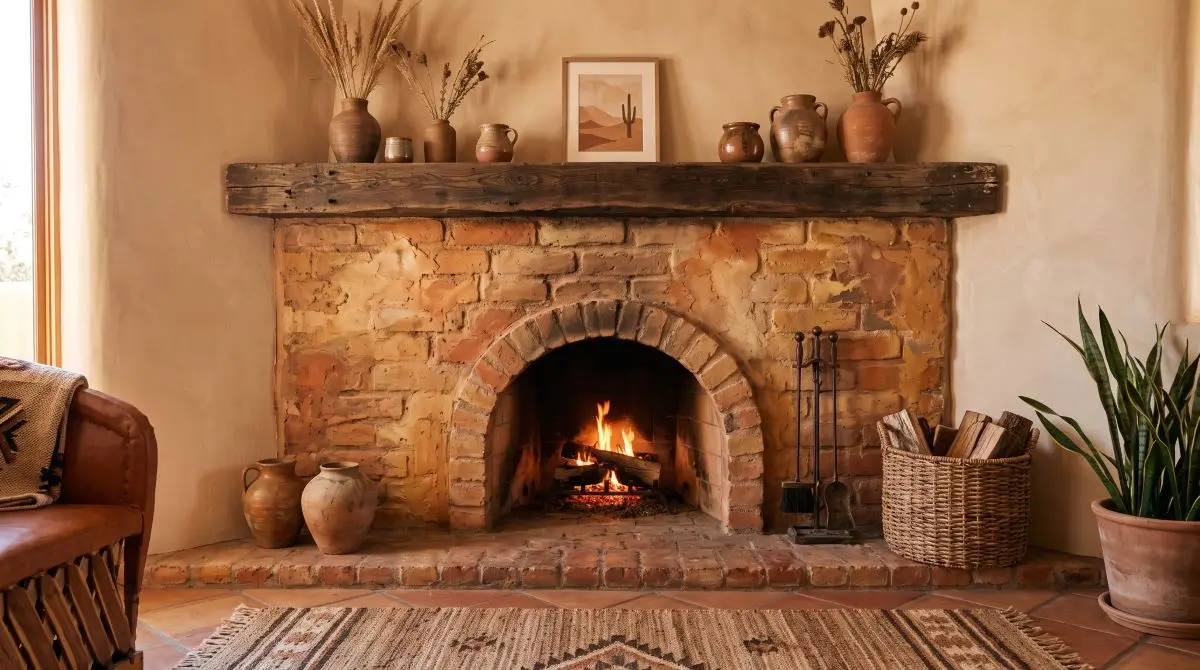
A muted terracotta or clay shade gives the fireplace warmth without relying on the original red brick. Use it with cream walls, natural wood, and soft beige fabrics. Keep the color earthy rather than overly bright for a more settled look.
19. Deep Green and Cream Color Blocking
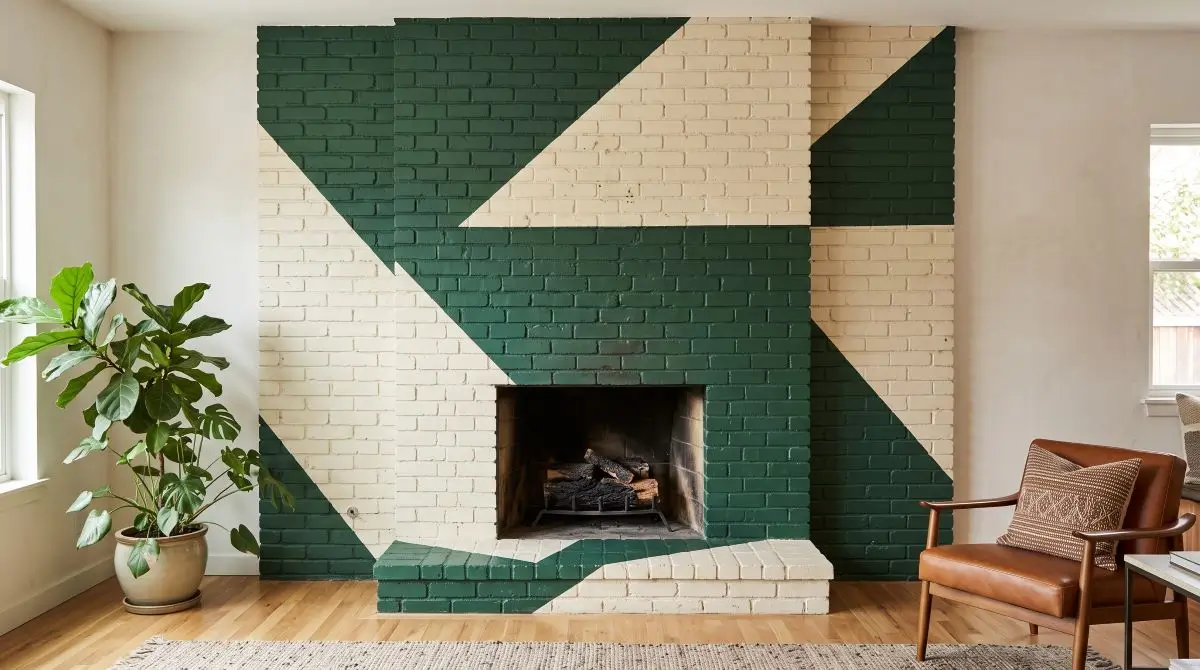
Color blocking lets you use a bold shade without covering every part of the fireplace in dark paint. Try deep green on the main brick surround with cream on a clearly defined outer section. Straight boundaries make this treatment look deliberate.
20. A Dark Fireplace in a Colorful, Eclectic Room
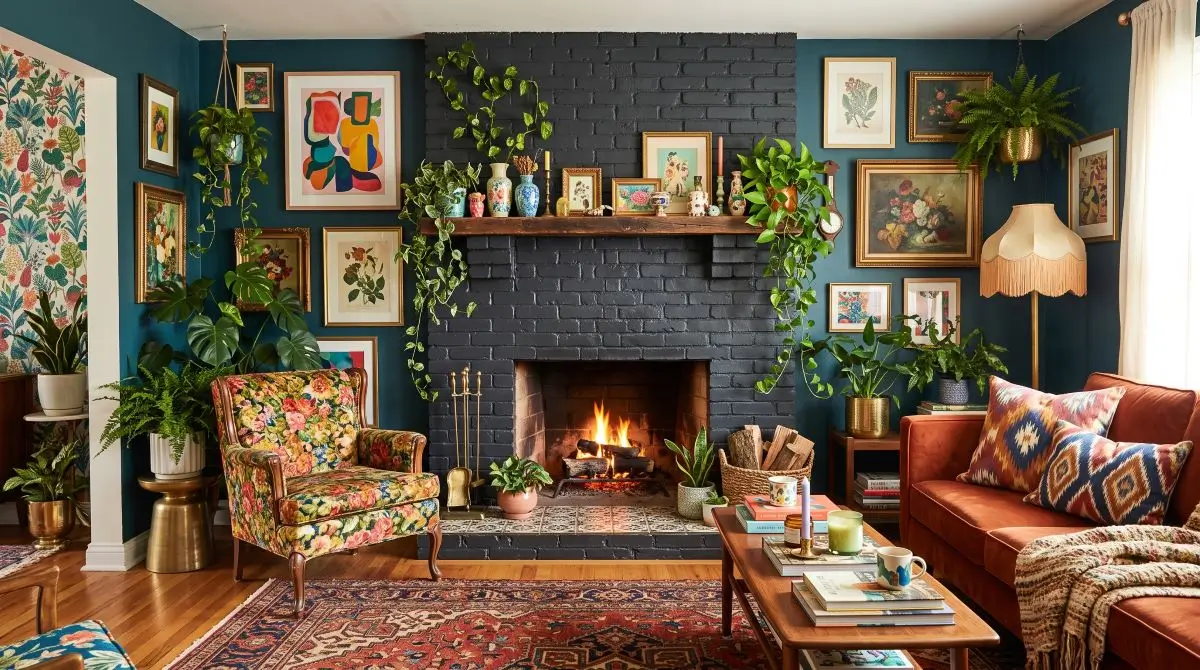
In a room filled with patterned rugs, colorful artwork, and mixed furniture, a charcoal or deep-green fireplace can act as a visual anchor. Repeating the fireplace color in just one or two smaller details helps connect everything.
21. Whitewash That Keeps the Brick Visible
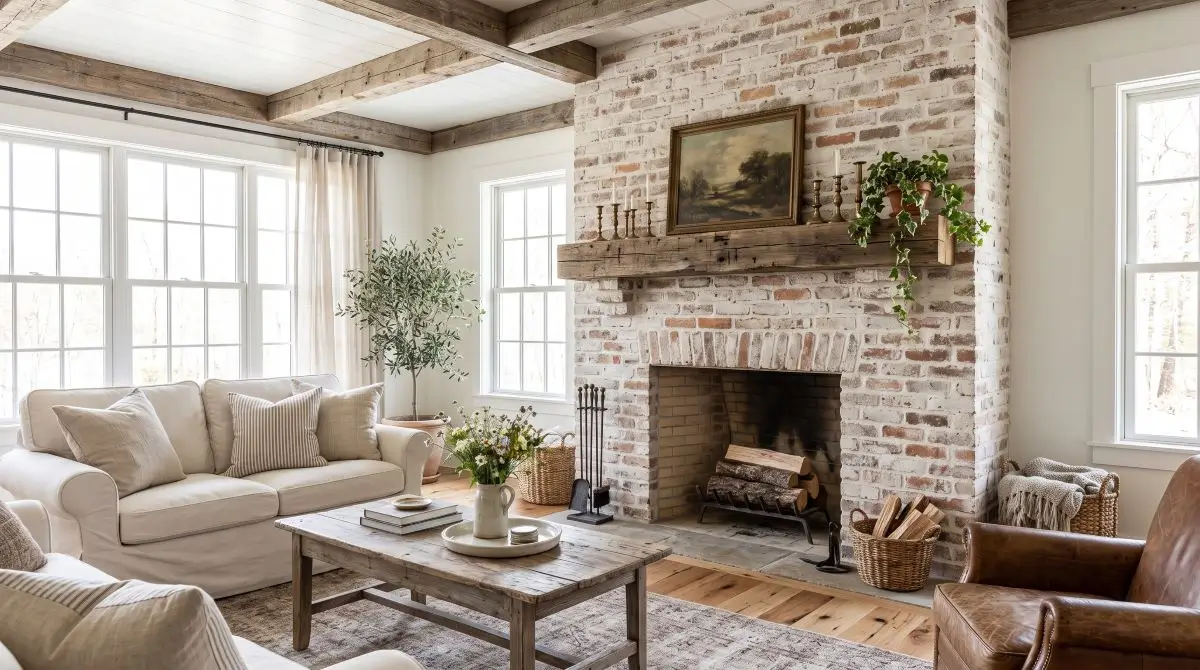
Whitewash softens the original brick color while allowing some of its variation to show through. The result is less uniform than full-coverage paint. It suits rooms where you want to lighten red brick but still appreciate its natural pattern.
22. Pale Limewash Brick Fireplace
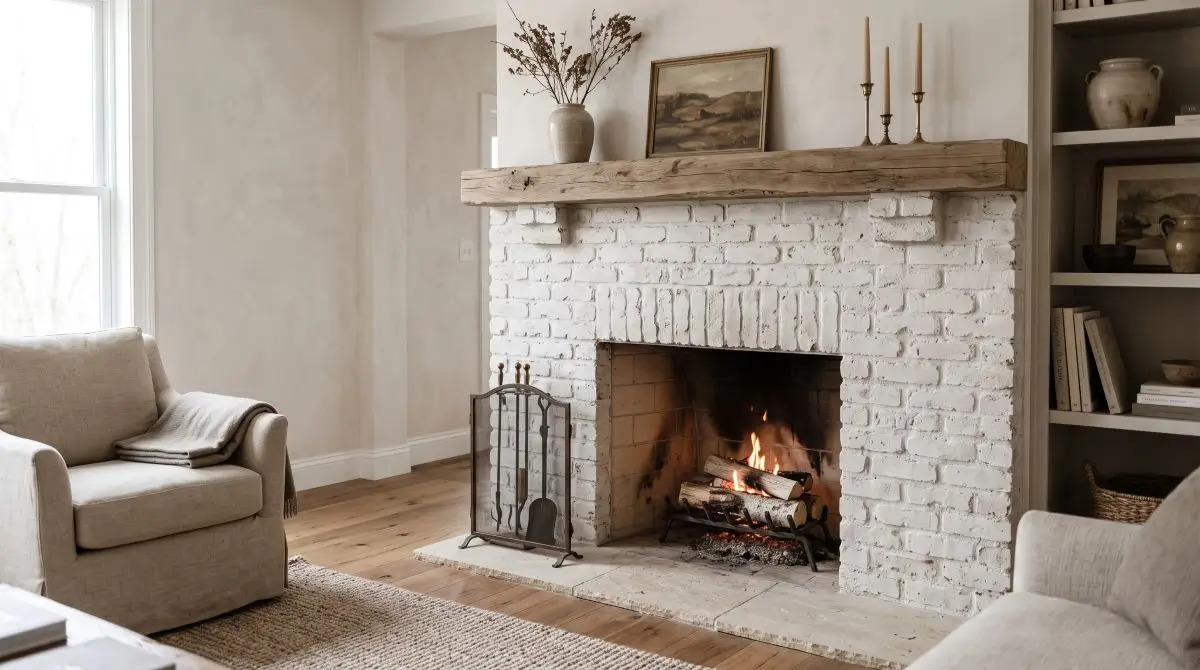
Limewash gives suitable masonry a soft, mineral appearance with natural variation. Unlike solid paint, it can preserve more of the brick’s character. Choose a product made for the surface and follow its specific preparation and application instructions.
23. German Schmear for an Old-World Fireplace
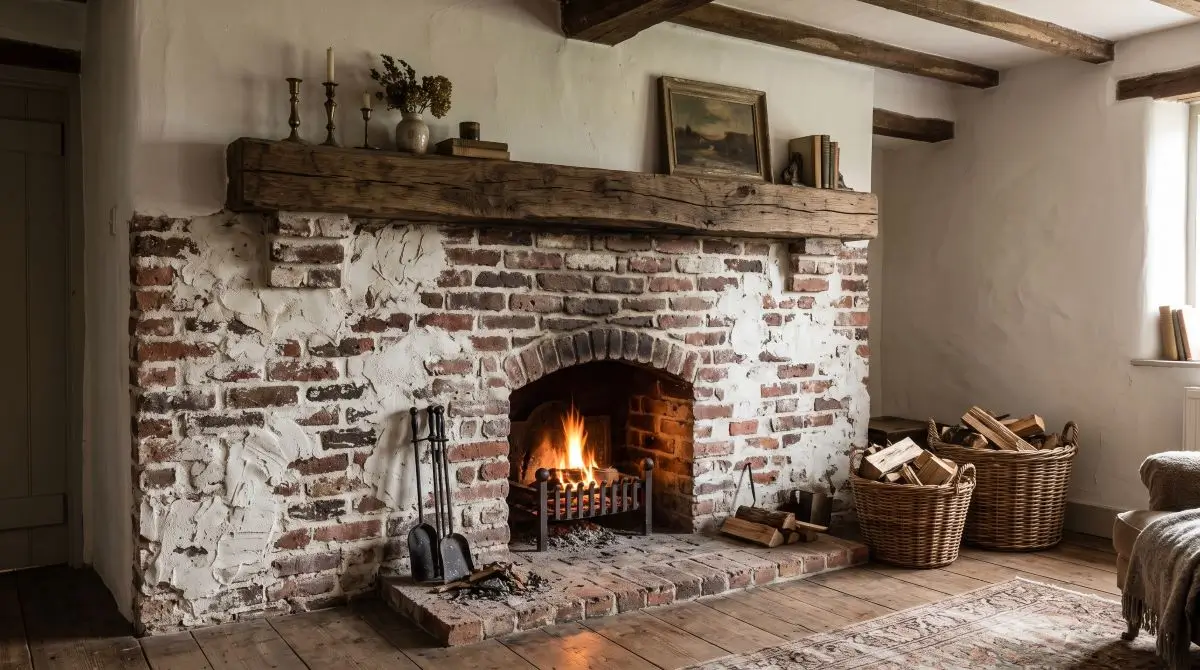
German schmear is a mortar-based treatment, not simply another paint color. It leaves a thicker, textured finish over parts of the brick and mortar, creating a rustic appearance. Consider it when color alone will not give you the look you want.
24. A Painted Schmear Effect for a DIY Project
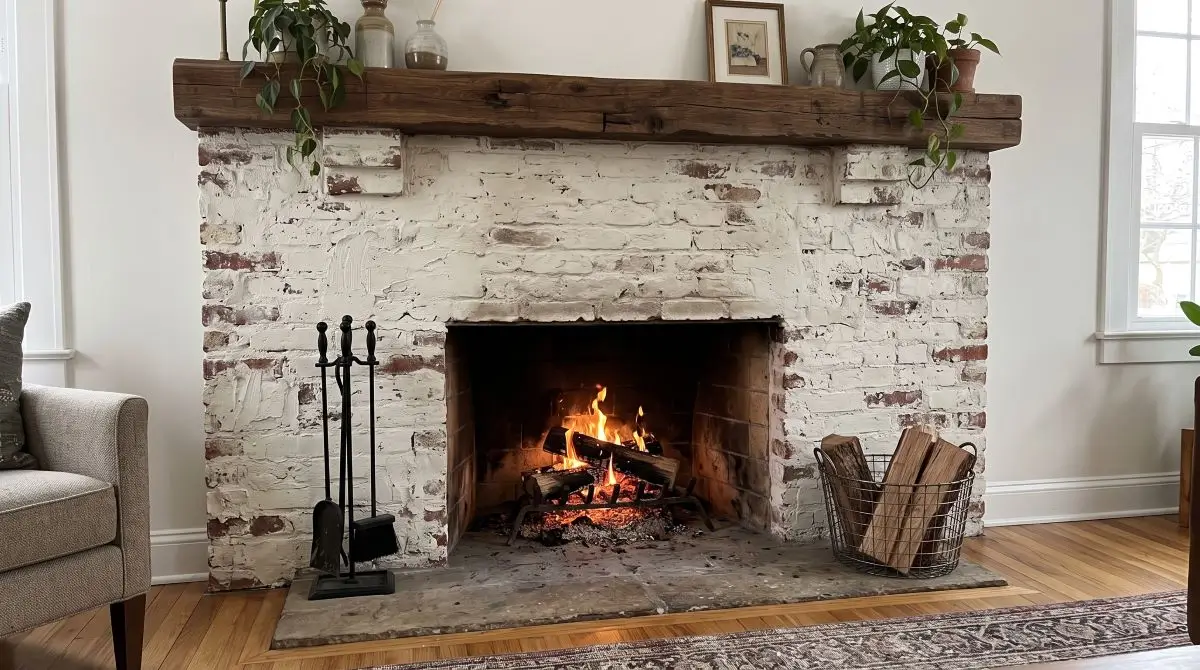
If you prefer a lighter effect without applying actual mortar, use a suitable paint-based technique to soften selected brick faces and joints. Work in small areas and vary the coverage for a less uniform appearance. This imitates the look but is not true German schmear.
25. Full-Coverage Paint for an Even Surface
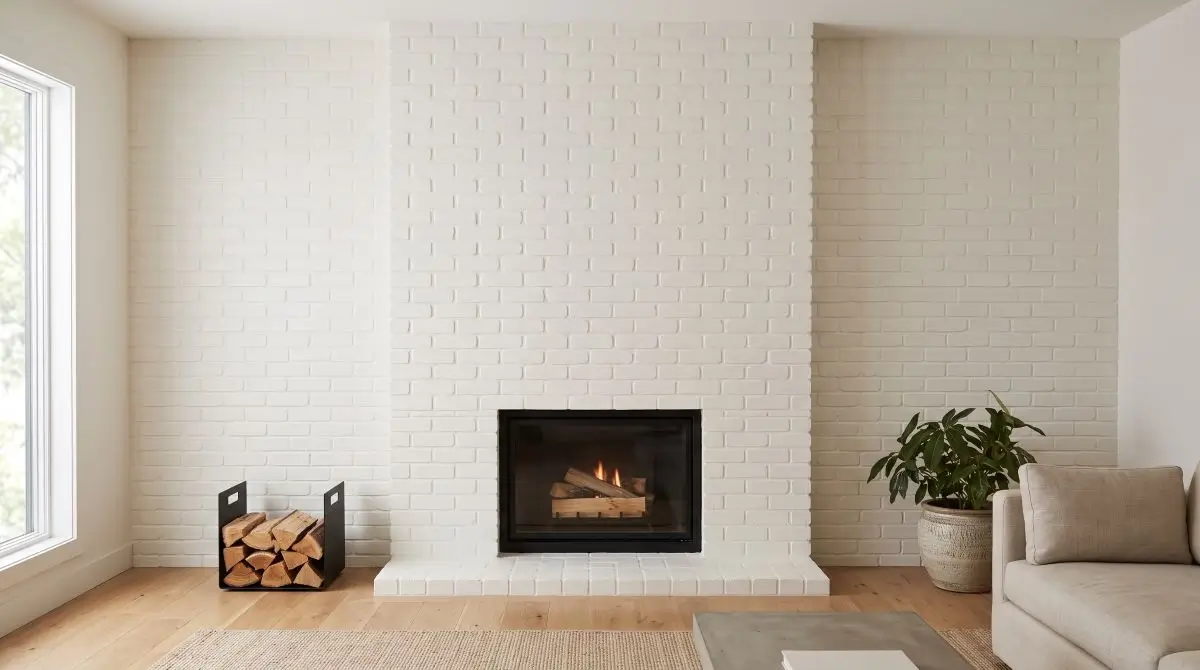
Sometimes the simplest option is the best one. Full-coverage paint hides most of the original red and brown variation, giving the fireplace a consistent color. Use a brush for the mortar joints and a suitable roller for the brick faces. Two thin coats usually look more even than one heavy coat.
26. A Distressed Finish with Vintage Character
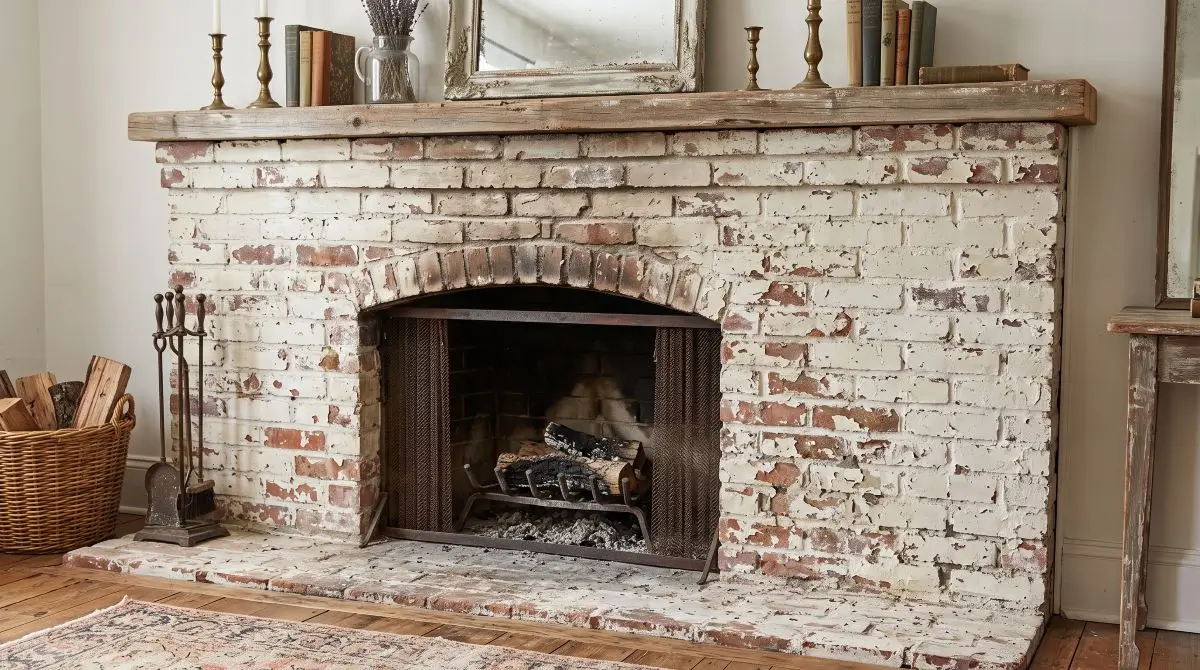
A distressed finish adds subtle variation instead of a perfectly uniform coat. It can work with vintage furniture, an aged mantel, and antique-style accessories. Keep the effect controlled so the fireplace looks intentionally weathered rather than poorly painted.
27. Faux-Tile Patterns on Painted Brick
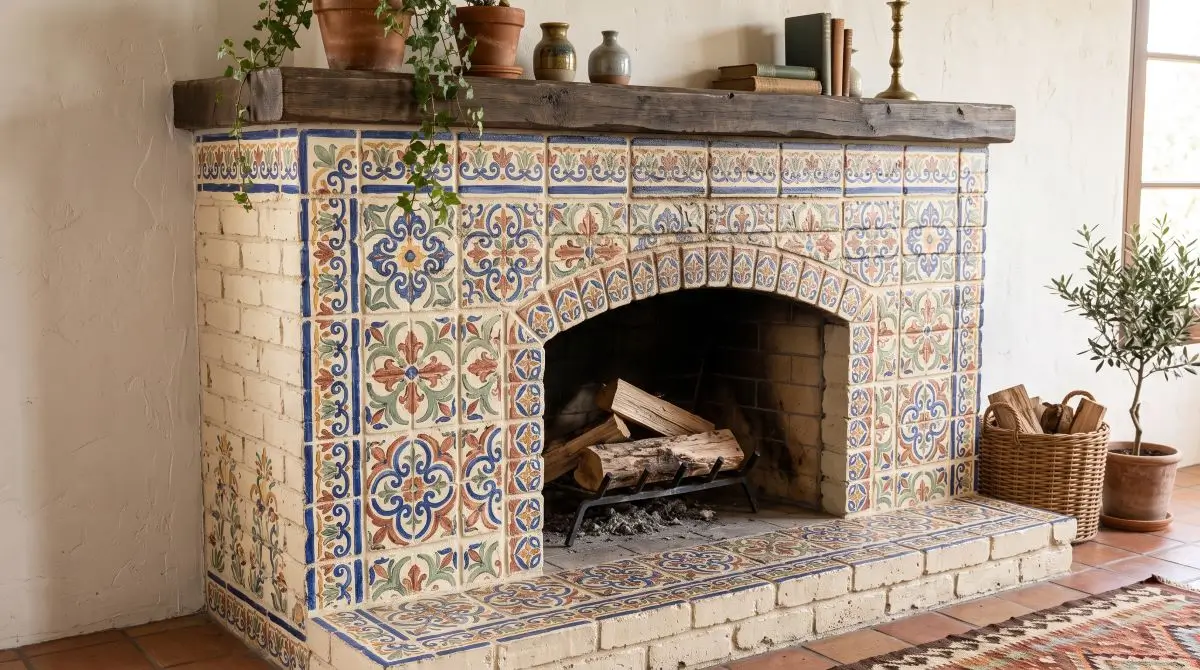
Paint and a carefully planned stencil can create the impression of a tile pattern on a brick fireplace. Choose a simple design with clear shapes, because deep brick texture can interrupt fine details. This approach suits homeowners who want a decorative finish without replacing the masonry.
28. Geometric Stencils for a Contemporary Look
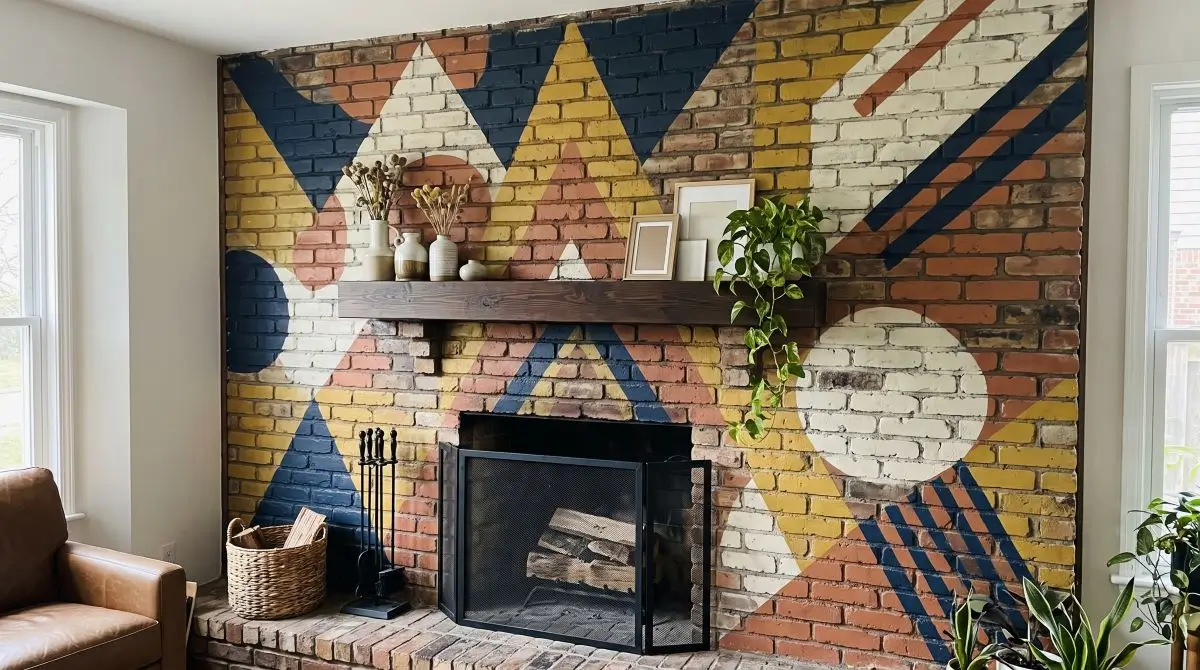
Geometric shapes bring a more modern feel to a plain fireplace. Use two compatible colors and repeat the pattern across a clearly defined section rather than covering the surface with too many details.
29. Broad Stripes for a Lodge-Inspired Fireplace
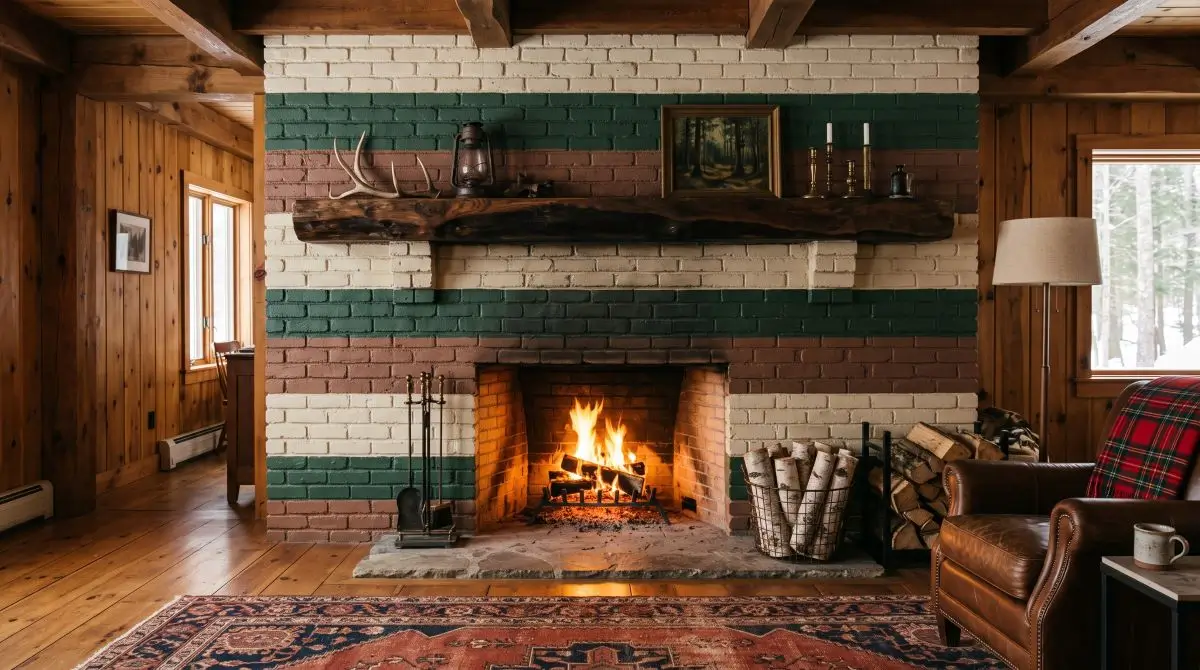
Broad painted stripes can give a fireplace a cabin or lodge character. Choose two or three colors and plan the layout around the brick courses. Wider bands read more clearly across the uneven surface than tiny, complicated patterns.
30. A Decorative Motif on a Plain Brick Surround
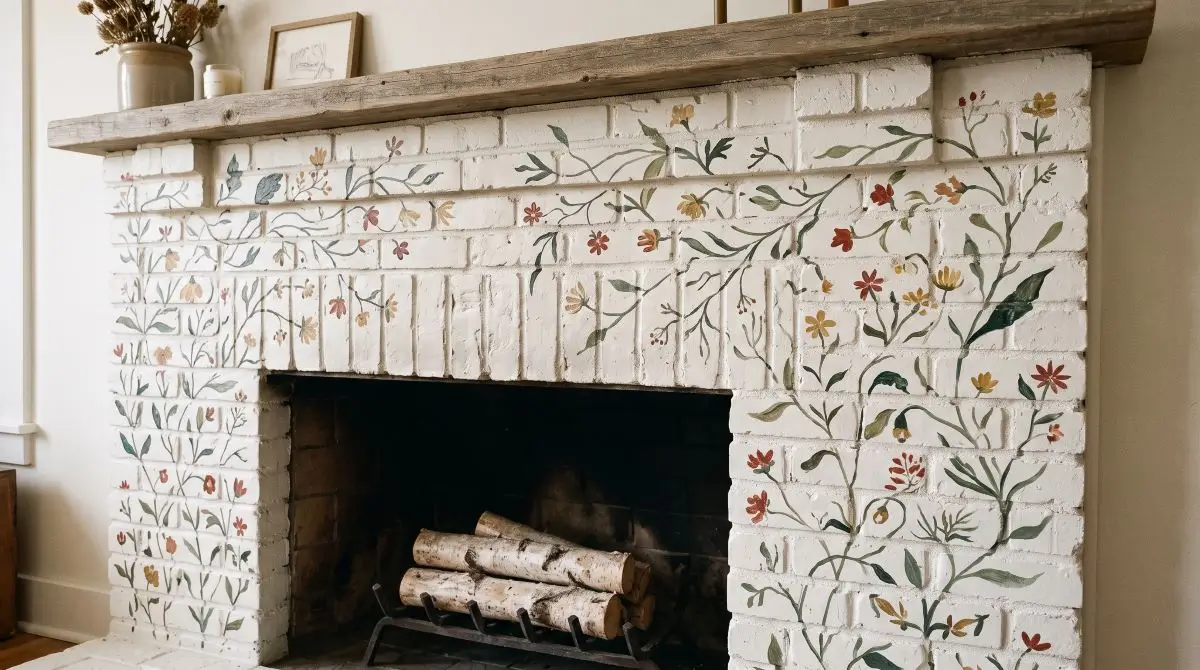
A small leaf, branch, or abstract motif can add personality while leaving most of the fireplace in a solid color. Choose a design that suits the room and keep it away from heat-exposed areas unless the product is approved for that use.
31. Contrasting Mortar Lines for a Defined Pattern
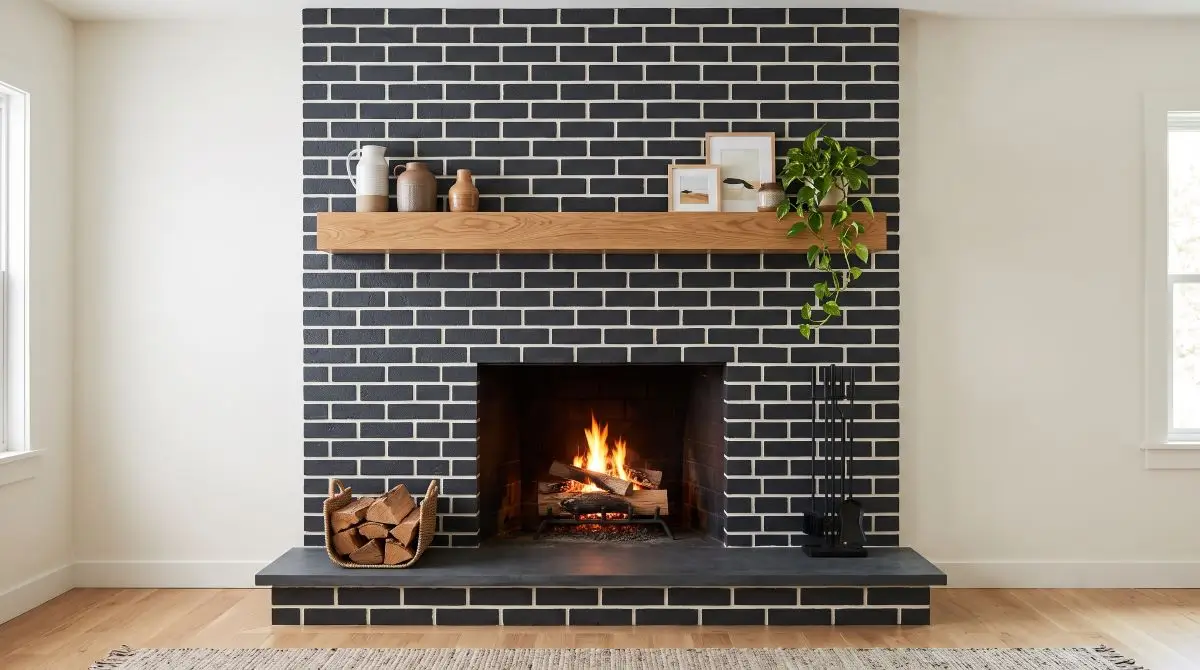
Painting the brick and mortar in contrasting shades emphasizes the masonry pattern. For example, muted gray brick with lighter joints creates a more defined grid. This takes careful brushwork, so it suits a fireplace where you want the brick layout to stand out.
32. An Ombré Brick Fireplace
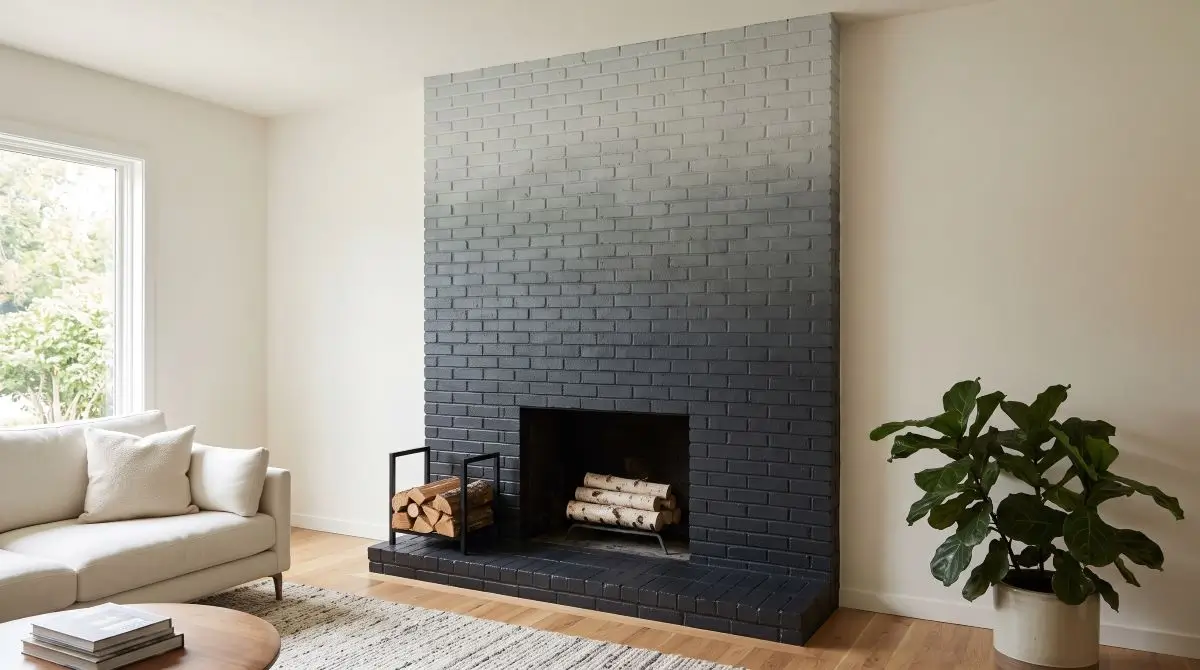
An ombré treatment gradually shifts from one shade to another, such as cream at the top and muted taupe near the bottom. The transition needs careful planning because brick courses create strong horizontal lines. A restrained shift between related colors feels more cohesive.
33. A Painted Arch That Highlights the Shape
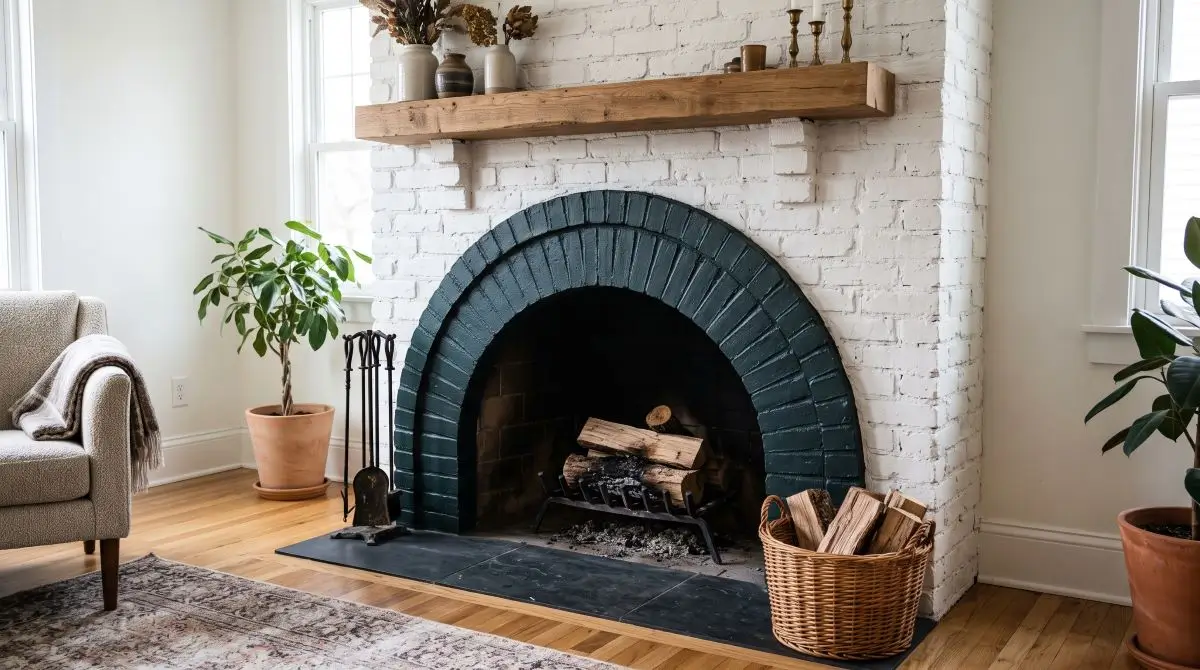
If your fireplace has an arched opening, use a contrasting color to emphasize its shape. A charcoal arch over cream brick creates definition, while a muted clay arch offers a warmer result. A small brush helps keep the curved outline neat.
34. Paint Only the Outer Brick Border
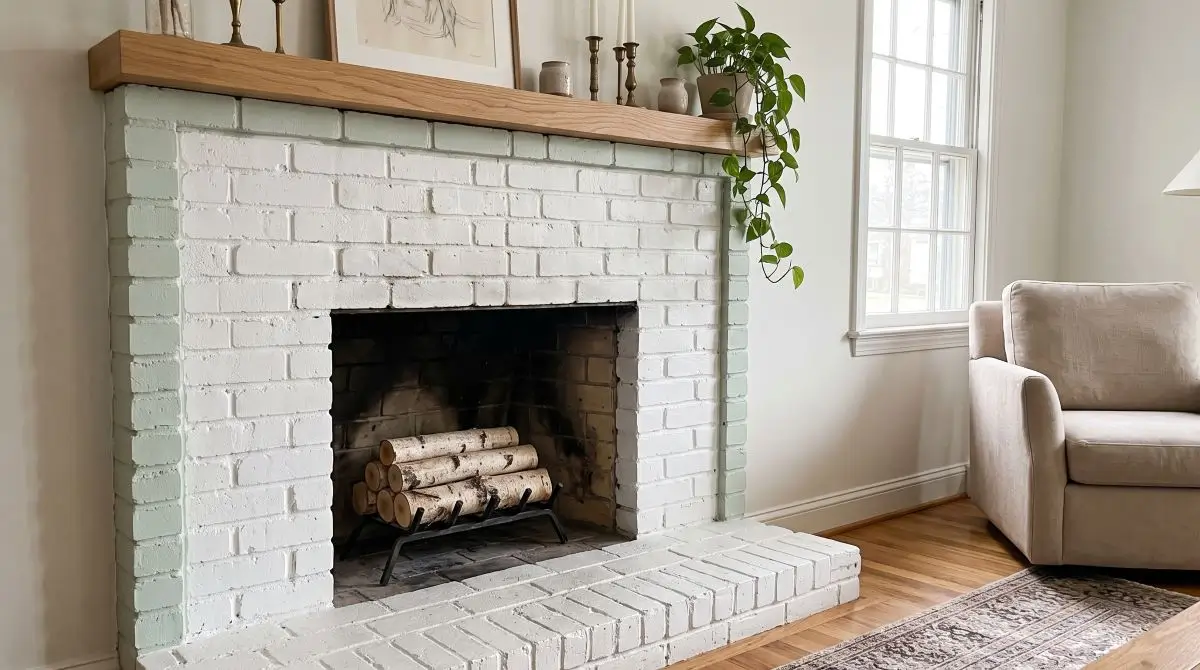
A defined painted border can frame the fireplace without changing the appearance of every brick. Use a contrasting shade around the exterior surround while keeping the remaining brick lighter. Plan the boundaries around the masonry pattern for a tidy finish.
35. A Black Accent Band around the Opening
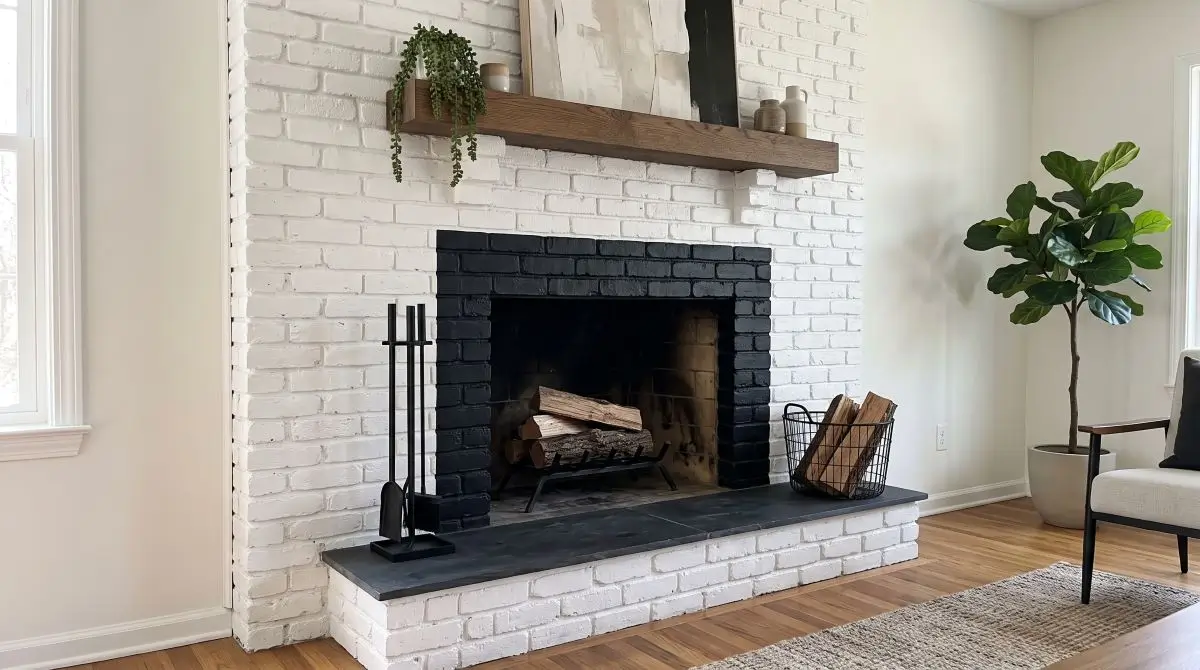
A black band around the exterior of the firebox opening gives a pale fireplace a crisp, modern edge. It is a smaller project than repainting the whole wall, but the line needs to be precise. Keep the exterior surround separate from the firebox interior.
36. Painted Brick Shade Chosen to Flatter a Natural Brick Hearth
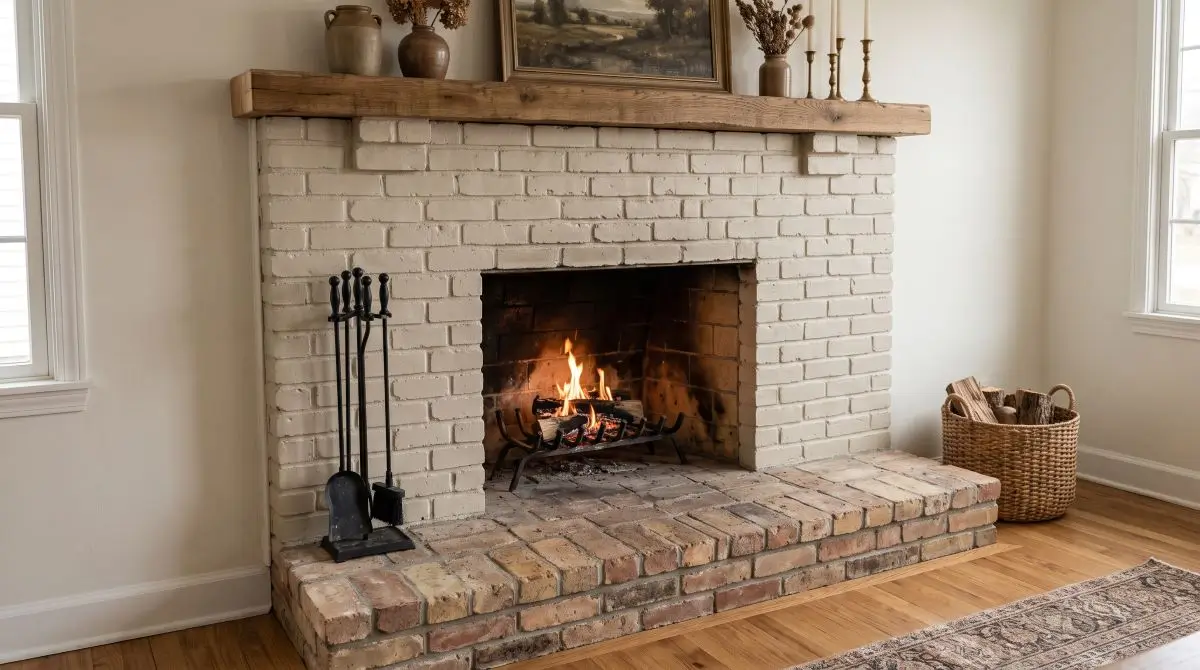
If you leave the hearth unpainted, the paint color on the vertical brick has to work with its red tone. Warm white, cream, or sage all harmonize with red brick, while a cool stark white can make the hearth look orange. Hold a sample next to the hearth before you commit, and mask the line between the two carefully so it looks deliberate.
37. Gray Painted Brick Matched to a Limestone Hearth
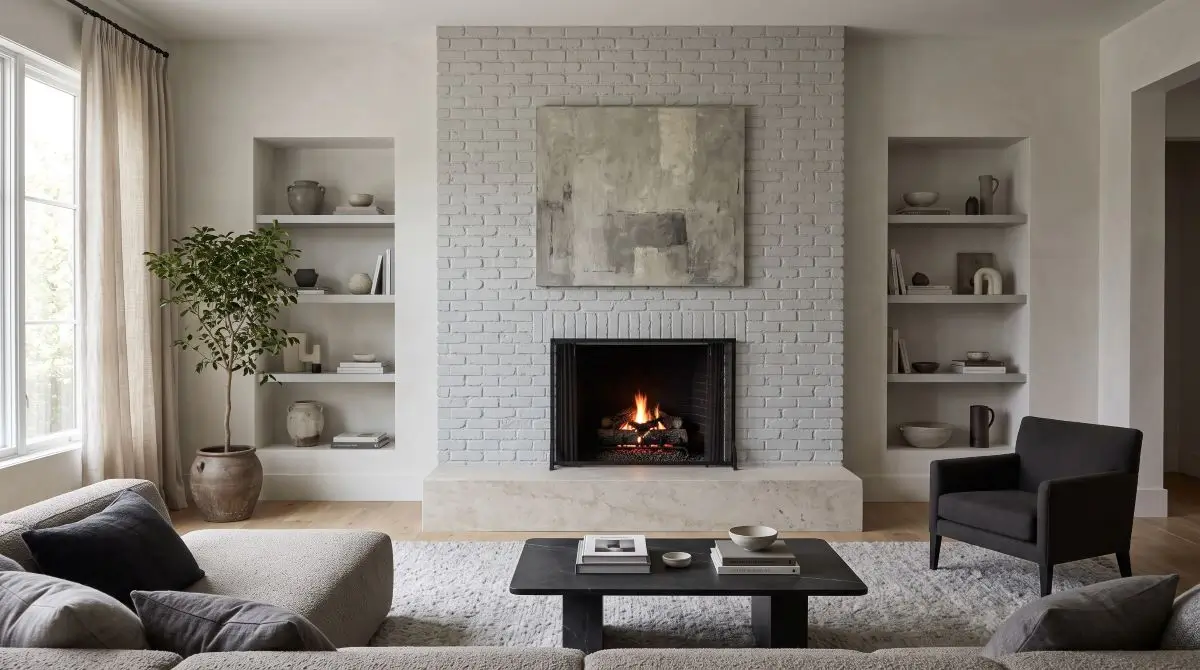
The painted brick should borrow its undertone from the stone. A warm greige suits cream or honey limestone, while a cooler light gray suits blue-gray stone. Matching undertones makes the brick and hearth read as one calm, tonal composition, and a satin finish adds a gentle contrast to the stone’s matte surface.
38. Pale Painted Brick for Contrast with a Dark Slate Hearth
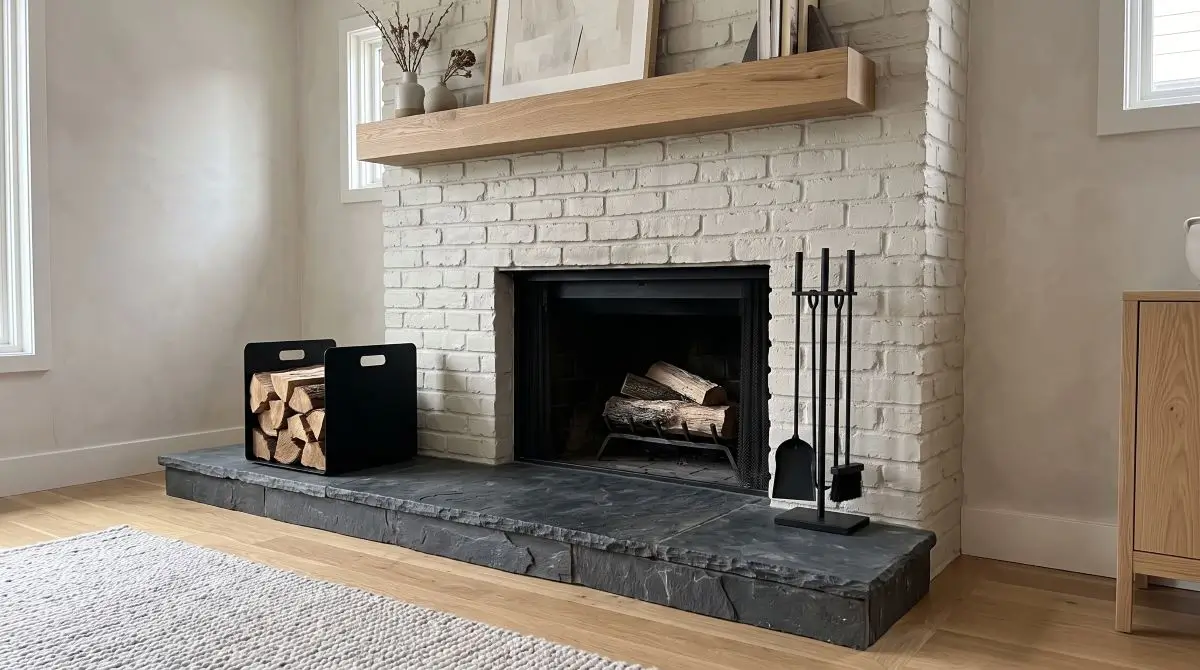
Here the paint does the contrasting work. Painting the brick a pale cream or warm white lets the dark slate hearth act as a strong base, giving the fireplace definition without a bold wall color. Choose a warm white rather than a stark one so the contrast feels soft, and repeat the slate shade in black tools or a metal screen.
39. An Accent Row of Contrasting Brick above the Opening
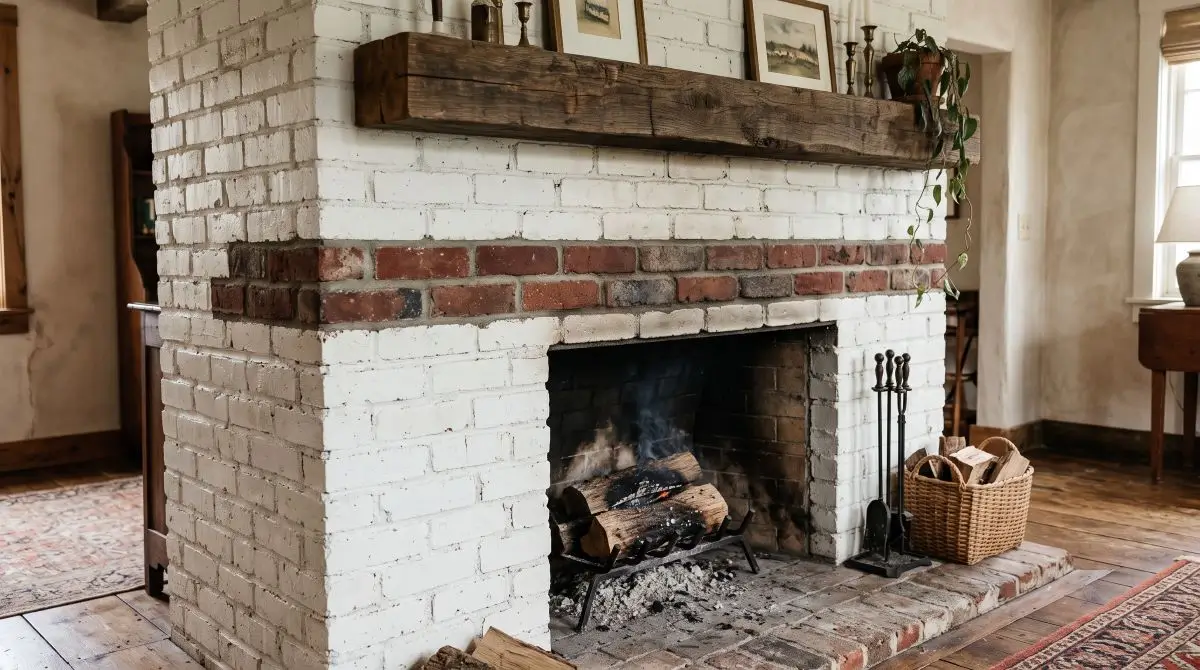
Painting just one horizontal row of bricks, such as the course above the opening, in a contrasting shade adds an architectural line with very little paint. Charcoal over cream, or clay over warm white, creates a subtle band that draws the eye across the chimney breast. Use a small brush and keep the line perfectly level, and treat only the exterior brick.
40. Match the Brick to the Built-In Cabinets
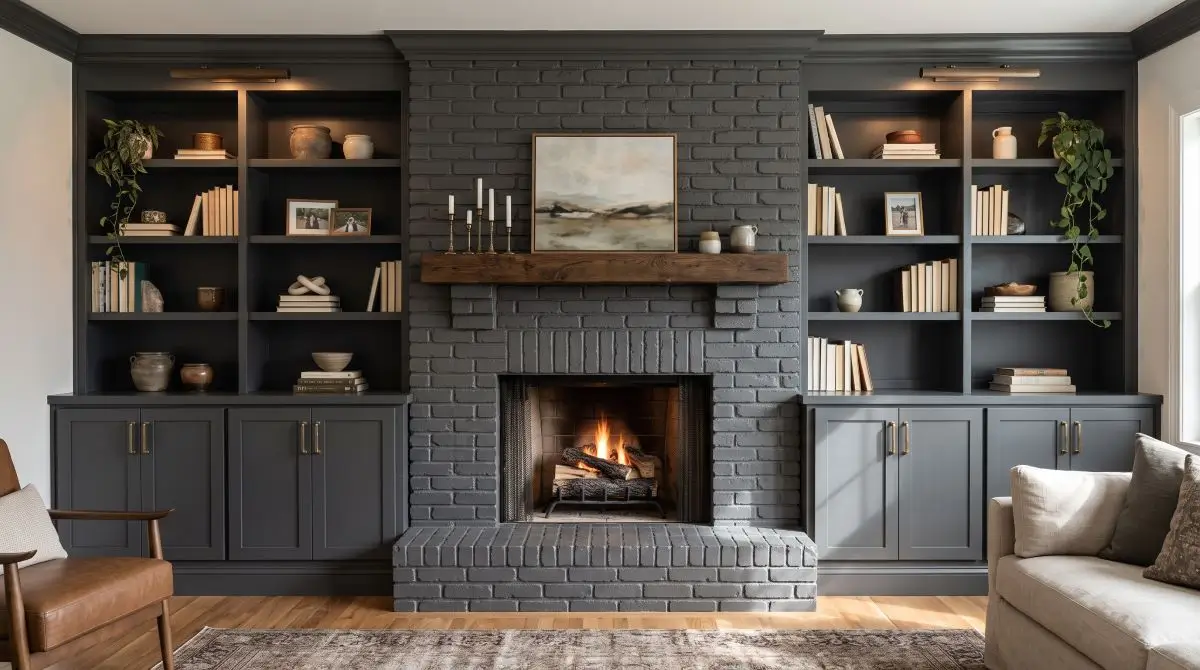
Using the same color on the fireplace and built-in cabinets creates a unified appearance. Warm white keeps the wall light, while deep green or navy gives it more drama. Different textures, handles, or wood details keep the wall from feeling flat.
41. A Floor-to-Ceiling Painted Chimney Breast
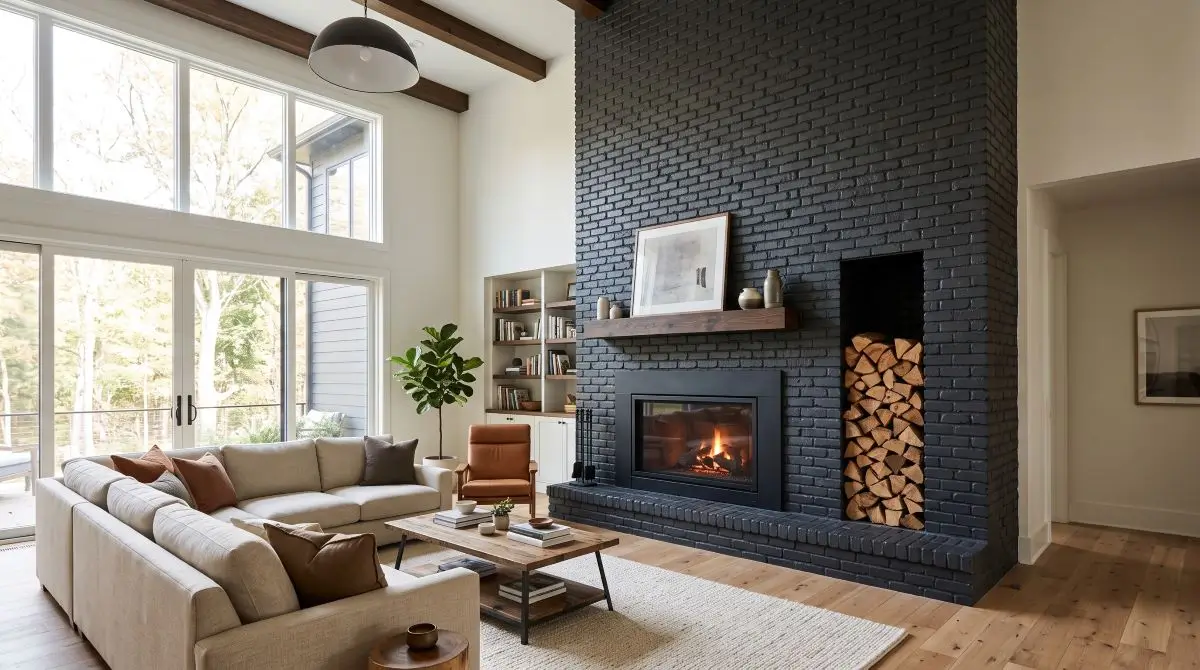
Painting the entire chimney breast makes a tall fireplace wall feel like one deliberate feature. White or cream keeps the room airy, while charcoal creates a dramatic backdrop. Use a brush and roller together to cover both the recessed mortar and the broad brick faces.
42. A Fresh Finish for a Non-Working Fireplace
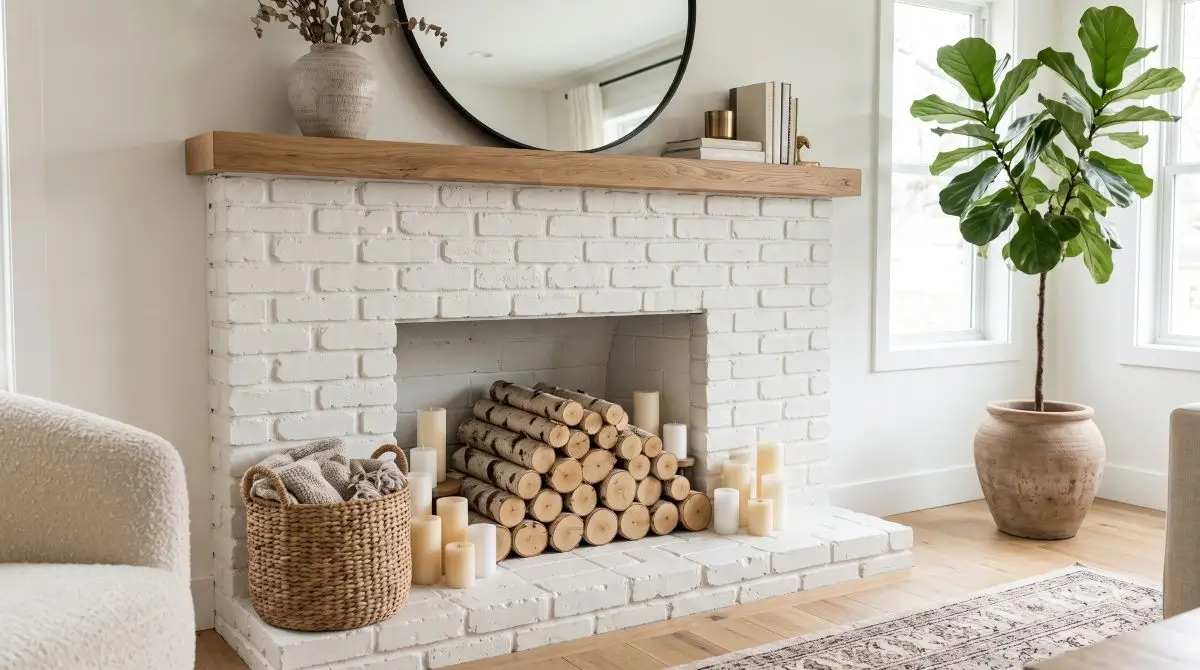
A fireplace that no longer operates can still be a lovely decorative feature. A new paint color makes the brick feel intentional, and the opening can be styled with a stack of logs, candles, or a pot of dried stems. Before painting any interior surface, check that the fireplace is truly out of service and which products are suitable.
43. Painted Brick with Wall Sconces on Either Side
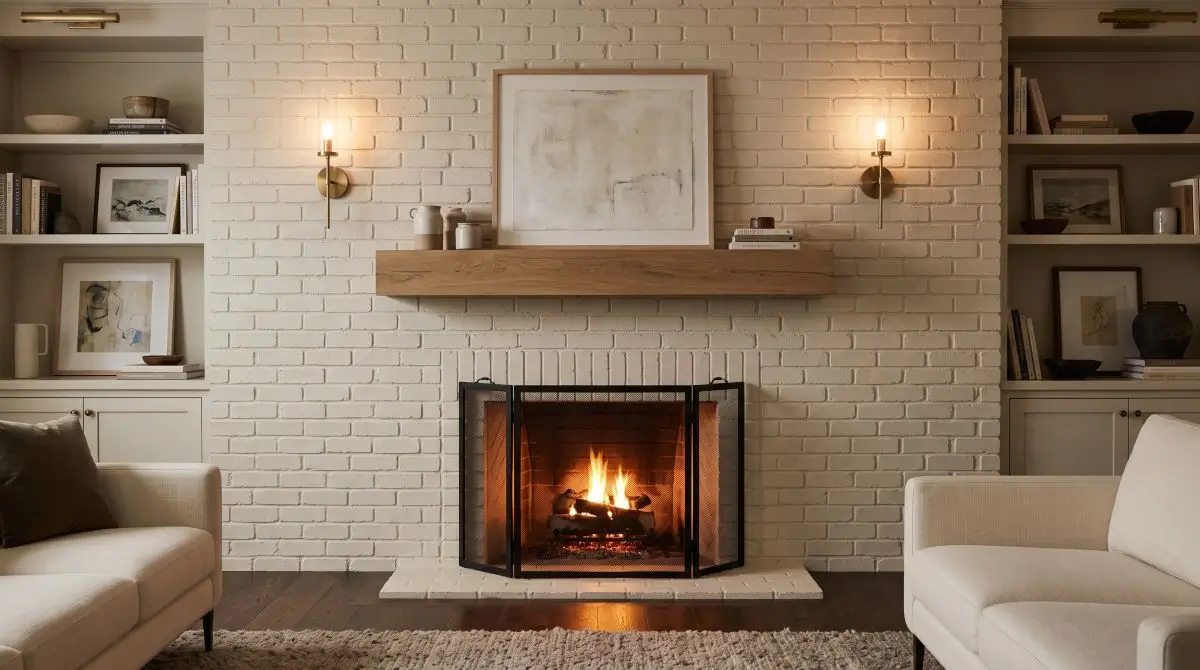
Lighting can be the finishing feature. A pair of wall sconces on either side of the chimney breast adds a warm glow that highlights the brick texture, especially on dark shades like forest green or navy. Hardwired or plug-in fixtures both work; place them clear of the fireplace opening and any required clearances.
How to Paint a Brick Fireplace: A Simple DIY Guide
Painting a brick fireplace takes more preparation than painting a smooth wall. Brick is porous, mortar joints collect dust, and soot can cause stains to show through a new finish. The following steps follow the general preparation approach described by Sherwin-Williams and Benjamin Moore.
1. Inspect the Brick
Look for loose mortar, crumbling bricks, cracks, moisture, and heavy soot stains. Repair masonry problems and address dampness before painting. Paint is a finish, not a repair for damaged brickwork.
2. Clean the Surface
Remove loose dust and debris with a stiff brush, then vacuum the brick and mortar joints. Wash the surface with a suitable cleaner to remove soot and residue. Follow the cleaner’s label and rinse as directed.
3. Let the Brick Dry
Brick absorbs water, so allow the surface to dry thoroughly after cleaning. Benjamin Moore advises allowing around 24 hours before priming and painting, though drying time depends on conditions and product instructions.
4. Apply a Suitable Primer
Use a primer compatible with the masonry and your chosen topcoat. A masonry primer helps the finish adhere to the porous surface. If soot or stains keep bleeding through, a stain-blocking primer may be needed.
5. Paint the Mortar Joints First
Work paint into the joints and recessed areas with a brush. Then use a roller suitable for textured brick to cover the broad surfaces. Working in manageable sections makes it easier to spot missed areas.
6. Apply Additional Coats as Needed
Let each coat dry according to the label before applying another. Brick can absorb paint unevenly, so two coats may be needed for consistent coverage. Follow the product instructions rather than rushing the process.
7. Allow the Finish to Cure
Dry-to-touch does not always mean the paint has fully cured. Follow the label’s instructions before using the fireplace again. Keep the firebox interior separate from the exterior surround: do not apply ordinary wall paint or masonry paint inside an active firebox.
What Paint Should You Use on a Brick Fireplace?
For the exterior brick surround, a masonry-compatible acrylic-latex paint is a common option when paired with a suitable primer. Products such as Sherwin-Williams LOXON Concrete & Masonry Primer, Benjamin Moore Fresh Start, and INSL-X Aqua Lock are examples of primers mentioned in manufacturer guidance. Check each product’s current technical data and compatibility before choosing a system.
A few things to keep in mind:
- Masonry primer: Helps prepare porous brick and mortar for the finish coat.
- Stain-blocking primer: May be useful when soot or other stains are likely to bleed through.
- Acrylic-latex or masonry-compatible topcoat: A practical option for suitable exterior surround surfaces.
- Limewash: Offers a mineral finish with visible variation instead of solid, opaque coverage.
- High-heat products: Designed for particular heat-exposed surfaces, but not automatically suitable for firebrick inside an active firebox.
Heat guidance varies by surface and product, so do not choose paint based on a general temperature claim alone. Follow the fireplace or appliance manufacturer’s instructions and the coating manufacturer’s label. If you are unsure which areas can be painted, consult a qualified fireplace professional.
How Much Does It Cost to Paint a Brick Fireplace?
The cost depends on the size of the fireplace, how dirty or damaged the brick is, the number of coats needed, and the products you choose. Angi lists a typical DIY budget of $100-$200 and professional painting costs of $350-$650 in its US cost guidance. Treat these as broad estimates rather than fixed prices.
A DIY project may cost less if you already own brushes, rollers, and drop cloths. On the other hand, porous brick, stubborn soot, repairs, extra primer, or a decorative finish can increase the total.
For a more useful estimate, measure the fireplace surround, check the paint coverage listed on each product, and include primer, cleaning supplies, masking materials, and any repair work.
Final Thoughts
The best painted brick fireplace ideas depend on the look you want and the condition of the existing masonry. White, cream, and greige create a softer backdrop, while charcoal, navy, and green make a stronger statement. Limewash, whitewash, stencils, and two-tone designs offer alternatives to a single solid color.
Before starting, inspect and clean the brick, allow it to dry, and choose a compatible primer and finish. Painting can be difficult to reverse, so think carefully before covering brick you may want to restore later. Most importantly, treat the exterior surround separately from the firebox and follow the relevant product and fireplace safety instructions.
